How a Tumor Grows Back After an Electric Shock express
A lightning bolt strikes an anthill. Some ants die instantly, some freeze, and a few days later the survivors start rebuilding the tunnels. That's roughly how a tumor behaves after electroporation — a method where short electric pulses are passed through tissue to poke holes in cancer cell membranes and kill them.
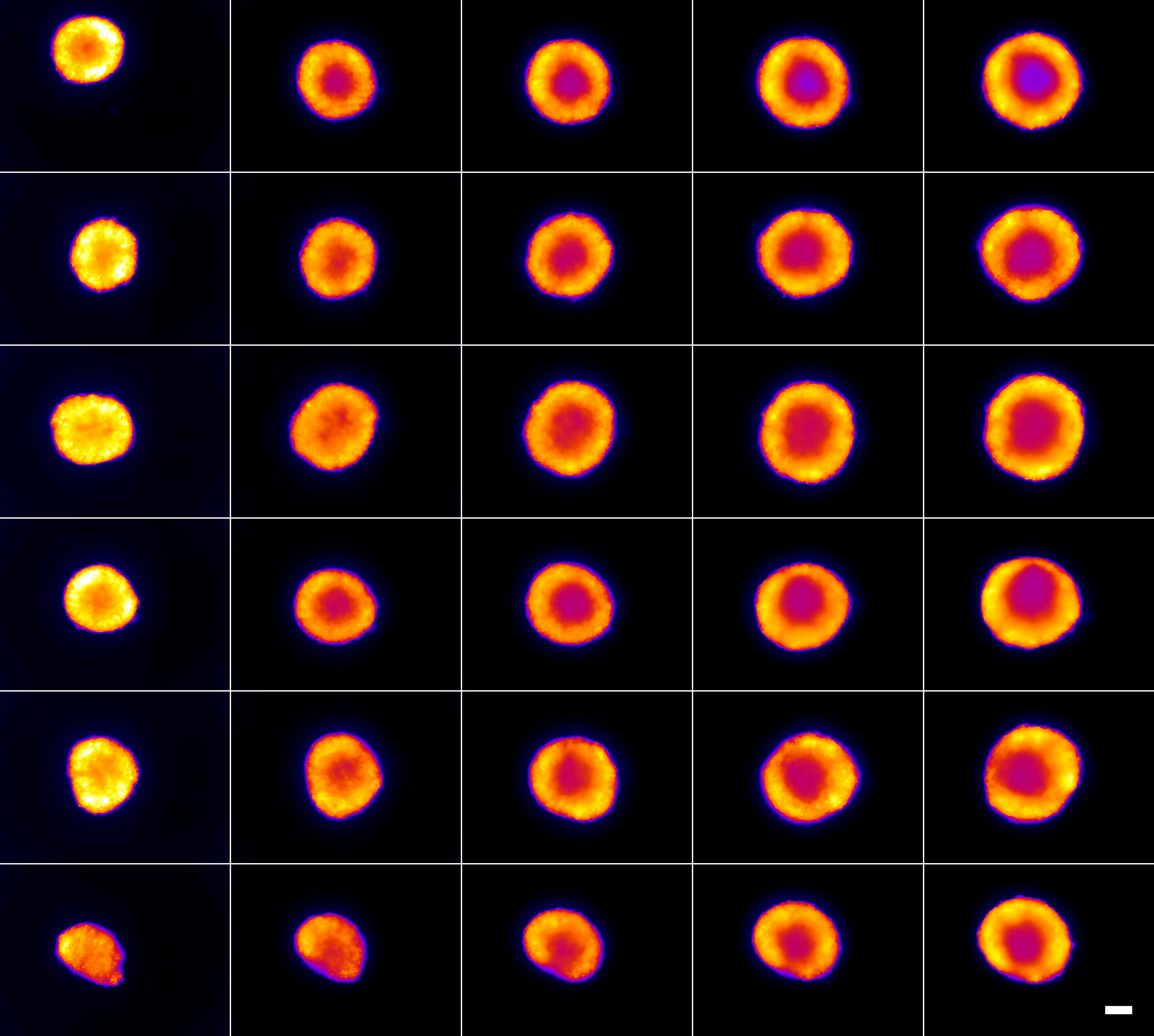
In the lab, researchers grew balls of tumor cells — three-dimensional spheroids that resemble a real tumor more than a flat layer in a dish. They zapped them with pulses of varying strength and watched what happened. After weak pulses, many cells survived and the spheroid quickly regrew. After strong ones, almost all died, and the survivors released signaling molecules: ATP and HMGB1. These molecules are like a cry for help that can wake up the immune system and make it finish off the remaining tumor.
But it's not that simple. Among tumor cells there are 'sleeping' ones — those that have temporarily stopped dividing. Some of them are killed by the pulse, freeing up space and resources. Others survive and, given free space, start multiplying again. So after the procedure, the tumor can come back.
The scientists built a computer model that mimics the spheroid's behavior after a pulse. It showed that the tumor's fate depends on the pulse strength and on how many sleeping cells survived. If treatment ignores these 'quiet ones,' they can undo all the effect.
So an electric shock to a tumor is not just burning it out. It's a complex conversation with cells, where it's important not only to kill but also to properly wake up the immune system and not let survivors start building again.
ATP is a molecule that cells use as a battery for their needs. But when a cell dies and releases ATP outside, it becomes a danger signal for the immune system.