Negative ions flow at ordinary pressure express
Deep in a cave beneath the Italian Apennines, a tank of gas sits in the dark. Inside, charged particles fly through, leaving faint flashes of light in their wake. These flashes are like the wake of a boat on dark water: they reveal where the particle went and how fast. For the first time, such a trail has been spotted not in a vacuum but at a pressure close to what we have outside our windows.
Light from the particles is captured by sensitive sensors. The gas in the tank is a mixture of helium and two fluorides. When a particle enters, it knocks electrons off the gas atoms. Those electrons quickly attach to the fluoride molecules, forming negative ions. These ions are heavier than electrons and move more slowly, but they barely scatter sideways. So their trail stays sharp.
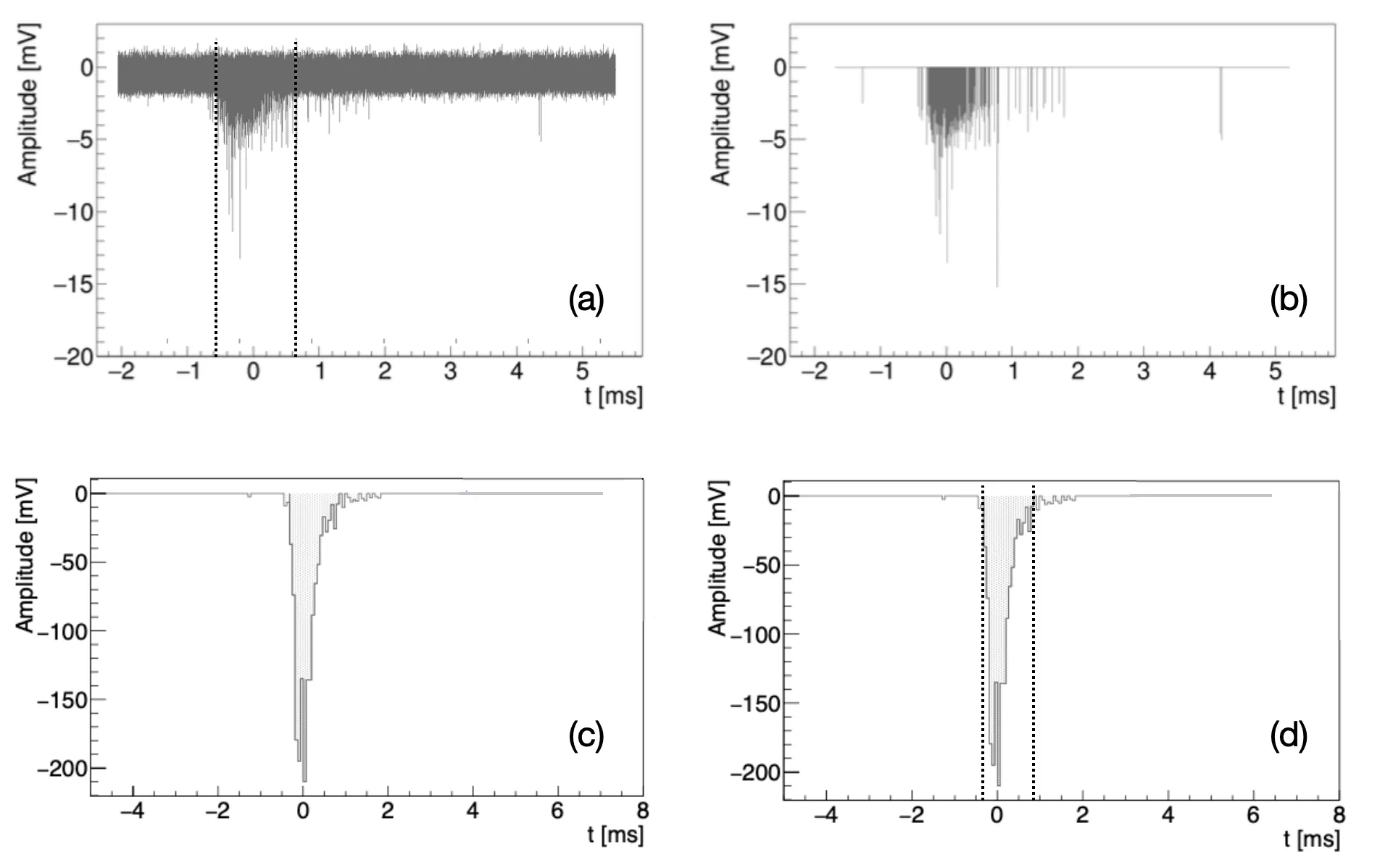
It turns out there are two kinds of these ions in the gas. The main kind is sulfur hexafluoride ions. But along with them flies a small addition of other ions that are 25% faster. They gave themselves away by the light flashes: they arrived a bit earlier than expected. From the delay time, the scientists calculated the ion speed: it came to a few centimeters per second.
Such a detector could become a trap for rare visitors from space. Dark matter barely interacts with ordinary matter, but occasionally it might collide with a gas nucleus. Then a weak signal would be born, and it needs to be distinguished from noise. The slow, sharp trails of negative ions could help do that. And working at ordinary pressure is simpler and cheaper than in a vacuum.
The cave under Gran Sasso was chosen for a reason: the rock above it muffles cosmic rays. In such silence, even a single trail from an invisible particle could become a discovery.
In the gas mixture, negative ions move thousands of times slower than electrons, so their trail can be seen in full detail.
In Liu Cixin's novel "The Three-Body Problem," particle detectors in deep mines catch signals from unknown forces — a similar principle is used in the search for dark matter.