The Synchronous Dance of Quantum Tops express
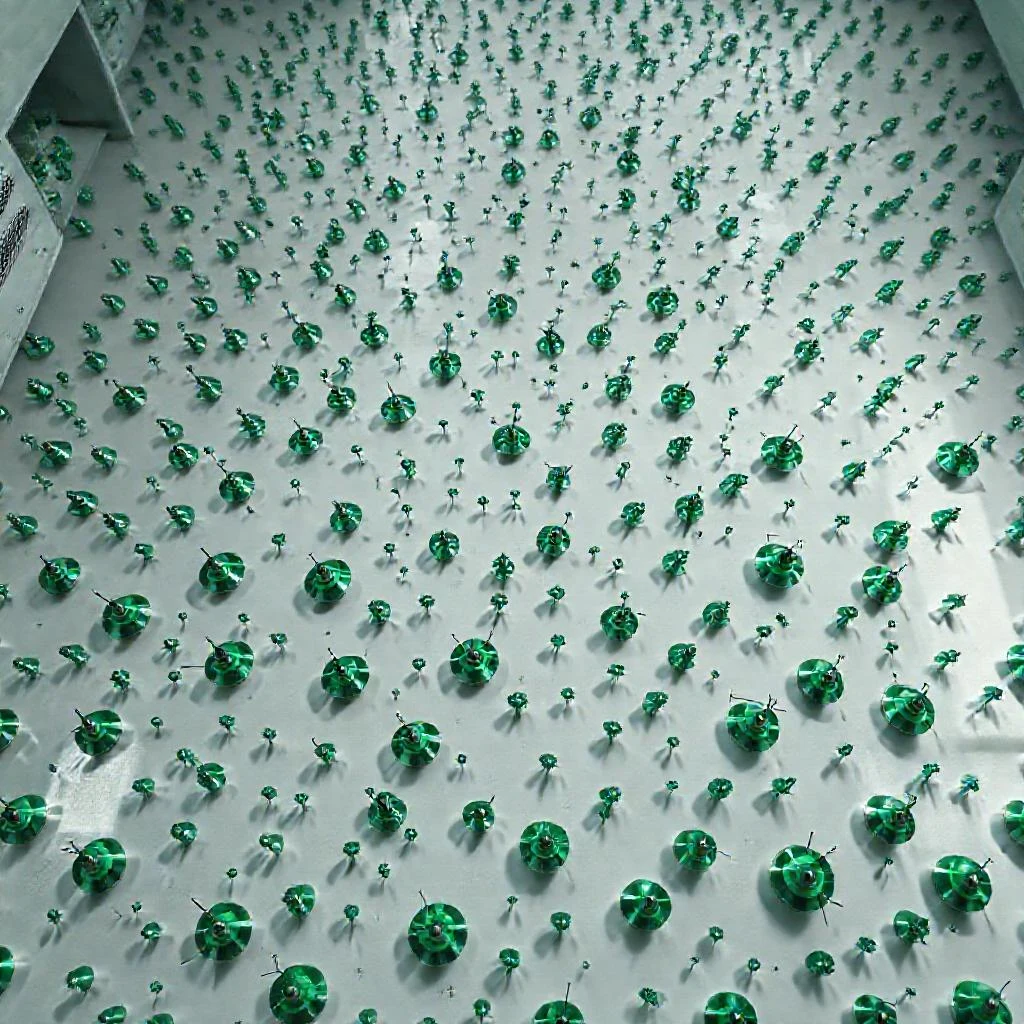
Physicists took 28 quantum tops, particles with intrinsic spin, and ran a cyclic process on a quantum computer predicted by Werner Heisenberg nearly a century ago. At first, each top spun however it pleased. But after a few cycles, their wobbles aligned: without any external force, they whirled in unison — order emerged from disorder.
The secret to synchronization is a hidden symmetry, reminiscent of a rule that lets tops spin in any direction yet still "agree." Once the symmetry was broken, the collective dance fell apart. Thus, symmetry protects harmony in the quantum world — a principle that also pervades the standard model of particles.
But the real surprise came with 156 tops. With a small initial spread, all synchronized. But with a large spread, a quantum chimera formed: within small groups, tops spun together, while the rest remained disordered. It's like a crowd of pedestrians where some groups walk in step while others move chaotically, even though the rules of movement are the same for all. Such a mix of order and chaos has been seen before in lasers and chemical reactions, but at the quantum level, it paves the way for ultra-stable devices.
Chimera states, a blend of order and chaos, were long considered a curiosity, but were later found in chemical reactions, lasers, and even pedestrian behavior.
In Peter Watts' 'Blindsight,' the collective mind resembles a quantum chimera: its parts act independently but form a unified whole.