Are you one of the authors of this paper? Email us from your institutional or work email address mentioning this article's arXiv ID and we'll verify you and give you edit access to this page.
Are you an author who sees something we missed or got wrong? Write to us — the subject line already carries the paper id. We read every note and correct the write-up.
Scientists measured how elusive particles interact with argon and found discrepancies with theory.
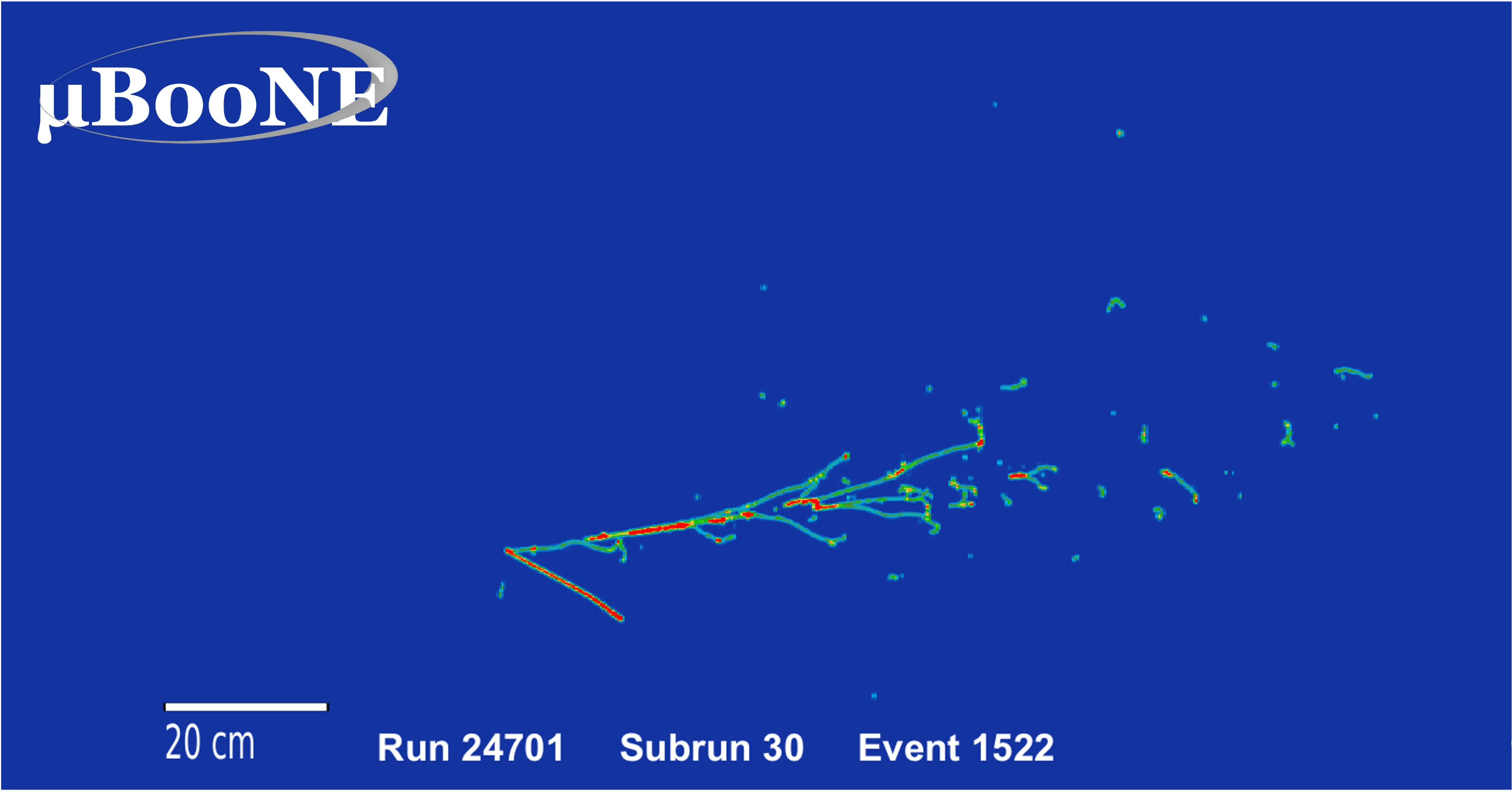
Neutrinos are tiny particles that zip through Earth, barely noticing it. In the MicroBooNE experiment, they are caught in a tank of liquid argon. When a neutrino strikes an argon nucleus, it produces an electron and protons, like splashes from a stone thrown into water.
Scientists measured where these particles fly and with what energy. It turned out that models predict the electron's behavior well but miss the angles at which protons emerge. It's like a weather forecast that accurately predicts rain but not the wind direction.
The experiment used a neutrino beam from the Fermilab accelerator. Over the entire run, they accumulated 1.3×$10^{21}$ protons on target: that's a number with 21 zeros!
Such measurements will help tune models for future giant detectors, such as DUNE, which will search for differences between neutrinos and antineutrinos. Perhaps these differences hold the secret to why the Universe is made of matter rather than antimatter.