C. Zhang

25 articles · 30 co-authors · latest: 2026-08-21
179 citations · h-index 6 · 114 papersData: Semantic Scholar

We have retold 25 papers by this author. 1 of them with a full read. most often about: brain cancer detection, flavour_tagging, supernova remnant. 30 co-authors across our retellings.

Links in the knowledge graph
All tracks at once: how LHCb reads the birth of B mesons in full
In 2016, the LHCb detector at the Large Hadron Collider recorded millions of proton-proton collisions. Among the debris of these collisions, neutral B mesons were born—particles that can spontaneously transform into their antiparticles and back.
High Energy2025-10-302 minarXiv:2510.26112express
Stellar Explosions as Particle Accelerators of Record Energies
When a massive star exhausts its thermonuclear fuel, its core collapses, and the outer layers are ejected into space at speeds of thousands of kilometers per second. This is how a supernova remnant is born — an expanding cloud of shock-compressed gas spanning light-years.
High Energy2026-01-061 minarXiv:2601.02801express
Solar Storm Illuminated Magnetic Fields in Space
Cosmic rays are like a downpour pelting from all sides. But when the wind blows, the droplets change direction. In the same way, a solar storm, a cloud of magnetized gas from the Sun, bends the paths of these particles that normally rain down on Earth evenly. Cosmic rays are invisible messengers from distant galaxies.
Quantum Physics2026-01-121 minarXiv:2601.07529express
One Laser Instead of Two: Simpler Control for Quantum Computers
A quantum computer isn't a monolith: it's more like an orchestra, where each qubit must play its part without drowning out the neighbors. In ion-based machines, two types of qubits are used: some store information, others process it. Previously, each type required its own laser, like separate batons for violins and trumpets.
HEP Experiment2026-01-221 minarXiv:2601.15646express
How Mesons Revealed the Difference Between Matter and Antimatter
In the LHCb detector at the Large Hadron Collider, protons collide, and for a fleeting moment, particles that don't exist in ordinary matter are born. One of them is the neutral B meson. It lives for less than a billionth of a second and decays into two other particles: the narrow resonance J/ψ and the broader ρ(770).
physics.acc-ph2026-02-061 minarXiv:2602.06684express
Beam Instability in Plasma Accelerators
In a plasma accelerator, particles are accelerated like surfers riding a wave created in the plasma. If the leading bunch and the trailing bunch are not aligned, an instability arises that shakes the trailing bunch. It's as if a surfer on a wave starts wobbling from side to side: their trajectory gets messed up, and they might fall off the wave.
HEP Experiment2026-02-111 minarXiv:2602.11138express
How to Catch a Rare Signal in a Sea of Data
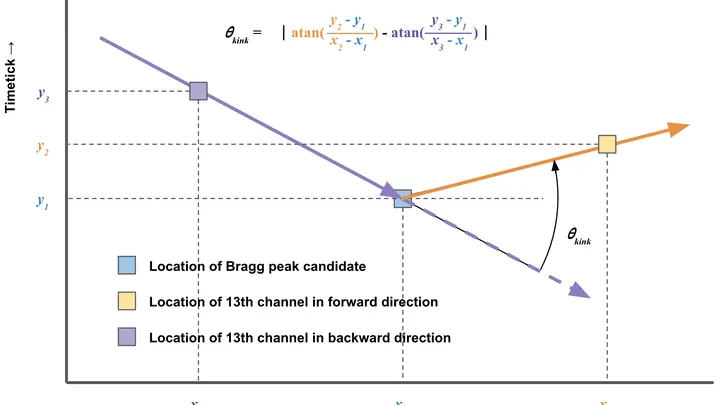
The MicroBooNE detector is a large tank of liquid argon that catches particles flying through it. When a particle passes, it leaves a trail of charge and a flash of light. These trails combine into a three-dimensional picture of the event, as if the particle were drawing its path in a transparent cube.
High Energy2026-02-132 minarXiv:2602.13411express
Three Years of Watching a Cosmic Beacon
For three years straight, every night, telescopes have stared at one point in the sky. There lies the galaxy Mrk 421, whose core shoots a jet of particles aimed almost exactly at Earth. Such objects are called blazars. A black hole at the galaxy's center spins matter into a disk, and some of it is ejected outward in two narrow beams.
HEP Experiment2026-02-191 minarXiv:2602.17184express
How Scientists Measured the 'Character' of Charmed Particles
In a giant particle accelerator, where protons traveling at nearly the speed of light smash into a neon target, charmed baryons are born — particles that live for less than a billionth of a second.
HEP Experiment2026-02-241 minarXiv:2602.21177express
Radon Hides Dark Matter
A dark matter detector is like a room where you're trying to hear a whisper while static electricity crackles nearby. This crackle is produced by radon atoms — a radioactive gas that seeps out from materials and air.
HEP Experiment2026-03-091 minarXiv:2603.08621express
Particle Collisions Reveal New Decays
Proton collisions at the Large Hadron Collider produce particles that live for less than a billionth of a second. One of them is the Bs meson, made of a strange quark and a bottom antiquark.
HEP Experiment2026-03-131 minarXiv:2603.13223express
Asymmetry in Decays: How Particles Reveal Their History
In the LHCb detector, like in a giant camera with billions of 'snapshots,' rare events are captured: how short-lived particles, B mesons, fall apart into lighter ones. One such decay, where a B meson turns into a kaon and a pair of muons, is particularly interesting. In it, as in a mirror, the difference between matter and antimatter may show up.
HEP Experiment2026-03-131 minarXiv:2603.13593express
Neutrinos in Argon: How Ghost Particles Give Away Their Secrets
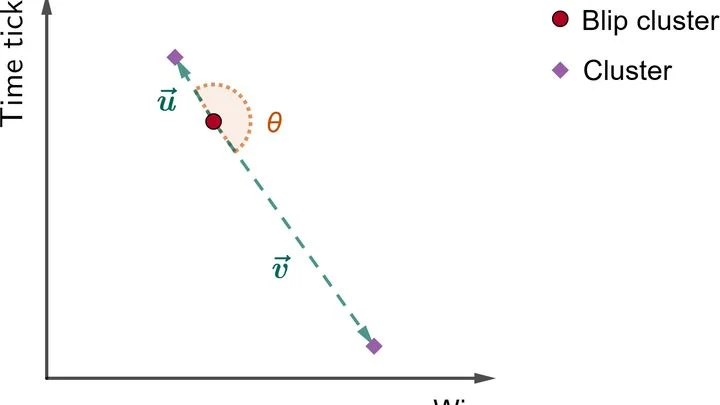
Neutrinos are tiny particles that zip through Earth, barely noticing it. In the MicroBooNE experiment, they are caught in a tank of liquid argon. When a neutrino strikes an argon nucleus, it produces an electron and protons, like splashes from a stone thrown into water.
High Energy2026-03-271 minarXiv:2603.26213express
HEP Experiment2026-03-301 minarXiv:2603.28456express
Two-Charm Baryon Caught for the First Time
In proton collisions at the Large Hadron Collider, physicists have for the first time caught a particle with two charm quarks. It is called Ξcc+ (pronounced "ksi-ksi-plus") and resembles a bead with not one but two heavy nuclei.
HEP Experiment2026-04-072 minarXiv:2604.05701express
The Gamma Angle: How Physicists Catch the Difference Between Matter and Antimatter
Every second, billions of decays happen inside our bodies, and nobody notices. But physicists do: they smash particles in accelerators and watch what fragments they fly into. Hidden in those fragments is the answer to why we exist at all. Right after the Universe was born, there were equal amounts of particles and antiparticles, but today all we see around us is particles.
HEP Experiment2026-04-071 minarXiv:2604.05712express
A 71-degree angle: how physicists catch the asymmetry of matter
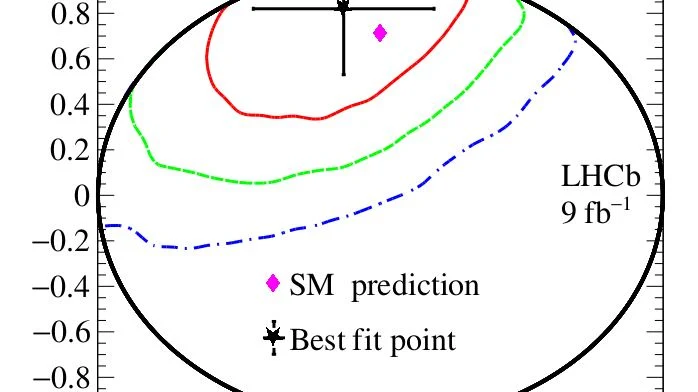
Imagine a balance scale with identical weights, yet one pan always tips lower. In the world of elementary particles, this imbalance is called CP violation: particles and their mirror twins (antiparticles) behave slightly differently.
HEP Experiment2026-04-231 minarXiv:2604.21257express
A New Charmed Meson
In the LHCb detector, where protons collide, one unusual track was found among billions of decays. The particle, named $$D_{s1}$$(2933)^+, appears for a moment and immediately decays into other particles. Its lifetime is so short that it cannot be observed directly — only through its decay products can its existence be reconstructed.
High Energy2026-04-242 minarXiv:2604.22621express
Cosmic accelerators push particles to the limit
Every second, invisible projectiles from the depths of space pierce through us. These are cosmic rays — atomic nuclei accelerated to speeds nearly indistinguishable from the speed of light. Their energy is hundreds of millions of times greater than what our most powerful accelerators can achieve. Where does this monstrous force come from?
HEP Experiment2026-04-291 minarXiv:2604.26784express
Rare decay spotted for the first time
A coin landing on its edge is about as rare as a heavy B meson decaying into a light pion and an electron-positron pair. Over a decade of collider operation, only a handful of such events have accumulated, but physicists have finally managed to spot them. The decay probability is about 2.4×10⁻⁸.
Energy Under the Microscope: Catching Millionths
A chamber the size of a small truck is filled with liquid argon at minus 186 degrees Celsius. When a particle flies in, it knocks electrons off argon atoms, and those electrons drift toward the walls, tracing a three-dimensional picture of the event.
HEP Experiment2026-06-151 minarXiv:2606.17323express
The Muon Pendulum Swings Its Last
In a giant ring of magnets outside Chicago, muons whirled like figure skaters on an ice rink. But instead of music, there's a magnetic field, and instead of spinning, there's a barely perceptible wobble of the spin. Physicists call this wobble the anomalous magnetic moment.
High Energy2026-06-231 minarXiv:2606.25054express
Cosmic Accelerator Flirts with the Limit
In the constellation Aquila, about 40,000 light-years away, one of the most powerful natural accelerators in the Galaxy is at work. It's the microquasar GRS 1915+105—a pair consisting of an ordinary star and a black hole.
High Energy2026-08-081 minarXiv:2608.07850express
The Pulsar Tail You Can See Through
Pulsar PSR J1740+1000 is a city-sized star spinning faster than a kitchen blender. After a supernova explosion, it left behind a dense core that accelerates particles to near-light speeds. These particles fly into space, and previously it was thought they scatter in all directions, like splashes from a stone thrown into water.
HEP Experiment2026-08-211 minarXiv:2608.21082express
How a Heavyweight Particle Decays
At the Large Hadron Collider, protons are smashed together, and among the debris, a heavyweight particle, the lambda baryon, sometimes appears. It lives for a tiny fraction of a second before decaying into other particles.