A. Johnson

5 articles · 30 co-authors · latest: 2026-05-29
1 citations · h-index 1 · 10 papersData: Semantic Scholar

We have retold 5 papers by this author. most often about: neutron star merger, lepton, Standard Model. 30 co-authors across our retellings.

Links in the knowledge graph
HEP Experiment2026-02-102 minarXiv:2602.09800express
Rare Meson Decay: Hunting for Neutrinos
Inside the accelerator, particles collide, and for a fleeting moment a B meson is born — a heavy particle that lives for less than a billionth of a second. Usually, it decays into a shower of debris, but sometimes it transforms into just two particles: a muon and a neutrino. This rare path is like a lottery where the winning ticket appears once in every two million draws.
HEP Experiment2026-02-111 minarXiv:2602.11138express
How to Catch a Rare Signal in a Sea of Data
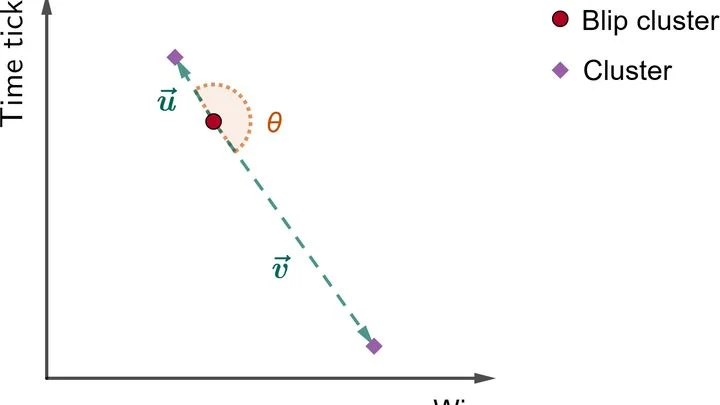
The MicroBooNE detector is a large tank of liquid argon that catches particles flying through it. When a particle passes, it leaves a trail of charge and a flash of light. These trails combine into a three-dimensional picture of the event, as if the particle were drawing its path in a transparent cube.
HEP Experiment2026-02-141 minarXiv:2602.13569express
Hunting Ghost Particles: What Belle II Saw
At Japan's KEK laboratory, electrons and their antimatter counterparts, positrons, collide inside the Belle II detector. In such collisions, new particles are born for a fleeting moment. Among them is J/ψ, a bound state of a charm quark and its antiquark.
HEP Experiment2026-03-131 minarXiv:2603.13593express
Neutrinos in Argon: How Ghost Particles Give Away Their Secrets
Neutrinos are tiny particles that zip through Earth, barely noticing it. In the MicroBooNE experiment, they are caught in a tank of liquid argon. When a neutrino strikes an argon nucleus, it produces an electron and protons, like splashes from a stone thrown into water.
Energy Under the Microscope: Catching Millionths
A chamber the size of a small truck is filled with liquid argon at minus 186 degrees Celsius. When a particle flies in, it knocks electrons off argon atoms, and those electrons drift toward the walls, tracing a three-dimensional picture of the event.