D. Franco

6 articles · 30 co-authors · latest: 2026-05-29
664 citations · h-index 4 · 16 papersData: Semantic Scholar

We have retold 6 papers by this author. most often about: dark matter, multi-messenger astronomy, neutron star. 30 co-authors across our retellings.

Links in the knowledge graph
HEP Experiment2026-02-102 minarXiv:2602.09421express
Heavy Dark Matter: Traces in Liquid Argon
A bullet that doesn't just pierce one target but leaves marks in several layers of armor. That's roughly how superheavy dark matter behaves, and it's what the DarkSide-50 detector was built to catch for the first time. The usual suspects for dark matter (weakly interacting massive particles, or WIMPs) pass through matter almost unnoticed, occasionally bumping into a nucleus.
HEP Experiment2026-02-111 minarXiv:2602.11138express
How to Catch a Rare Signal in a Sea of Data
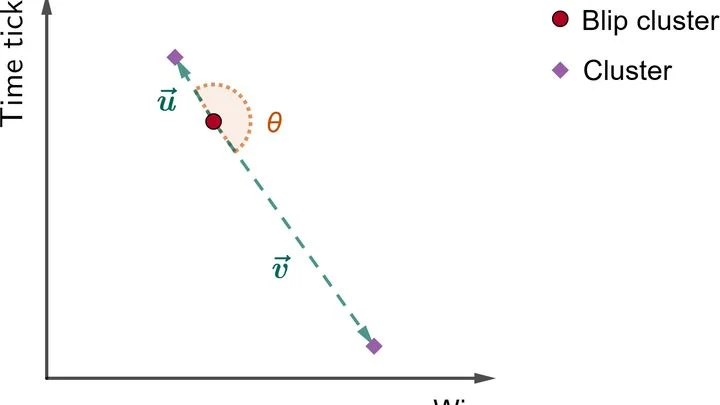
The MicroBooNE detector is a large tank of liquid argon that catches particles flying through it. When a particle passes, it leaves a trail of charge and a flash of light. These trails combine into a three-dimensional picture of the event, as if the particle were drawing its path in a transparent cube.
HEP Experiment2026-02-161 minarXiv:2602.14538express
Argon catches dark matter
In the dark chamber of the detector, argon waits. When an invisible particle (say, a dark matter candidate) flies through, it gives the argon nucleus a gentle shove. The nucleus is knocked out of place, and charges are born around it. Exactly how many charges is no trivial question: physicists use that number to tell what kind of visitor dropped by.
HEP Experiment2026-03-131 minarXiv:2603.13593express
Neutrinos in Argon: How Ghost Particles Give Away Their Secrets
Neutrinos are tiny particles that zip through Earth, barely noticing it. In the MicroBooNE experiment, they are caught in a tank of liquid argon. When a neutrino strikes an argon nucleus, it produces an electron and protons, like splashes from a stone thrown into water.
Nuclear Experiment2026-04-102 minarXiv:2604.08950express
How Physicists Tested the Pauli Exclusion Principle Using Carbon
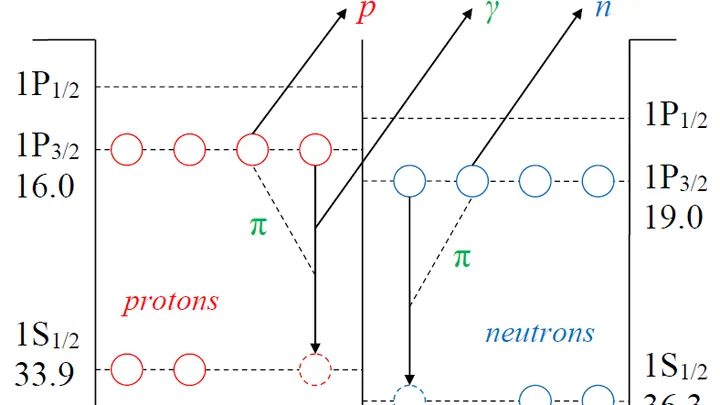
In a carbon atom's nucleus, particles occupy their own 'apartments'—like residents who cannot share the same room. Physicists call this rule the Pauli exclusion principle: two identical inhabitants of a nucleus cannot be in the same state. But what if the rule is sometimes broken?
Energy Under the Microscope: Catching Millionths
A chamber the size of a small truck is filled with liquid argon at minus 186 degrees Celsius. When a particle flies in, it knocks electrons off argon atoms, and those electrons drift toward the walls, tracing a three-dimensional picture of the event.