Liquid argon is a cryogenic fluid used as both a target and a detector medium in particle physics, particularly for dark matter searches and neutrino detection. Because argon is dense, transparent to scintillation light, and can be ionized easily, it allows scientists to observe rare particle interactions with high precision. Its use has become central in experiments like DarkSide and ICARUS, probing the most elusive particles in the universe.
History
Liquid argon detectors were pioneered in the 1970s by Carlo Rubbia and his collaborators, who proposed using it for neutrino detection; the technology matured in the 1990s with the ICARUS project.
How it works
When a particle interacts with an argon nucleus, it deposits energy, producing ionization electrons and scintillation photons. Electric fields drift the electrons to sensitive readout planes, while the light is captured by photomultiplier tubes. The timing and pattern of these signals reveal the particle's type, energy, and direction, allowing researchers to distinguish a rare dark matter candidate from background radiation.
In practice
Beyond dark matter and neutrino physics, liquid argon is used in medical imaging (PET scanners) and as a shielding medium in gamma-ray spectroscopy.
Fun fact
Argon is the third most abundant gas in Earth's atmosphere, yet it was not discovered until 1894 because it is completely inert and colorless.
An aluminum sphere the size of a large globe sits in a neutron beam and answers each hit with a precise note. Inside the sphere there is nothing but nitrogen and eleven tiny steel balls, each the size of a pinhead. When a neutron enters the sphere, it knocks a particle out of a nitrogen atom, and that jolt turns into an electrical signal.
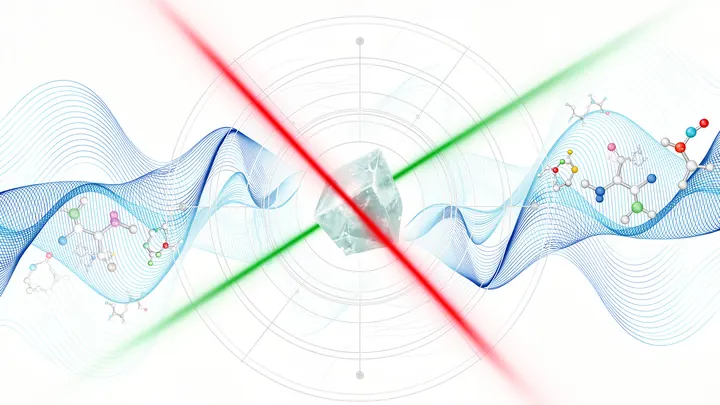
Dark matter is the invisible scaffolding of the universe. It's there, we know from the motion of stars and galaxies, but what this scaffolding is made of remains unknown. One guess is ultra-light particles similar to axions. They barely interact with ordinary matter, yet occasionally they do get involved.
At nine in the morning, the DarkSide-50 detector, 1400 meters beneath Gran Sasso, records a weak ionization pulse. By eleven at night, the frequency of such events drops noticeably. This is not an electronics glitch or a seasonal background variation.
Spectroscopy has always been a way to hear the unheard. Back in the 19th century, Johann Balmer deciphered the elegant lines of hydrogen — a simple numerical harmony that foreshadowed quantum theory.
The story began with a puzzle: in the 1930s, Fritz Zwicky noticed that clusters of galaxies behave as if an enormous invisible mass is hidden within them. Half a century later, Vera Rubin confirmed that stars on the outskirts of galaxies rotate too fast to be held by visible matter alone.
The story began almost a century ago, when Edwin Hubble showed that galaxies are receding, and Fritz Zwicky and Vera Rubin later realized: to explain their motions, invisible mass is needed — dark matter.
On a scorching afternoon, a stifling haze hangs over the city, and not a single cloud is on the horizon. Usually, in such weather, all you can do is wait for nature to take pity and send some cool relief. But what if shade and rain could be switched on schedule, like a light in a room?
Dark matter is invisible, but its gravity governs the motion of galaxies. What it's made of is a mystery. One idea: it consists of ultra-light particles akin to axions.
An electron flying through a gas is like a swimmer trying to cross a crowded pool. Each collision with an atom changes its course and speed. In dense argon gas, there are so many collisions that a simple description no longer works.
Physicists measured electron mobility — how easily electrons drift under an electric field.
Deep in a Canadian mine, there's a barrel holding 3269 kilograms of liquid argon — a clear fluid that looks like very cold water. This barrel is the DEAP-3600 detector, and its job is to catch dark matter particles, which are thought to permeate the universe but barely interact with ordinary matter.
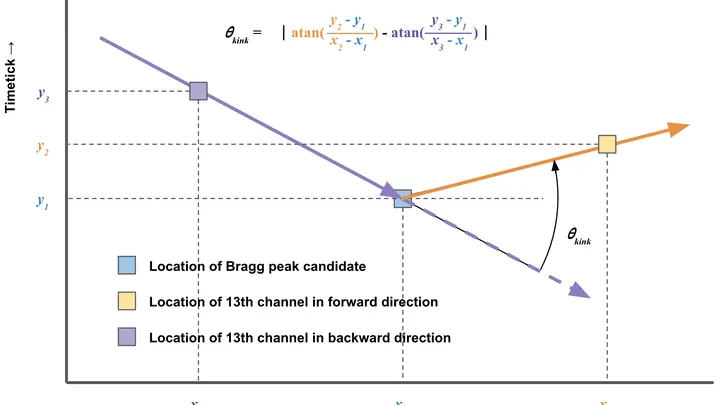
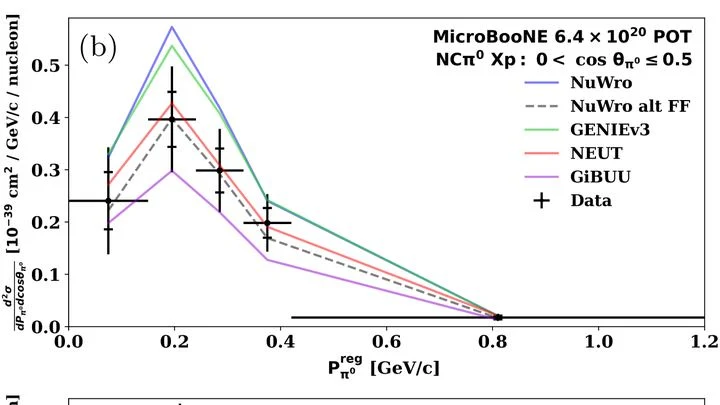
Neutrinos are tiny particles that zip through Earth, barely noticing it. In the MicroBooNE experiment, they are caught in a tank of liquid argon. When a neutrino strikes an argon nucleus, it produces an electron and protons, like splashes from a stone thrown into water.
Deep in the Swiss Alps, there is a vertical shaft that plunges 800 meters down, like two skyscrapers stacked on top of each other. A railway tunnel runs nearby, and trains thunder through it every day. But inside the shaft, it is as quiet as a library at night.
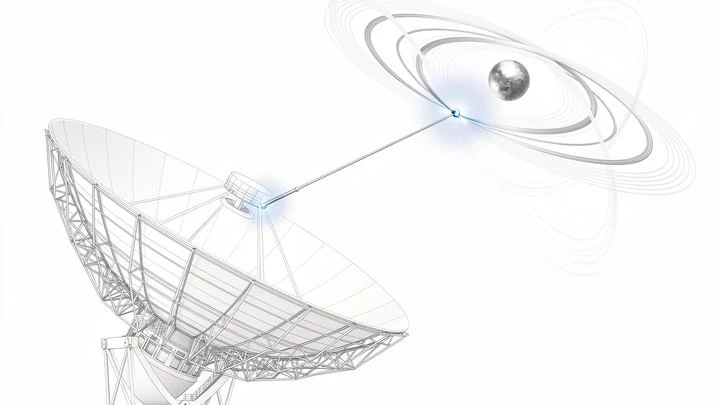
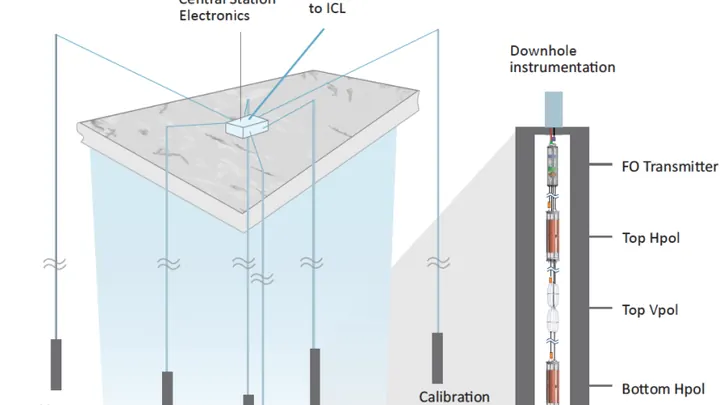
Deep within the Antarctic ice, at depths where sunlight never reaches, antennas hang suspended. They listen not for sounds but for radio waves, waiting for a signal from a particle that is nearly impossible to catch. A neutrino passes through the Earth like a bullet through fog, but occasionally, very rarely, it grazes an ice atom.
In the dark chamber of the detector, argon waits. When an invisible particle (say, a dark matter candidate) flies through, it gives the argon nucleus a gentle shove. The nucleus is knocked out of place, and charges are born around it. Exactly how many charges is no trivial question: physicists use that number to tell what kind of visitor dropped by.
The MicroBooNE detector is a large tank of liquid argon that catches particles flying through it. When a particle passes, it leaves a trail of charge and a flash of light. These trails combine into a three-dimensional picture of the event, as if the particle were drawing its path in a transparent cube.
A bullet that doesn't just pierce one target but leaves marks in several layers of armor. That's roughly how superheavy dark matter behaves, and it's what the DarkSide-50 detector was built to catch for the first time. The usual suspects for dark matter (weakly interacting massive particles, or WIMPs) pass through matter almost unnoticed, occasionally bumping into a nucleus.
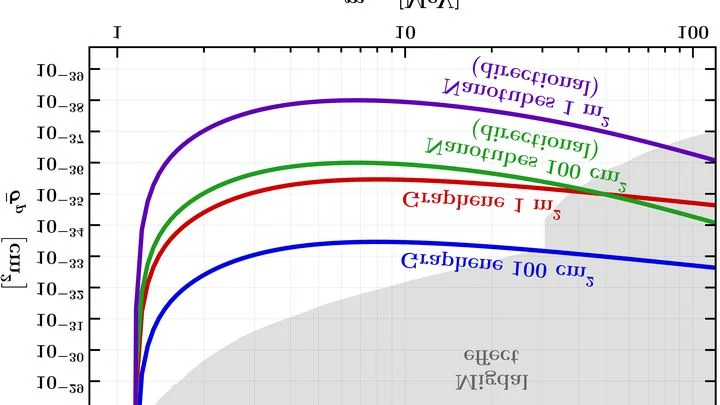
Dark matter is invisible, but you can catch it on the rebound. Hydrogen embedded in a carbon film acts like a billiard ball: when a dark matter particle hits it, the proton flies out. That ejection is the signal you're looking for.
In an underground hall at Fermilab, a huge tank holds liquid argon — a transparent fluid at minus 186 degrees. When an invisible neutrino flies into the tank, it occasionally strikes an argon nucleus, and a short track of charged particles flashes.
Two kilometers underground, beneath the Canadian rock, sits a tank filled with three tonnes of liquid argon. The argon is chilled to minus 186 degrees Celsius and is as clear as water.
Dark matter is five times more massive than ordinary matter, yet it emits no light. Its nature remains unknown. One candidate is the ultra-light axion particle. Axions could pierce right through the planet, barely noticing atoms.
At the center of many galaxies lurks a black hole — an object predicted by solutions to the equations of Karl Schwarzschild. Around it stretches a scorching corona — a region of tenuous plasma heated to billions of degrees.
In a dark room, there is a tank of liquid argon. Sometimes an invisible particle flies through it, strikes an atomic nucleus, and a faint light flashes in the liquid. From this flash, physicists try to figure out what kind of guest has arrived.