Diamond Resonator: How to Catch a Loud Echo express
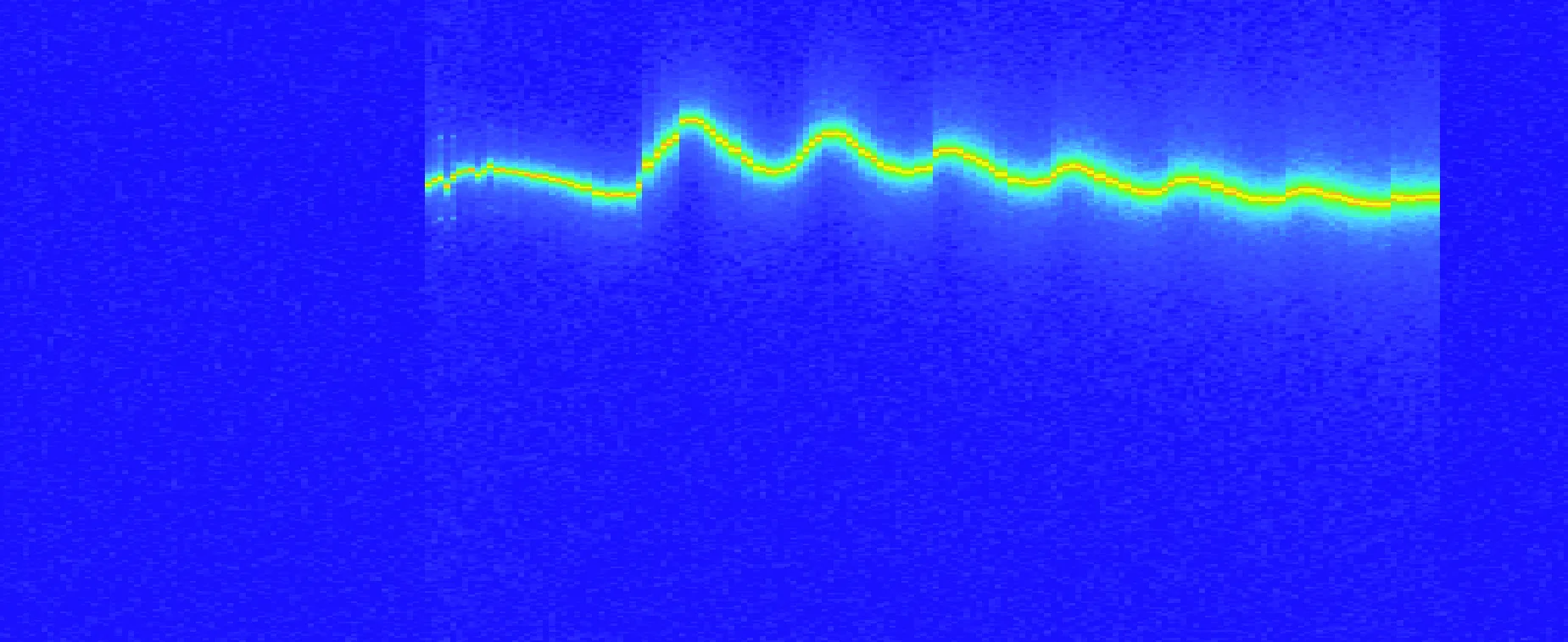
A tiny diamond bridge vibrates so strongly that it starts to 'sing' at many frequencies at once. Previously, such vibrations would dampen themselves: the harder the resonator swung, the harder it was to add energy. Physicists found a loophole in this rule.
They used light to drive the diamond. Light pushes on the bridge, making it tremble. Usually, this trembling quickly plateaus — further pumping is useless. But in the new experiment, the scientists noticed that the system has two stable states: one with weak vibrations, the other with strong ones. If you give the system a gentle nudge, it jumps to the second state and vibrates almost ten times stronger.
They dubbed this trick 'nonlinear attractor engineering.' An attractor is a state the system tends toward on its own, like a ball rolling into a pit. If the landscape has two pits of different depths, you can learn to toss the ball from the shallow one into the deep one. Here, the deep pit corresponds to strong vibrations.
The practical benefits are huge: such resonators could become ultra-sensitive sensors, operate at room temperature, and even help couple light to the magnetic properties of diamond. Plus, it's a step toward compact sources of many light frequencies — ones that currently occupy entire optical tables.
Original abstract
as written by the authors arXiv:2603.19421
Nonlinear dynamics clamp the amplitude of mechanical resonators driven into self-oscillation by optomechanical backaction. Here we overcome the conventional limits of self-oscillation amplitude by navigating the nonlinear dynamical landscape of a diamond optomechanical cavity supporting coherent optomechanics at room temperature. By exploiting the bistable phase space of the system, we increase the oscillation amplitude by nearly an order of magnitude. This enhancement arises from deterministic access to a high-energy state in the system's nonlinear attractor, and is accompanied by the generation of an optical frequency comb produced by cascaded phonon scattering that underlies the nonlinear dynamics. Our results establish nonlinear attractor engineering as a route to large amplitude coherent phonon generation and provide a platform for optomechanical frequency combs, spin mechanical interfaces in diamond, and precision sensing in ambient conditions.
Diamond is not just a gemstone but also one of the best materials for optomechanics: it is very stiff and conducts heat well, so its vibrations barely decay.
In Arthur C. Clarke's novel 'The Fountains of Paradise,' a super-strong material of the future is described — possibly diamond filaments that could withstand monstrous vibrations, similar to those studied in optomechanics.