A Light Vortex That Keeps Its Shape express
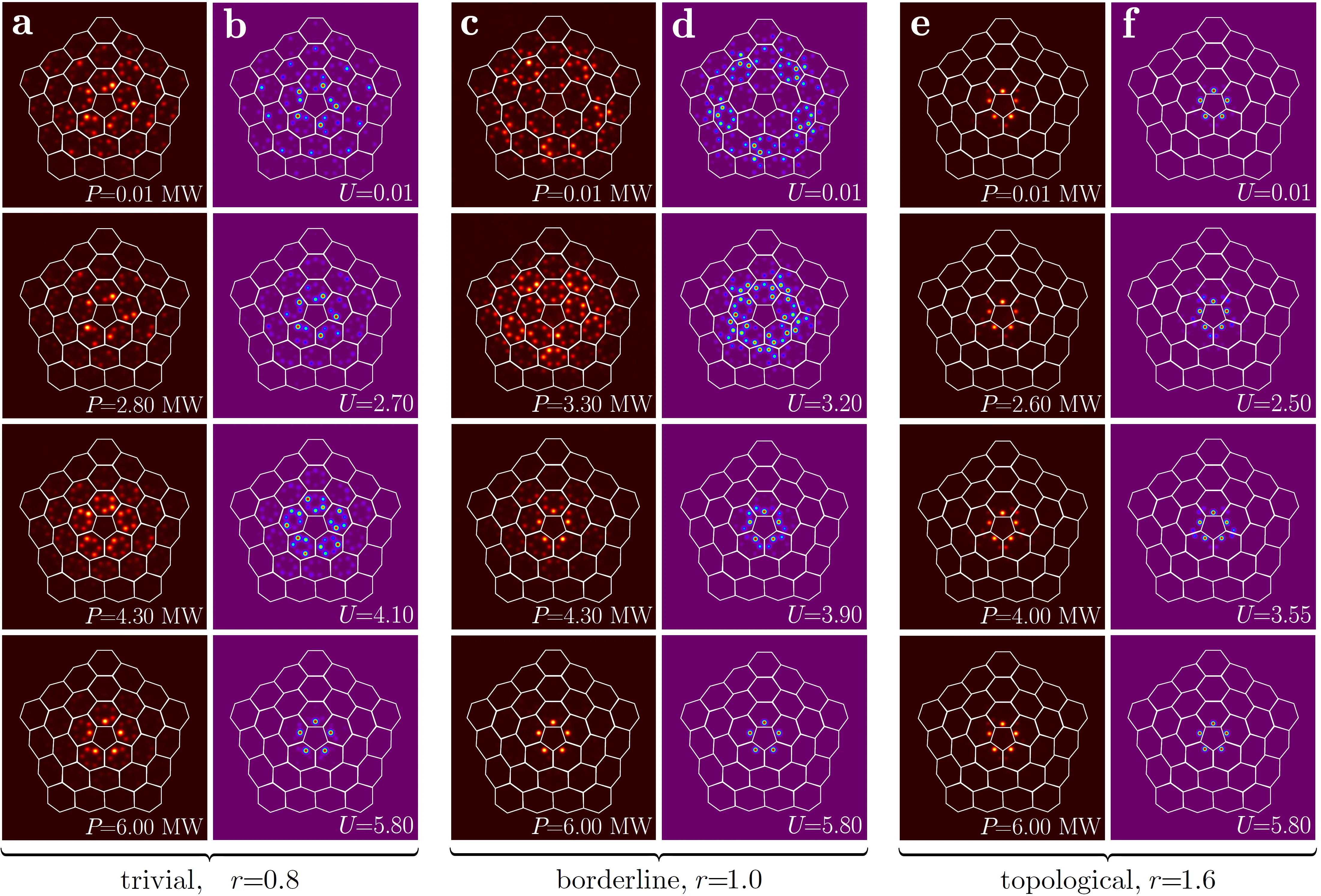
A laser beam twisted into a spiral looks like a drain vortex in a sink: light moves not only forward but also in circles. Such vortex beams already help move tiny particles and transmit more data. But once they pass through an inhomogeneous medium, the vortex falls apart, like water from a leaky bucket.
Photonics — the science of light in microchips — has found a way to hold the vortex. In glass, laser-written waveguide tracks were burned, but not in straight rows; instead, they included a defect — like a missing strand in a woven basket. This defect creates a protected channel through which light travels, ignoring scratches and dust.
The researchers superimposed two protected light streams and obtained a vortex that doesn't disintegrate. Its shape doesn't occur in ordinary lattices — because ordinary lattices are too regular. Here, the defect helps rather than hinders.
This discovery bridges two ideas: light that carries rotation and a material that shields light from disturbances. In the future, such vortices could serve as couriers in optical computers or as tweezers for assembling micromachines.
The laser used to burn tracks in the glass fires pulses lasting femtoseconds — that's one millionth of a billionth of a second. In that time, light travels less than the thickness of a human hair.
In the TV series "Stargate," portals transport characters through swirling rings of light — similar to those studied in this work.