Magnetic Fields in the Cores of Red Giants express
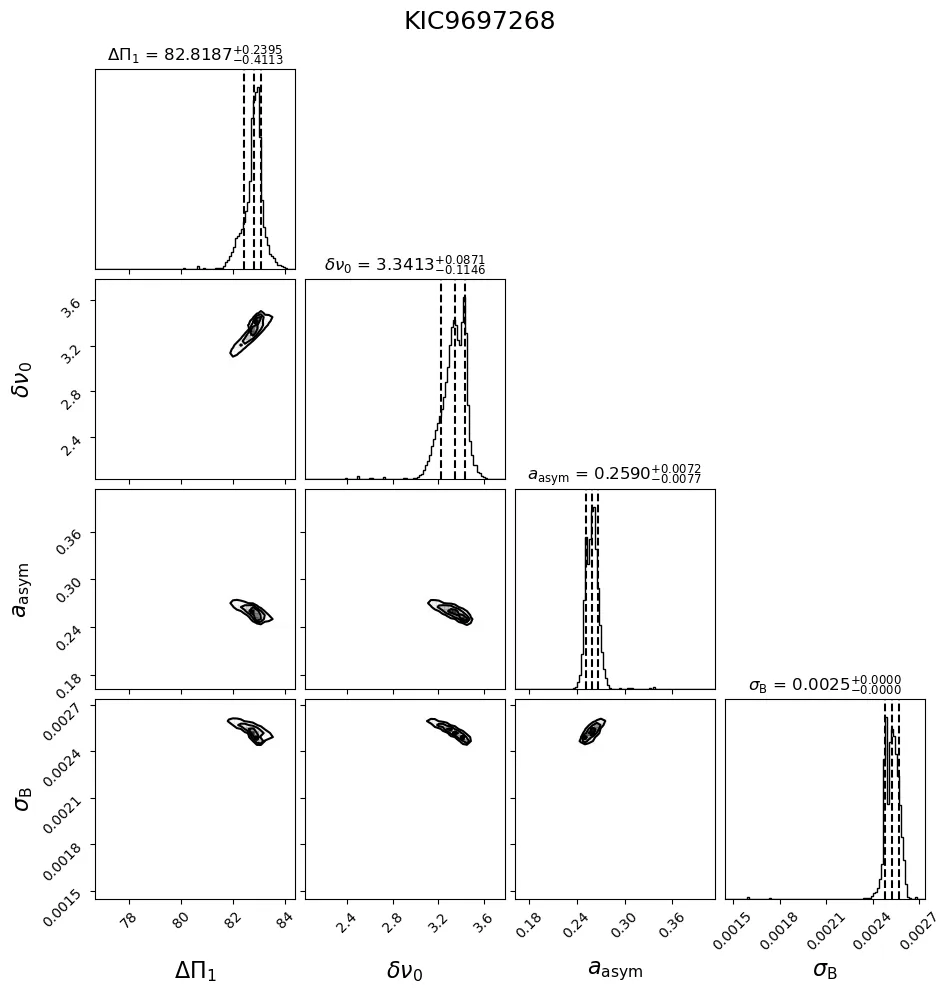
Eight red giants — bloated old stars like the future Sun — are not behaving by the book. Their surfaces oscillate steadily, like a bell, but within this chime there are glitches: some tones are missing, and the rhythm breaks. Scientists suspected an invisible hand inside — a magnetic field — and tried to calculate its strength.
To explain the observations, they had to assume the field is very strong — from 100 to 700 kilogauss. For comparison, a refrigerator magnet's field is about 0.001 kilogauss. Such a powerful field could not have arisen just by chance. Most likely, it was born in the star's youth, when its hot core churned like boiling water in a pot, mixing matter and generating a magnetic dynamo.
These eight stars turned out to be not very massive — roughly like the Sun. The size of their magnetic field matches the size of the core the star had in its youth. This means the field is a memory of a turbulent youth, frozen deep inside. Now astronomers can use such stars as natural laboratories to understand how magnetic fields live and die within stars.
The magnetic field in a red giant's core is millions of times stronger than a refrigerator magnet's field, but it is hidden deep beneath the star's surface.
In Stanisław Lem's novel 'Solaris', the planet's ocean behaves as if alive; here, the star itself stores a 'memory' of its youth in the form of a magnetic field.