How Helper Cells Keep a Thought in Mind express
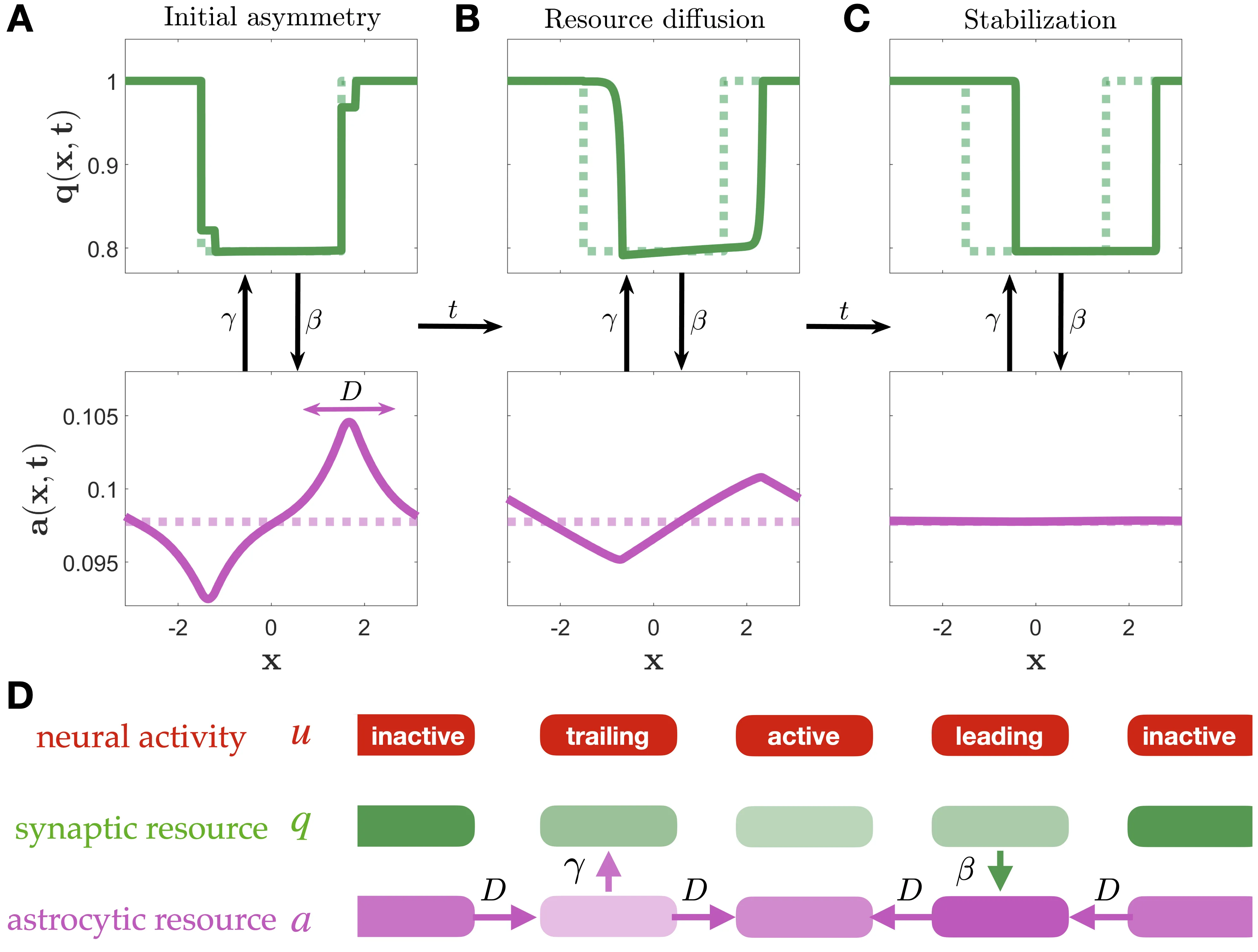
Holding a phone number in your head while you dial it: that's working memory. In the brain, a group of cells is responsible for this, sending signals to each other like people passing a bucket along a chain. But every transfer has a cost: it requires messenger substances that get used up. If they aren't replenished, the chain stops and the thought is lost.
In this new study, helper cells, astrocytes, were added to the chain. They don't transmit signals themselves but ferry needed substances around, like a water delivery service for firefighters. It turns out that if the helpers quickly distribute resources and restock supplies, the active zone stays put even if nudged slightly. Without such support, the zone starts to drift and eventually fades out.
The scientists derived the conditions under which working memory is stable. It's like finding the right rhythm for the bucket brigade: if the water supply comes too slowly, the fire goes out. Understanding these mechanisms could help with diseases where memory weakens.
Astrocytes can exchange substances through special channels, forming a network that spans large regions of the brain.