A Drop Crawls, Wriggling express
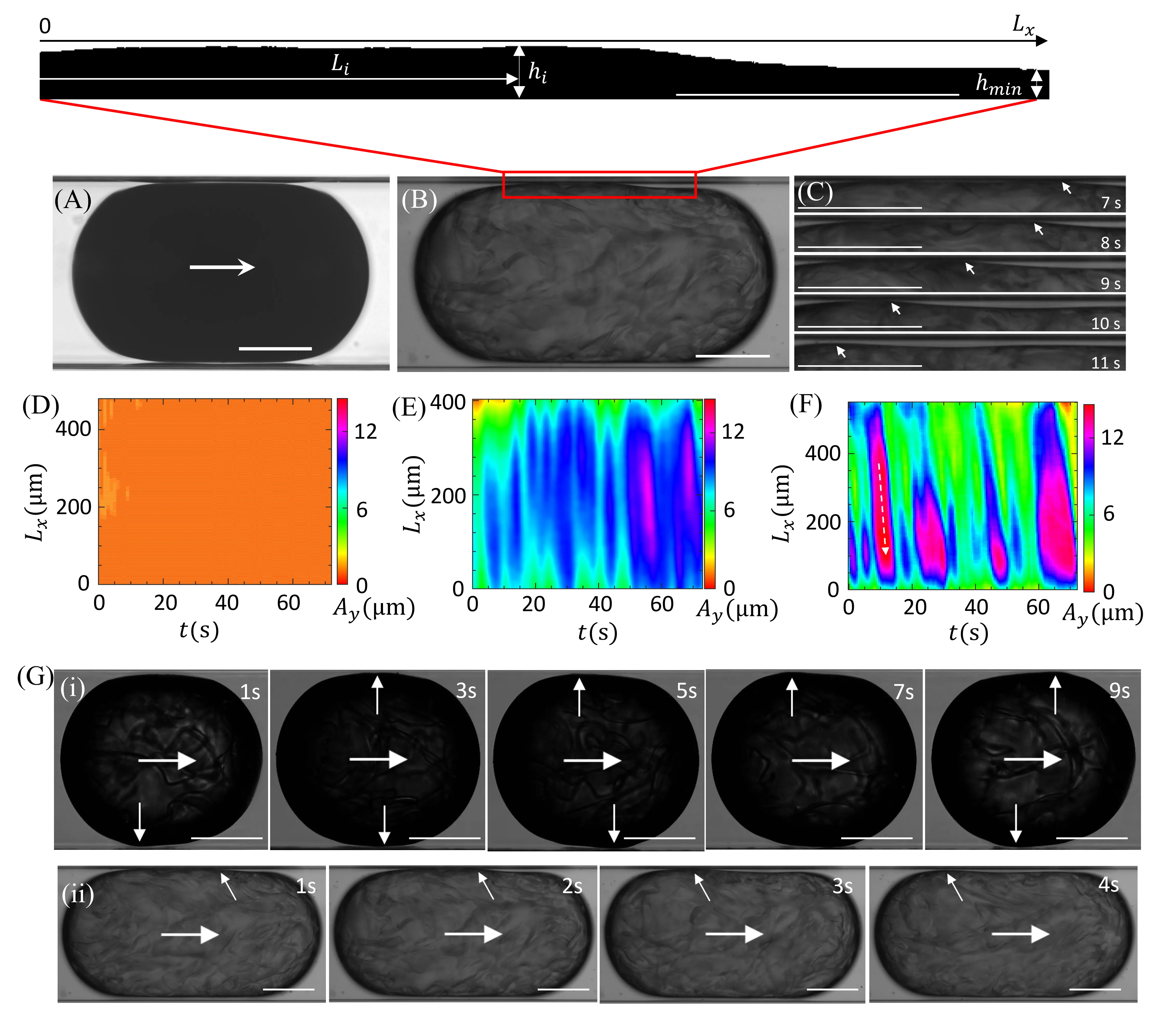
A tiny oil drop squeezes through a water channel narrower than itself. In pure water, it crawls along calmly, like a round bead. But add a little soap to the water, and the drop begins to bend, like a caterpillar.
Researchers observed this behavior by placing drops of a special liquid crystal into water with varying soap concentrations. In a weak solution, the drop keeps its shape; in a more concentrated one, rhythmic waves appear on its surface. Interestingly, the speed of motion barely changes: both the 'calm' and the 'wriggling' drop first slow down in the narrow spot, then settle into a constant speed. The key is the thin film of water between the drop and the channel wall.
The more soap, the thicker this film, and the easier it is for the drop to bend. The scientists also noticed that depending on the channel width, waves on the drop can travel from two sides or just one, as if the drop chooses which side is more convenient to push off from. Calculations showed that these waves are driven by an instability known as the Marangoni effect: differences in soap concentration across the drop's surface create forces that deform it.
This mechanism is an example of how living and non-living matter find similar solutions for moving in tight spaces. Microbes, when squeezing through narrow pores, also change their body shape. Understanding such 'dances' of drops could help create microrobots that deliver drugs to the most inaccessible corners of the body.
You can see the Marangoni effect at home: if you drop some alcohol on the surface of water, the liquid will spread away from the spot — due to differences in surface tension.
In science fiction, such self-deforming drops resemble the liquid robots from the movie 'Terminator 2', which can seep through narrow cracks.