How a Cell Makes a Waist express
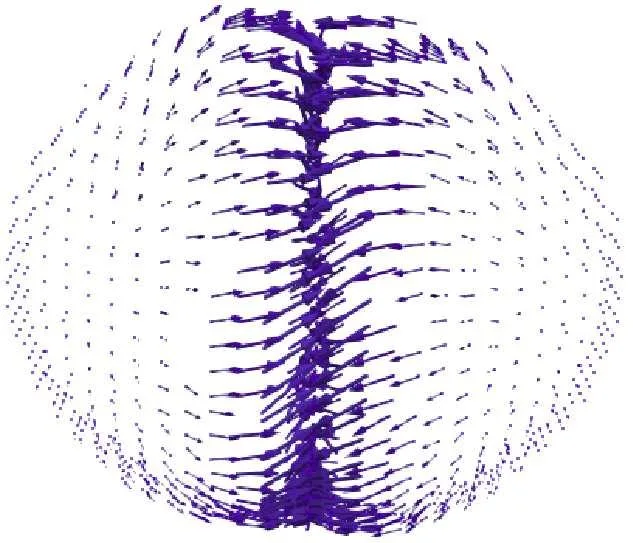
A cell about to divide first marks its waist. Beneath its membrane, in a thin gel of protein filaments, movement begins. The filaments flow like a slow river, and a belt forms in the middle of the cell. This belt tightens more and more until the cell is pinched in half.
Scientists built a computer model of this process. They saw that the ring of filaments forms on its own if the filaments are initially aligned in one direction. Even without an external command. But if the filaments are arranged randomly, no ring forms. So the cell remembers how its filaments were arranged before division.
This result helps explain why cell division sometimes goes wrong. If the filaments are not arranged properly, the ring won't form, and the cell won't be able to divide. And division errors underlie many diseases, including cancer.
The belt that divides a cell is less than a thousandth of a millimeter thick. But it can squeeze the cell with enough force to tear it into two parts.