Tiny black holes as dark matter express
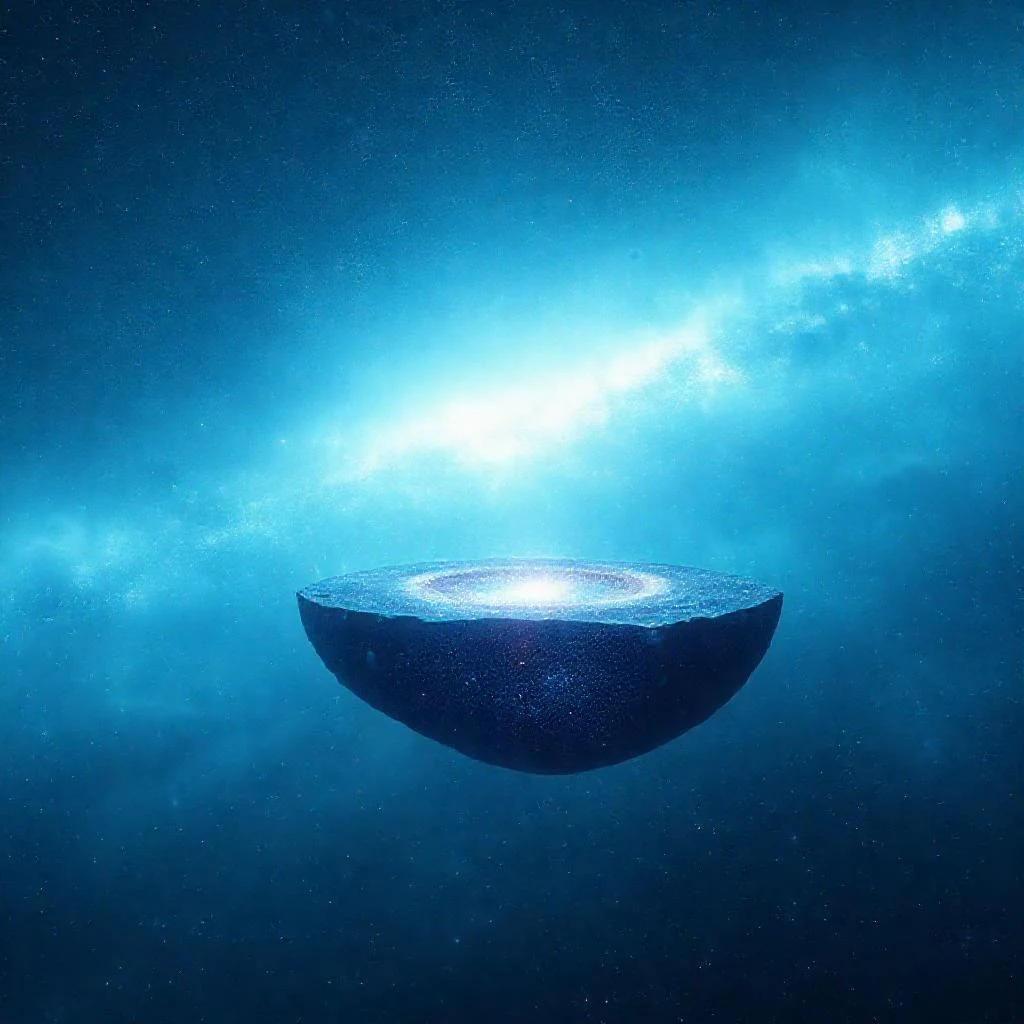
After the Big Bang, the Universe resembled a tightly inflated balloon: pressure prevented matter from clumping together. But hypothetical superheavy particles — sort of ‘heavyweights’ of the microcosm — momentarily made the balloon less stiff. Matter easily clumped, giving birth to black holes with masses from a billion to a billion billion tons. The size of an atomic nucleus, they emit no light, yet their collective gravity governs the motion of stars and galaxies. Calculations show: if such holes make up all dark matter, everything matches observations. The usual model gives too few holes and has been rejected. An unexpected twist: these same tiny ones could have become the seeds of supermassive black holes at the centers of galaxies.
An asteroid-mass black hole is microscopic: passing through Earth, it would leave only a thin tunnel and cause weak tremors. The chance of such an event is extremely small.