How the Void Gave Birth to Matter ✛ ✎ ✦
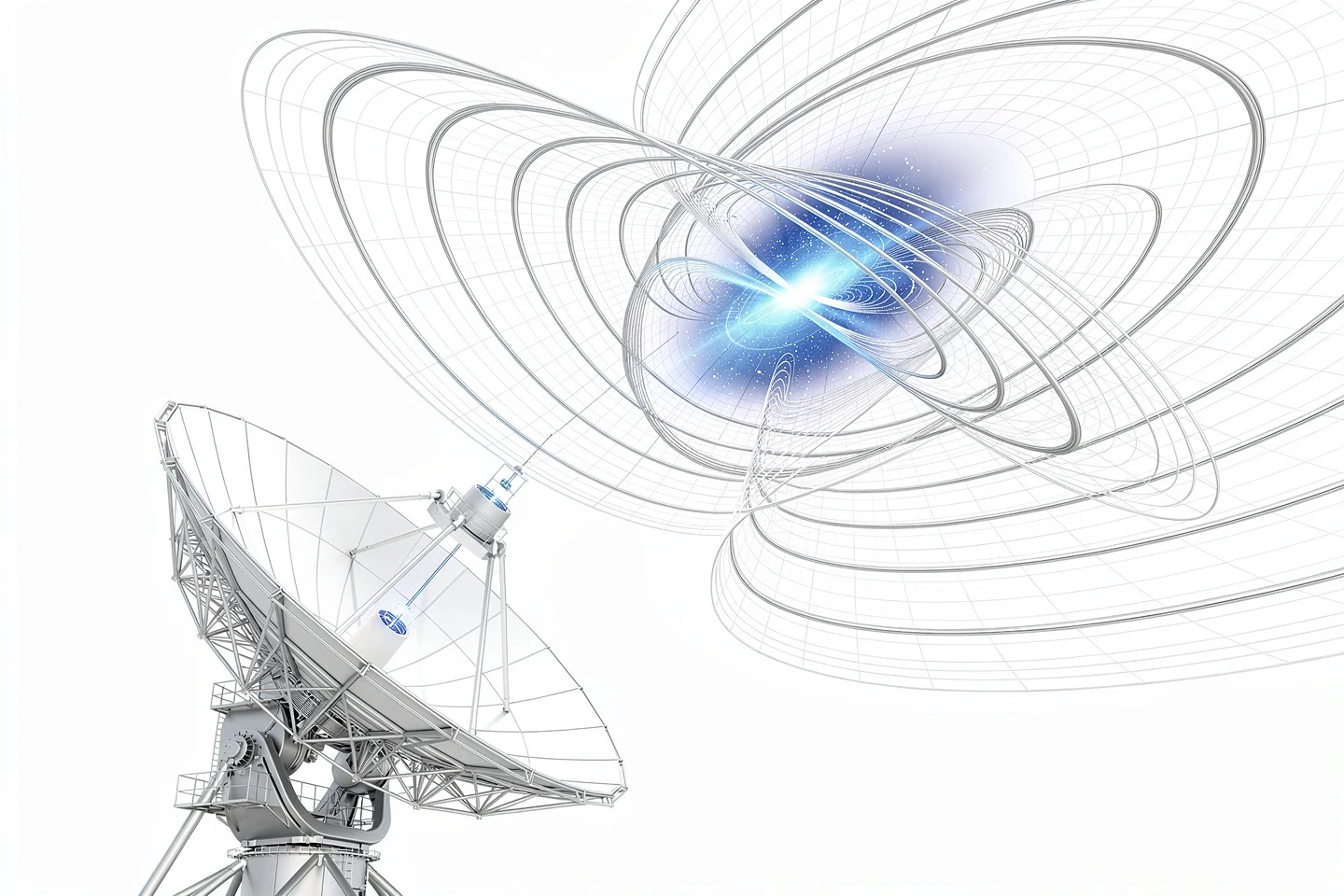
Right after the Big Bang, space began expanding at a furious pace. It was like yanking the edge of a tightly drawn bedsheet — dust motes get tossed into the air. Thus, from the vacuum, heavy neutrinos, almost imperceptible particles, were 'shaken out'. They decayed unevenly: for each speck of antimatter (mirror matter), a slight surplus of ordinary matter appeared. From this minuscule edge grew everything visible.
This inflation (ballooning) was so powerful it jostled the very curved fabric of spacetime, spawning gravitational waves — ripples in the cosmos. Future telescopes, peering into the cosmic microwave background (ancient light), could spot them. That would be direct proof of the picture. The idea of inflation was proposed by Alan Guth, and the nature of gravitational waves was described by Kip Thorne.
To create all matter, a microscopic imbalance was enough: for every billion antiparticles, there was one extra ordinary particle.