Big Mysteries: Survey Reveals Physicists' Disagreements express
Physics often resembles the construction of a giant ship — the Universe. The physicist-engineers have yet to agree on the basic blueprints. The large-scale 'Big Mysteries' survey exposed this: even the nature of black holes (about which Stephen Hawking argued for decades) and the Big Bang remains controversial. Dark matter and dark energy — the invisible scaffolding of the cosmos — are accepted by many, but Vera Rubin, who discovered anomalous galaxy rotation, sparked a discussion that hasn't subsided in half a century. Even spacetime curvature — a kind of structural beam of the edifice — still provokes heated debate.
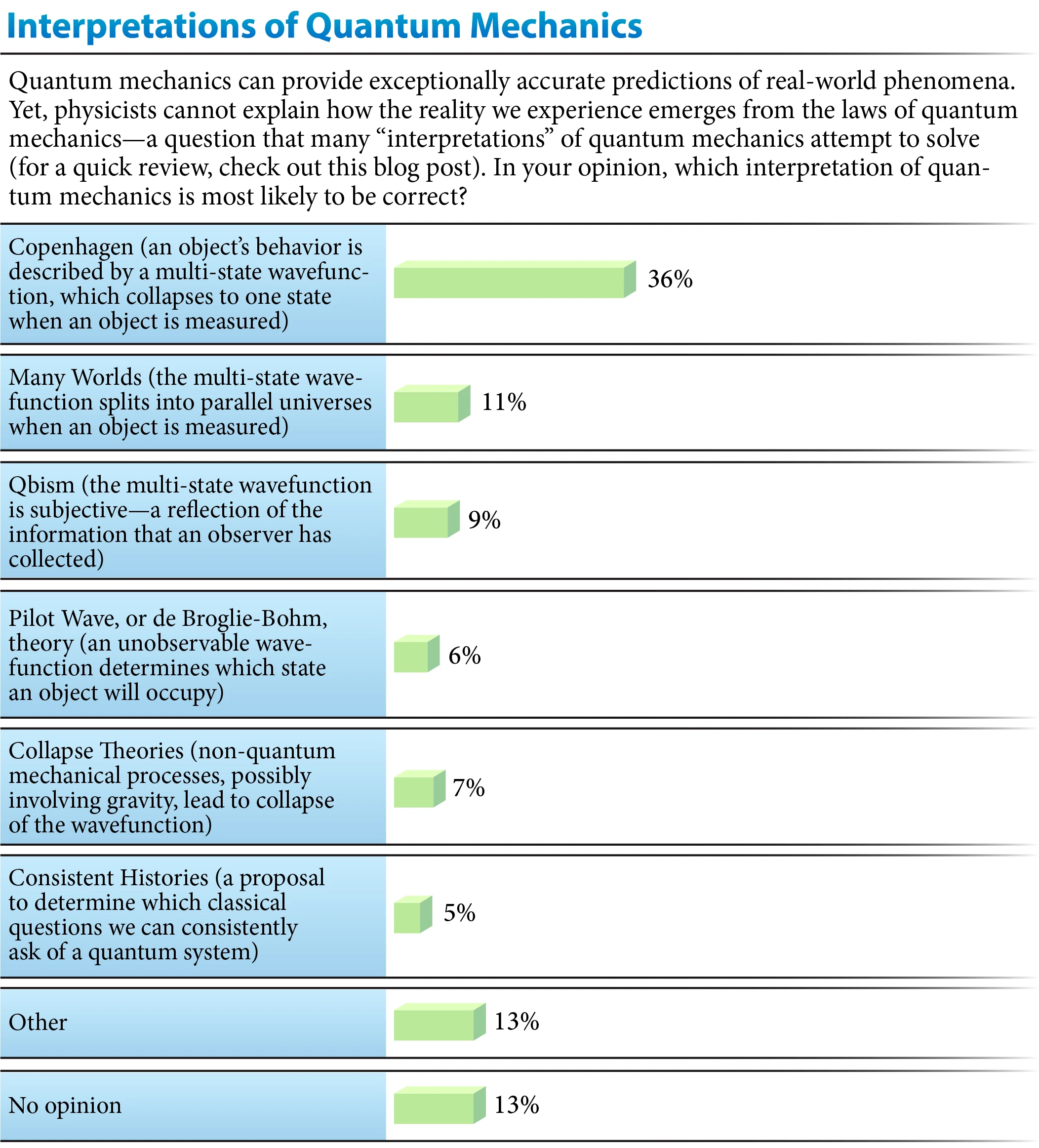
The survey's biggest surprise: less than half of scientists consider quantum mechanics a complete theory. And yet every transistor in your smartphone is an indisputable miracle of it. So it goes: the ship sails, but the builders doubt the properties of water. Science is not a museum of answers but a living argument, where precisely disagreement promises breakthroughs.
According to the survey, less than half of physicists are confident that quantum mechanics is a complete theory, even though all modern electronics is based on it.