How the elongated merger orbit points to where the pair was born ✎ express
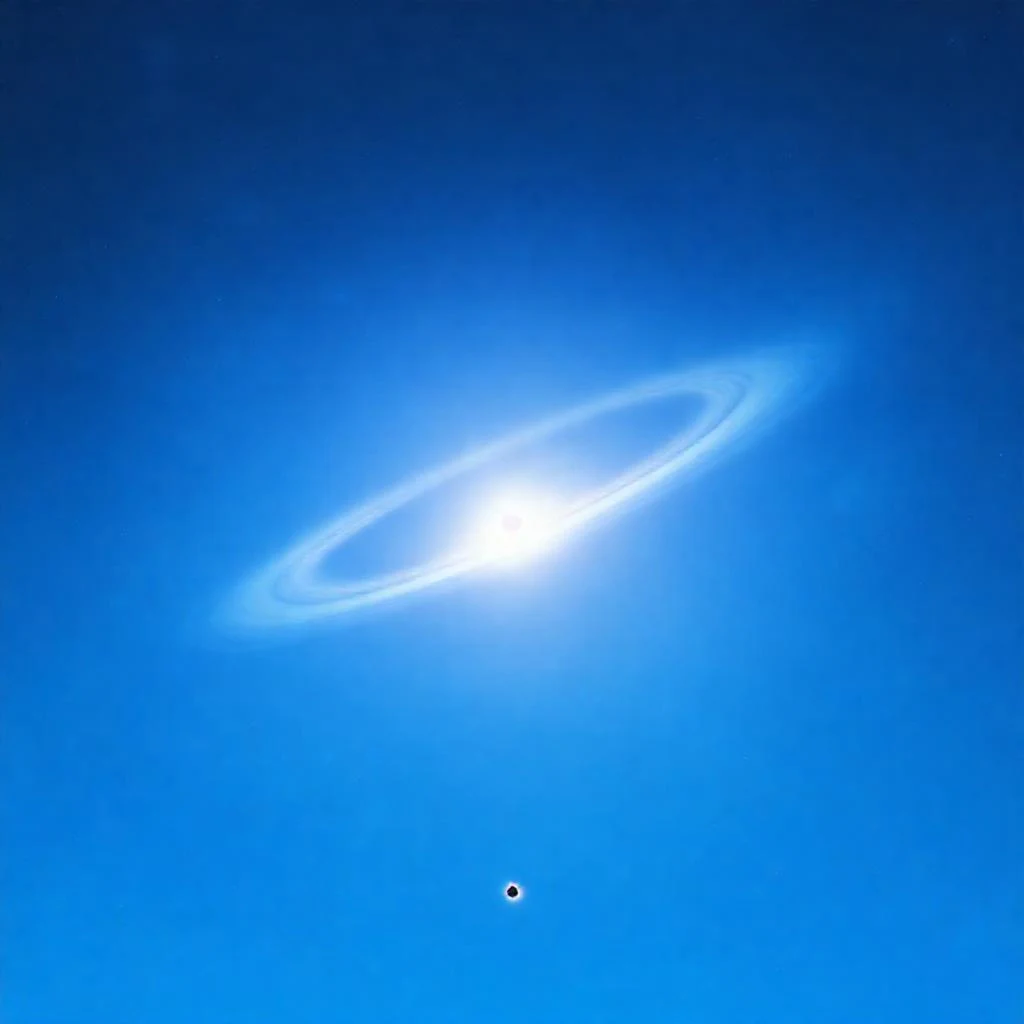
When a neutron star and a black hole merge, they send out gravitational waves — ripples in spacetime that reach Earth. These ripples carry the imprint of their final dance: the orbit before the collision is often elongated, like an ellipse. Astronomers, like forensic scientists, study this 'trace' to reconstruct the crash scene.
The degree of elongation is directly linked to the objects' relative speed. In stellar 'suburbs' — globular clusters — stars wander slowly, so captures happen at low velocities and the orbit stays nearly circular. In galactic centers (nuclear clusters), everything races at breakneck speed — mergers there are fast and orbits highly elongated. So from the shape of the orbit, scientists figure out where the pair lived.
For the merger GW200105, the chance of being born in a nuclear cluster is 71%, in a globular only 29%. A surprising fact: pairs formed in isolation almost always have circular orbits — billions of years turn them into perfect circles. So any elongation immediately betrays that the black hole and neutron star met in the crush of a stellar metropolis.
Even a single elongated gravitational merger orbit is ironclad proof that the pair was born not in emptiness but in a dense stellar metropolis.