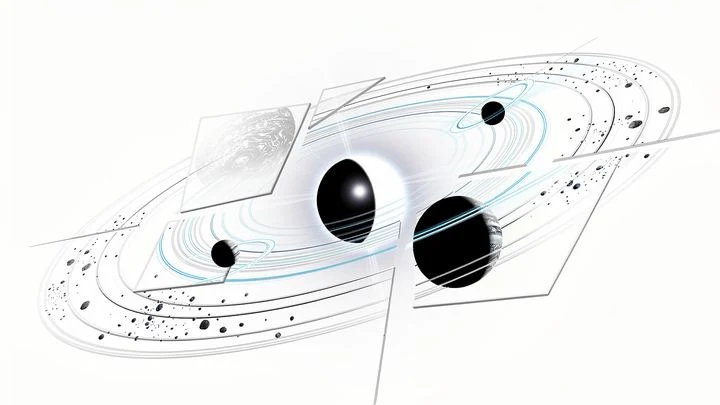
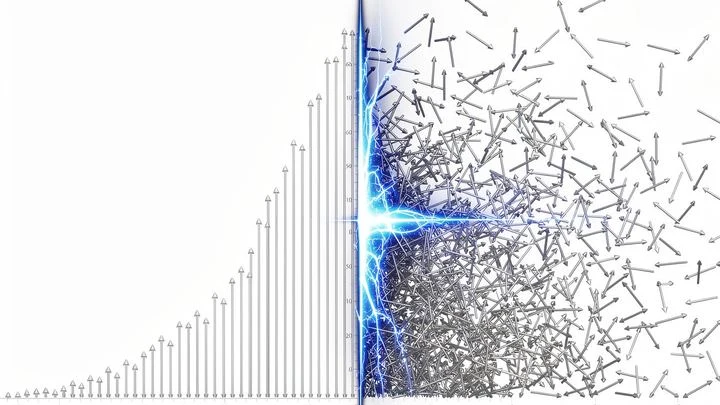
Globular clusters are gravitationally bound systems of tens of thousands to millions of stars, aged 10–13 billion years. Their nearly perfect spherical shape is due to mutual attraction, and the core has an extremely high density of stars. The chemical composition is poor in elements heavier than helium (astronomers call this low metallicity), which indicates their birth in the early Universe.
History
The globular cluster M22 was first discovered by Johann A. Ihle in 1665. Systematic catalogs were compiled by Charles Messier and William Herschel in the 18th century. In the early 20th century, Harlow Shapley, studying the distribution of clusters, proved that the Solar System is located on the periphery of the Galaxy. Later, using Hertzsprung–Russell diagrams, the ages of clusters were determined, confirming cosmological time scales. In the 1990s, the Hubble Space Telescope revealed multiple stellar populations, complicating the picture of their formation.
How it works
The gravitational interaction of stars is described by the law of gravitation, and the statistical properties of the system follow from the virial theorem (twice the average kinetic energy equals the average potential energy). This allows measuring the total mass of the cluster from the velocity dispersion of stars. The tidal forces of the Galaxy strip away outer stars, and internal processes (evaporation of stars from the core and gravitational contraction) lead to slow evolution. Some clusters contain central intermediate-mass black holes or blue straggler stars—the result of mergers.
In practice
These clusters serve as natural laboratories of stellar evolution and beacons for measuring cosmic distances: the variable stars within them act as standard candles.
Fun fact
Some clusters, such as Omega Centauri, may hide a black hole of intermediate mass at their center—a 'missing link' between light and supermassive black holes, the key to understanding black hole growth.
An old stellar ball that has gathered hundreds of thousands of suns has been circling the edge of a dwarf galaxy for billions of years. By all calculations, it should have long ago plunged into the center like a heavy stone into jelly. But the ball holds its ground, and this fact has been nagging astrophysicists for several decades.
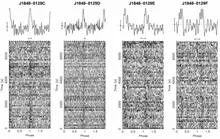
At night in fog, a searchlight works worse than in daylight: tiny droplets scatter the beam, and distant objects drown in the murky haze. Much the same way, radio waves from pulsars get lost in the interstellar medium when there are many free electrons between us and the star.
A ground-based image of a distant galaxy looks like a view through frosted glass: the atmosphere smears details, hiding the internal structure. Astronomers have long wanted to know where exactly star formation shuts off in galaxies, but ground-based telescopes could not resolve the subtle color gradients.
A resident of a bustling city center one day packs a suitcase and moves to a quiet suburb. The same happens to galactic clusters, except instead of a suitcase, they have stars, and instead of a move, they have billions of years of drifting across the disk.
Berkeley 36 is an open cluster, that is, a group of stars born together from a single cloud.
A resident of a bustling city center one day packs a suitcase and moves to a quiet suburb. The same happens to galactic clusters, except instead of a suitcase, they have stars, and instead of a move, they have billions of years of drifting across the disk.
Berkeley 36 is an open cluster, that is, a group of stars born together from a single cloud.
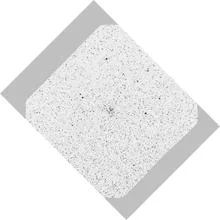
In the stellar family of the Phoenix galaxy, there are five old globular clusters, and the sixth child was long considered a foundling. The object Fornax 6, located just 270 parsecs from the galaxy's center, looked like a random clump of field stars or a compact group of distant galaxies. Astronomers argued over whether it deserved to be called a cluster.
In the stellar family of the Phoenix galaxy, there are five old globular clusters, and the sixth child was long considered a foundling. The object Fornax 6, located just 270 parsecs from the galaxy's center, looked like a random clump of field stars or a compact group of distant galaxies. Astronomers argued over whether it deserved to be called a cluster.
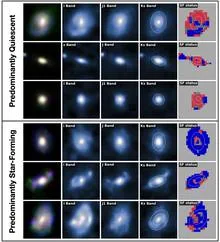
An old city gains new suburbs. In the center, narrow streets where life has nearly stopped, while on the outskirts construction is booming. That is what a spiral galaxy looks like when its core stars have long aged and new stars are still being born in the outer disk.
An old city gains new suburbs. In the center, narrow streets where life has nearly stopped, while on the outskirts construction is booming. That is what a spiral galaxy looks like when its core stars have long aged and new stars are still being born in the outer disk.
Faint galaxies scattered across the Perseus cluster are like ghosts among their bright neighbors. They are so diffuse that distant objects shine through them, and they contain hundreds of times fewer stars than our Milky Way.
Faint galaxies scattered across the Perseus cluster are like ghosts among their bright neighbors. They are so diffuse that distant objects shine through them, and they contain hundreds of times fewer stars than our Milky Way.
The night sky looks smooth, but it's actually clumpy — vast communities of galaxies that bend light from distant objects like lenses. When a short, powerful radio burst goes off somewhere in the universe, its path to an Earth telescope can pass near such a clump.
Stars are like spinning tops: they start fast and gradually slow down. This process acts like an hourglass — the slower a star spins, the older it is. Astronomers use this relationship to estimate stellar ages, but they need reference groups of stars with known ages.
Stars are like spinning tops: they start fast and gradually slow down. This process acts like an hourglass — the slower a star spins, the older it is. Astronomers use this relationship to estimate stellar ages, but they need reference groups of stars with known ages.
Galaxy NGC 5584 is a vast stellar city, where some neighborhoods are just being built while others are already marked by aging giants. To see both, astronomers used two very different flashlights. The ultraviolet telescope Swift lit up hot blue patches — stellar nurseries where massive stars have recently ignited.
A red giant in a globular cluster is a star in retirement. It has burned up the hydrogen in its core and now lives off fusion in a thin shell around a helium ash core.
A red giant in a globular cluster is a star in retirement. It has burned up the hydrogen in its core and now lives off fusion in a thin shell around a helium ash core.
A globular cluster, a dense swarm of hundreds of thousands of stars, plows through a galaxy like a bullet through water. In ordinary dark matter (the invisible mass that holds galaxies together), it should quickly lose speed due to dynamical friction.
A gas disk with a mass of four hundred thousand suns encircles the black hole at the center of the Milky Way. Its gravity works like a gravitational rudder: slowly but inexorably turning the orbits of binary stars, driving them into the region where tidal forces tear the pair apart.
In the spiral galaxy Fireworks Galaxy — 6410 stellar nurseries. That's how many regions where massive stars are being born right now were identified by an algorithm on old ultraviolet radiation images from the Edwin Hubble. These aren't just blobs in a picture — each has a clear boundary, like a country on a contour map.
1799 kilometers per second — that's the speed at which star S5-HVS1 is permanently leaving the galaxy. 4.8 million years ago, it was ejected from the center of the Milky Way during a close encounter with the supermassive black hole Sgr A*.
A young star cluster resembles an orchestra before a concert: each instrument tunes up in its own way, and the overall hum seems like chaos. But if you listen closely, you can pick out individual notes.
The temperature at the center of a galaxy cluster reaches a hundred million degrees. These largest gravitationally bound systems are natural laboratories where nature hides 85% of its mass in invisible dark matter.
A hundred thousand stars in the dense core of a globular cluster move like steel balls in a giant pinball machine. Each 'bump' — a gravitational encounter between a binary system and a single star — triggers a cascade of unpredictable events.
For thirteen billion years, light battled through cosmic emptiness. It bent around massive galaxy clusters that, as Einstein predicted, acted as giant lenses — amplifying and distorting the distant glow. In 2023, the NIRSpec instrument on the James Webb Space Telescope captured this light and spread it into spectra.
In May 2020, the LIGO and Virgo detectors picked up a gravitational-wave burst known as GW200105. Among the many similar gravitational waves recorded, this one stood out for an oddity: the orbit of the colliding neutron star and black hole was not a perfect circle, but a stretched ellipse.
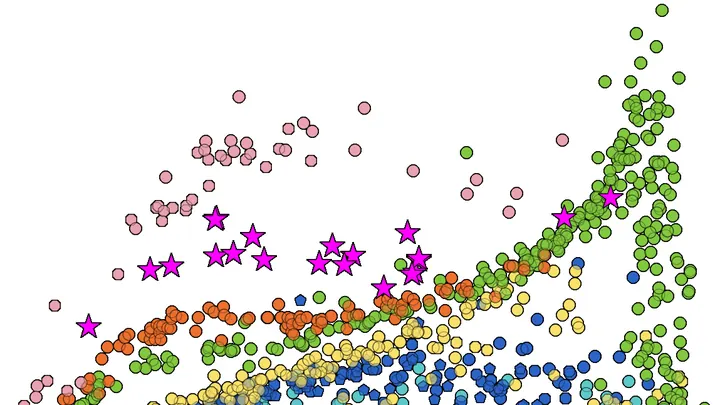
A star's age is the key to the galaxy's history. But prying that key from nature is no simple task: unlike a tree, a star doesn't grow annual rings. Yet, its atmosphere holds a chemical code — the ratio of elements that slowly shifted as generations of stars died and new ones were born.
In 2016, astronomers saw something incredible: a distant star, named Icarus, flared up for several weeks, crossing the abyss of space. Gravitational lensing, an effect predicted by Einstein, had kicked in: a massive object bends spacetime and focuses light like a giant magnifying glass.
The universe rewrites its history again and again. Where ordinary astronomy sees only a point, a black hole, gravitational waves peel back thin layers of the past, like an ancient palimpsest. The idea that black holes can grow by devouring each other, and their offspring can enter new unions, has been discussed by astrophysicists for half a century.
Imagine an ancient manuscript, where a new story is written over an old text. Over time, the upper layer wears thin, and lines of the past show through. That’s exactly how globular clusters, the oldest stellar systems in the Universe, are structured, like a palimpsest.
In the heart of a dense star cluster, a true forge reigns: here stars, like glowing blanks, collide and merge under gravity, and these mergers are not a catastrophe but an opportunity. Each strike of the stellar hammer transfers spin to the future black hole.
Imagine an ancient manuscript, where a new story is written over an old text. Over time, the upper layer wears thin, and lines of the past show through. That’s exactly how globular clusters, the oldest stellar systems in the Universe, are structured, like a palimpsest.
In the young Universe, about ten billion years ago, galaxies resembled endless fields after a thunderstorm: everywhere, giant — thousands of light-years across — clumps of star formation were boiling up, where young stars were born with unbridled energy. Today, these patches are an almost vanished species: in nearby galaxies, raucous hotbeds are rare.
In deep space, 95 parsecs from Earth, nature is assembling a planetary clock. The model HD 114082 is a prototype, only 15 million years old. Two massive pendulums — exoplanets b and c — are already swinging with periods of 225 and 314 days, but the whole mechanism is still covered in the construction dust of a debris disk.
The mergers of black holes, first predicted by Karl Schwarzschild, are the main source of gravitational waves picked up by LIGO detectors. Over the years, 259 events have accumulated, each one an encrypted birth story of a pair. But is there a hidden system in this data?
At the center of a tiny galaxy lies a dense clump of stars and dark matter. This clump, called a soliton, is not frozen in place: it quivers and oscillates like jelly on a plate.
An ordinary black hole is surrounded by a thin photon sphere — a place where light can loop around before falling in or escaping. In the new work, this region has puffed up into a whole layer packed with massless particles that zip around at nearly the speed of light and don't press against the walls.
Imagine a forest planted in a single day. At first glance, all trees look alike, but their cross sections tell different stories: some grew on clean soil, others on the ashes of ancient fires.
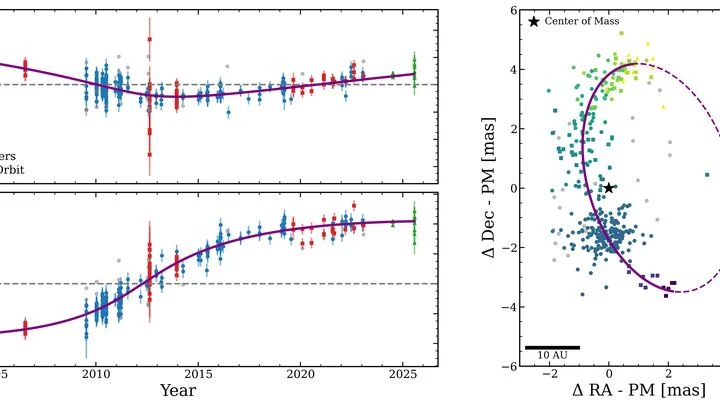
For 23 years, Hubble and James Webb have peered into the heart of Omega Centauri, a globular cluster where millions of stars crowd into a space just 150 light-years across. In this stellar beehive, the motion of the stars betrayed an invisible partner: a main-sequence star (one that has not yet left the main evolutionary branch) seemed to be tugged in a dance with an unseen weight.
Waves sort pebbles on a sandy beach. Small stones lie close together, nearly identical in size. Farther from shore, there's a scatter of larger and more varied ones. And right at the waterline, where the surf is strongest, the biggest and most rounded fragments pile up. Nature sorts black holes by mass in much the same way when they merge in pairs.