How to Spot Hidden Magnetism by Symmetry express
Two teams pull a rope with equal force in opposite directions — the rope doesn't move, and the net force is zero. That's how many antiferromagnets behave: the magnetic moments of atoms are aligned oppositely and cancel each other out. But sometimes, even with zero net magnetism, electrons inside feel a difference, as if one end of the rope were made of silk and the other of sandpaper. That's altermagnetism.
Previously, to recognize such a state among hundreds of antiferromagnets, you had to wade through the thicket of mathematical symmetry — groups and subgroups. The authors of the new work have reduced the problem to a single question: is there an operation in the crystal that swaps the two magnetic sublattices? If no such operation exists — electrons with different spins get different energy "tickets," and the material becomes an altermagnet.
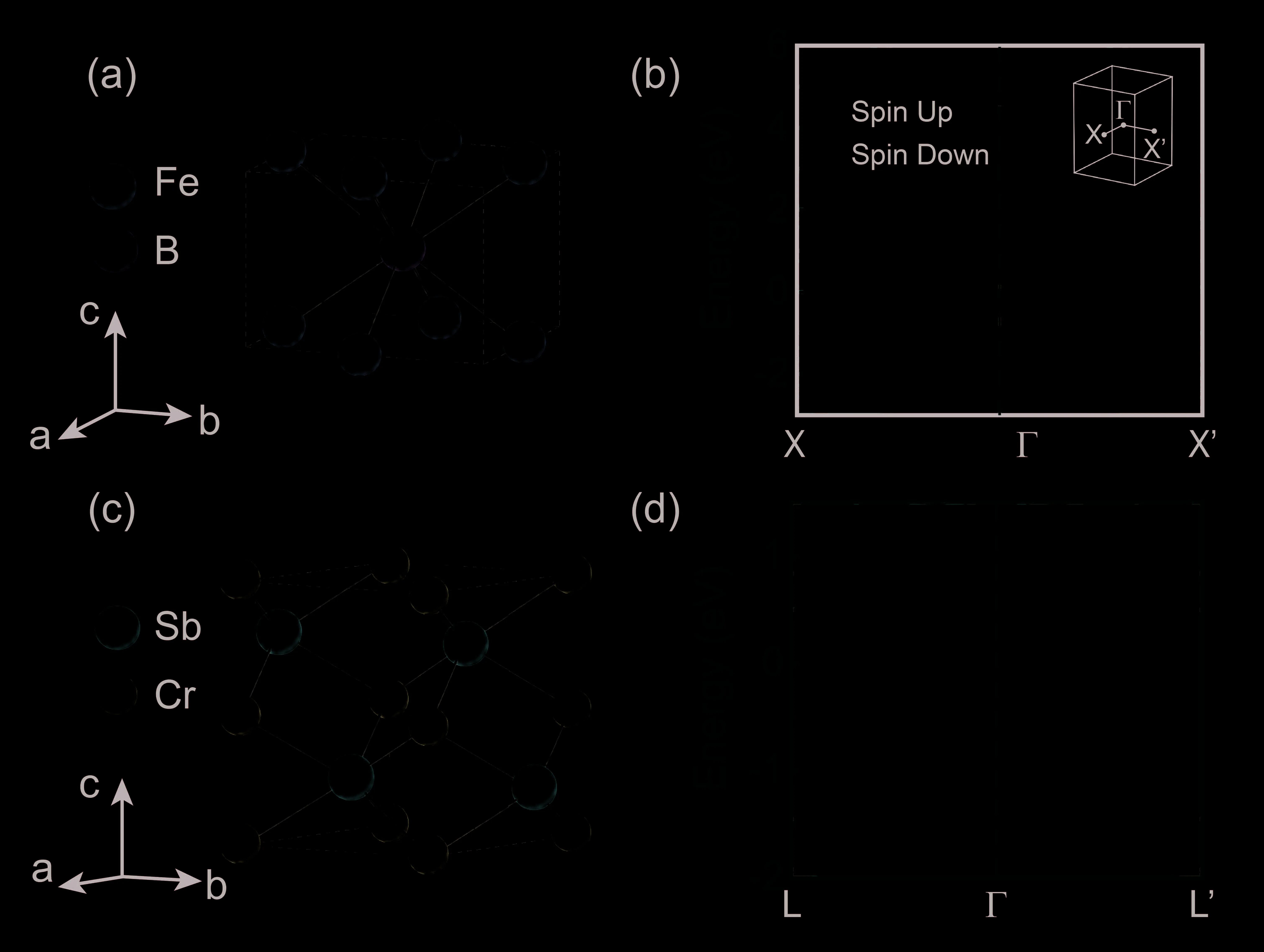
Tests on real materials, both centrosymmetric and those without an inversion center, confirmed the rule. The method works for crystals, quasicrystals, and low-dimensional systems alike. Now, instead of cumbersome calculations, a quick glance at symmetry is enough to tell whether a substance harbors hidden spin splitting. And as in a tug-of-war where the external force is zero but the ends feel different to the touch — an altermagnet looks nonmagnetic from the outside, yet carries hidden order within.
Altermagnets can conduct spin current without losses, like superconductors for electricity, but for magnetic information.
In Neal Stephenson's novel "The Diamond Age," nanomachines use quantum effects for computation — altermagnets could be the basis for such devices.