Dark matter tugs at satellites like invisible strings express
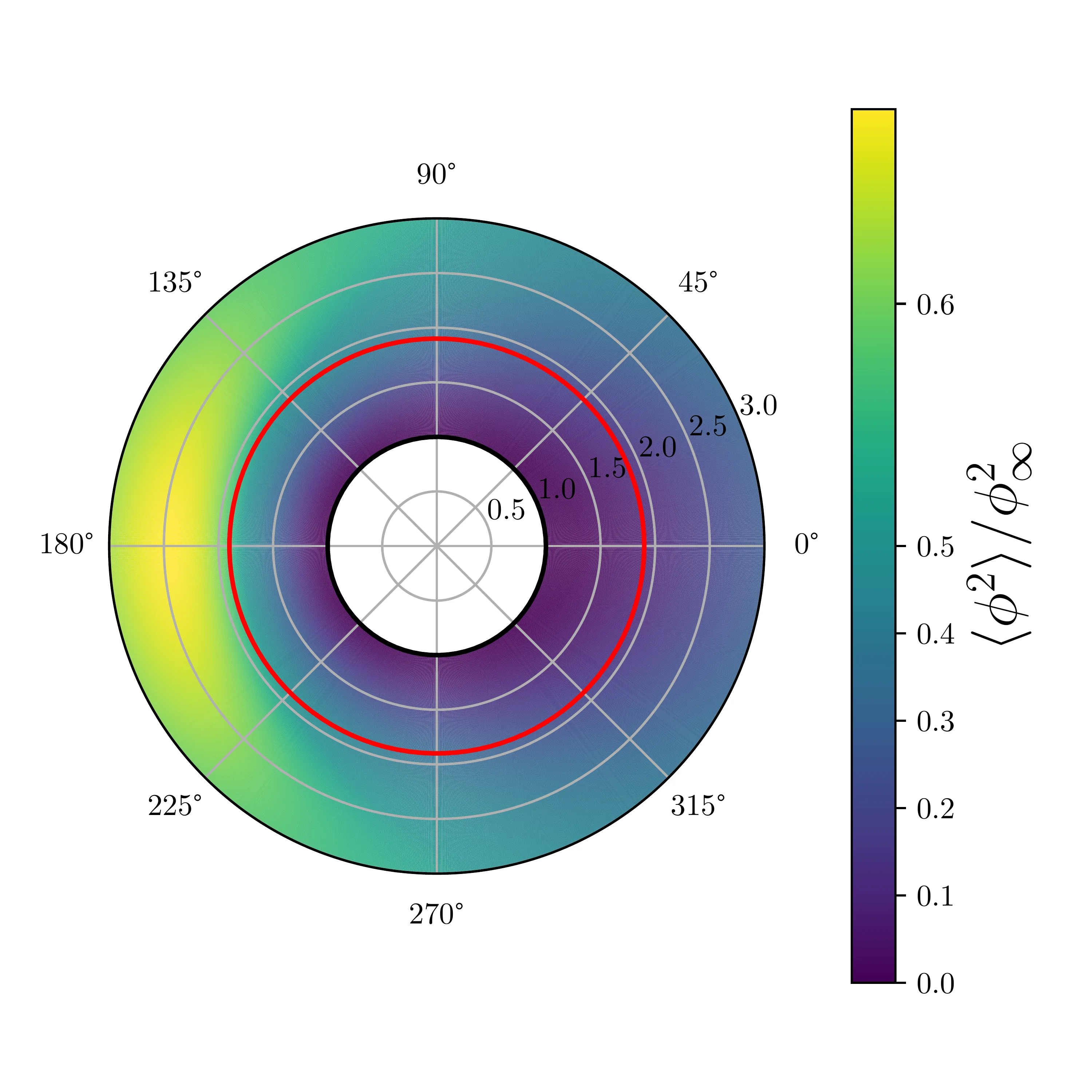
A stone thrown into water leaves ripples. A satellite orbiting Earth also leaves a trace — not on water, but in the laws of physics. Its orbit is not a frozen line: it slowly rotates, like the hand of a giant clock. Part of this rotation can be explained by ordinary gravity, but there are growing hints that something else is at play — something invisible and omnipresent.
This "something" is dark matter, a mysterious substance that neither emits nor reflects light, yet pulls on stars and galaxies with its mass. If it consists of ultralight particles (billions of times lighter than an electron), then near a massive body like Earth, these particles cluster together, like midges around a lamp. As they cluster, they alter the strength of gravity, as if a tiny extra spring were added to ordinary gravity. This spring is what makes the satellite's orbit rotate slightly faster or slower.
The authors of the study tested this idea using the real satellite LAGEOS II — a dense sphere about the size of a large watermelon, launched in 1992 specifically for gravity measurements. Its orbit is known to within centimeters. They found that if ultralight dark matter exists, its influence should be visible in how the orbit rotates (what scientists call perihelion shift).
The most interesting part is that this method works where ground-based experiments fail. Ultra-precise scales in laboratories and atomic clocks on satellites cannot detect the influence of these particles when they interact very strongly with ordinary matter. But LAGEOS II's orbit can. It's like trying to hear a whisper in a noisy room: some instruments have blocked ears, but the satellite's ears are wide open.
Thus, by watching the slow dance of a satellite, we can probe the properties of something invisible to any telescope. And if the orbit's rotation turns out to be slightly different from what ordinary physics predicts: that might just be the long-awaited hello from dark matter.
The LAGEOS satellites are among the most "passive" spacecraft: they have no electronics, no engines, and not even solar panels. They are simply brass spheres covered in reflectors, so that laser beams from Earth can precisely measure the distance to them.
In the novel "Roadside Picnic" by the Strugatsky brothers, alien artifacts subtly alter the laws of physics around them — much like ultralight dark matter, which can slightly tweak gravity near Earth.