How a Digital Twin Saves a Brain in Minutes express
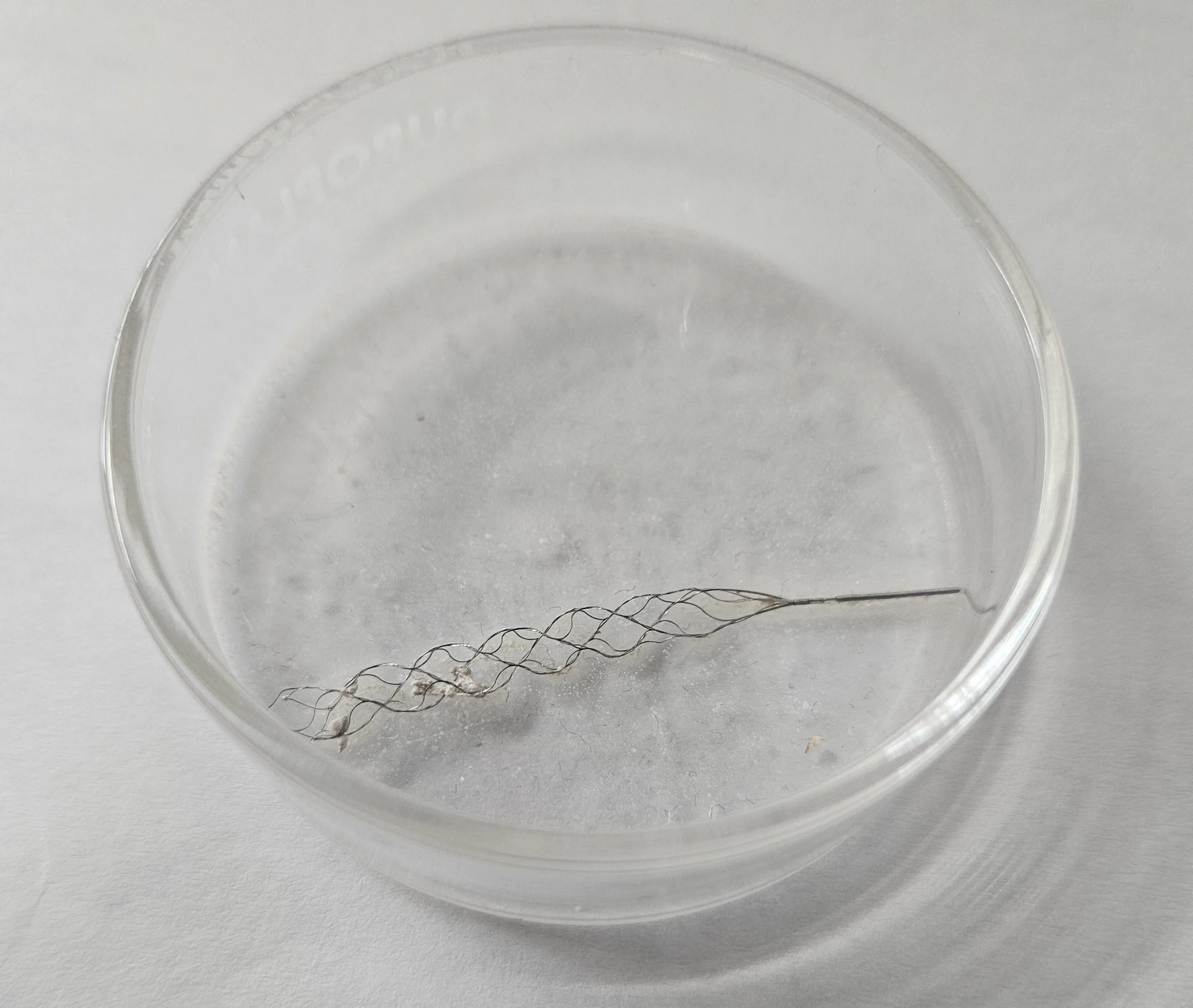
A plumber clears a clog in a narrow, winding pipe — by feel, without seeing inside. That's roughly how a surgeon feels during mechanical thrombectomy, the operation to remove a blood clot from a brain vessel. Time is short, and every move can either save a life or damage the vessel wall.
Physical computer simulations could give doctors X-ray vision. They calculate how a soft aspiration tube will navigate a living vessel, and how the clot will behave under suction. But these calculations are like cooking dinner using molecular physics: accurate, yet unbearably slow. By the time a supercomputer finishes one branch of the vessel, precious time is gone.
The authors decided to train fast digital twins — neural networks that learn from examples of completed simulations and then provide predictions almost instantly. They took three different models and tested them on two scenarios: a simple straight tube and a vessel with a bend. At each step, the network had to predict where the clot would move and how the fluid flow would change.
The result is encouraging: on simple cases, the neural networks sped up calculations by tens of times and made barely noticeable errors. But when the geometry was made more complex, adding twists like a real vessel, the models started to "go crazy" when predicting more than a few steps. The error accumulated, and the virtual clot flew off in the wrong direction. It's like a navigator who, looking at a map, steers the ship accurately for the first hundred meters, then suddenly heads straight for the rocks.
Still, this is not a failure but an important lesson. The study showed that fast digital assistants are possible, but they need special training for long and winding routes. Perhaps future versions of these networks will become reliable advisors in the operating room: they could play out dozens of intervention scenarios in seconds and suggest the safest path for the surgeon. And then the plumber will finally see inside the pipe.
Modern aspiration catheters for removing clots are so thin and flexible that they can travel through vessels from the groin to the brain, and their inner lumen is comparable to a drinking straw.
In the series 'Altered Carbon,' doctors use instant holographic projections of internal organs for surgery — our neural network simulations take a first step toward such real-time visualization.