Long Carbon Chain Found Around a Young Star ✛ ✎ ✦
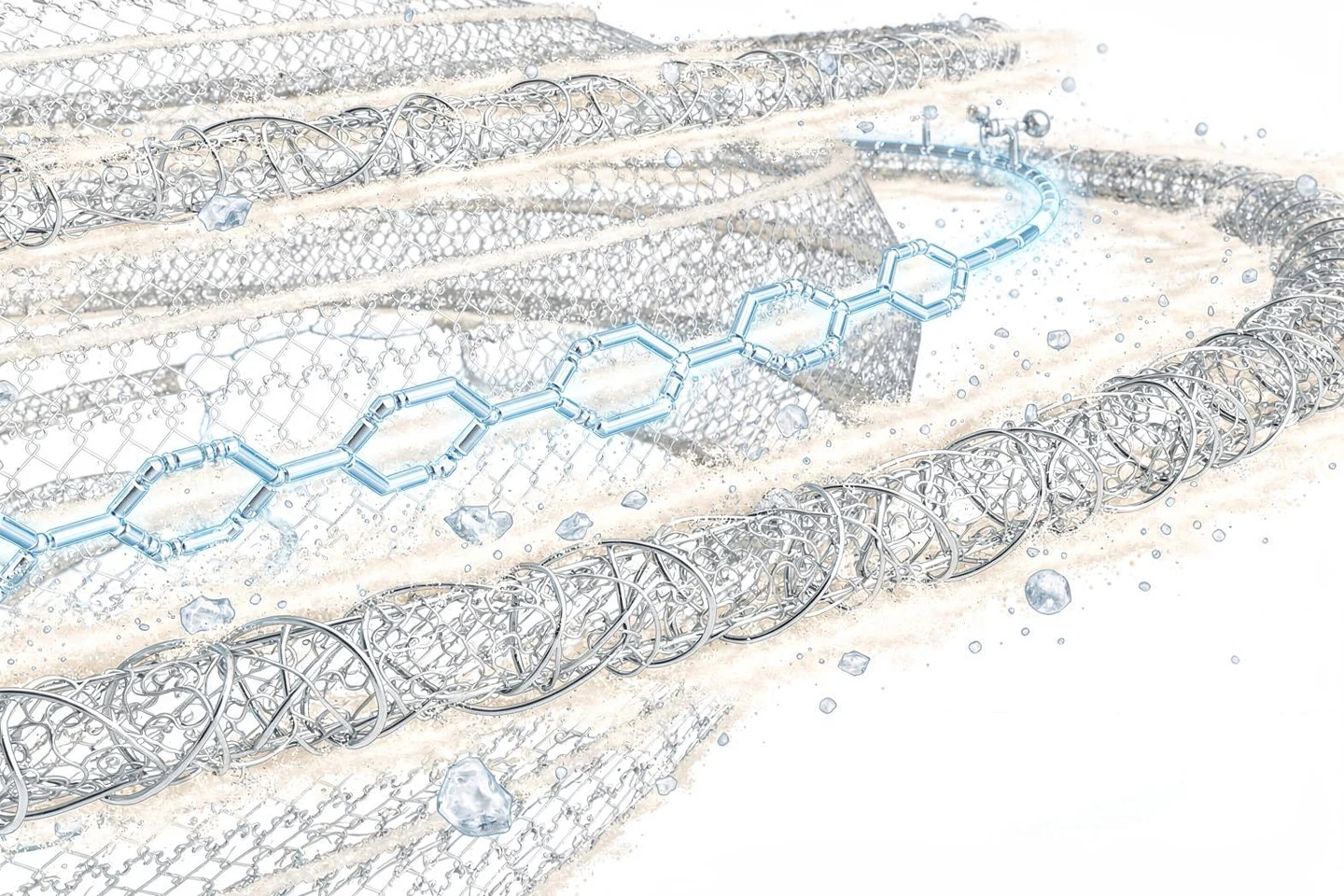
The HC5N molecule resembles a thread with five carbon beads and a nitrogen clasp. It was spotted by ALMA radio telescopes in a cloud of gas and cosmic dust around the star TW Hydrae (200 light-years away). Scientists broke down the disk’s faint radio emission by frequency (much like splitting light into colors, but for radio waves) and found a pattern, like a fingerprint of the molecule. The signal was faint, but they amplified it by combining data from many antennas. These carbon chains, like beads on a string, stand out in the radio band thanks to their elongated shape.
Previously, such long chains were only found in icy interstellar clouds. Now they’ve been detected in warm disks where planets around other stars are born. This proves that complex organics survive in the cradles of worlds. In TW Hydrae’s disk, we’ve already seen water, ammonia, and an abundance of carbon along with hydrogen and oxygen — ingredients for a future exoplanet. But here’s the kicker: in cold clouds, chains with 11 atoms (HC11N) have been found. It’s possible that such giants also lurk in disks, the future building blocks of planetary atmospheres.
The longest known chain of this type, HC11N with 11 carbon atoms, hides in the cold cloud TMC-1. Astronomers suspect that similar giants might also be lurking in disks around stars, waiting to be discovered.