Ammonia is a pungent gas that smells of 'sal ammoniac' in everyday life. In space, complex molecules are built from it, and on Earth it is needed for fertilizers. Its molecule resembles a pyramid of nitrogen with three hydrogens on top.
History
Although ammonia was known to the ancient Egyptians in the form of sal ammoniac (NH₄Cl) from camel dung, gaseous ammonia was first isolated by Joseph Priestley in 1774, who called it 'alkaline air'. Its composition was determined by Claude Berthollet in 1785. In astrophysics, the first reliable detection of interstellar ammonia was made in 1968 by the group of Cheung and Welch via the inversion transition at 23.7 GHz in the direction of the Galactic center. This discovery confirmed the existence of dense molecular clouds. The spectroscopic parameters of ammonia were later refined in laboratory experiments.
How it works
Ammonia exhibits the quantum effect of inversion—tunneling of the nitrogenatom through the plane of the three hydrogens. The potential curve of the molecule has two minima separated by a barrier of ~2020 cm⁻¹. The tunneling splitting frequency of the ground vibrational state is 23.7 GHz (1.26 cm), which is used in astronomical observations. Inversion transitions are sensitive to gas temperature and density, making ammonia a thermometer for molecular clouds. In the interstellar medium, ammonia is formed mainly on the surface of dust grains by sequential hydrogenation of nitrogen. In planetary atmospheres, it participates in cycles, forming clouds (on Jupiter and Saturn) and contributing to coloration. Symmetric and asymmetric bending modes lie in the infrared region (950–1100 cm⁻¹). For astrophysics, rotational and inversion-rotational transitions in the microwave range are important. Spectroscopically, ammonia is described by quantum numbers J, K, where K is the projection of the angular momentum on the symmetry axis.
Fun fact
In Jupiter's clouds, ammonia creates brown and white bands.
A bacterium hit with a dose of ampicillin behaves like a runner pushed to the limit: first it gasps out acid, then falls out of rhythm. Scientists measured this breakdown with sensors thinner than a human hair: they detect pH changes right at the bacterial surface.
Ampicillin doesn't just break the bacterial wall.
An extra electron in a molecule is like a passenger barely hanging onto the step of a departing train. Such a 'passenger' turns the particle into an anion — a negative ion. Studying it is tough: the bond is weak, the electron cloud is diffuse, and any jolt can knock the electron off.
The era of cosmic noon is a time when the Universe was experiencing its stormy youth. Three billion years after the Big Bang, galaxies were giving birth to stars at a frantic pace, and supermassive black holes were growing in their centers.
Titan is a cold world with methane lakes and a dense orange atmosphere. But beneath the icy crust, warm puddles may hide, formed after meteorite impacts. In such a puddle, like a chemical flask the size of Selk Crater, simple gases from the air, hydrogen cyanide and acetylene, mix.
The nose is an amazing instrument. A single coffee molecule entering a nostril can awaken a memory of a morning kitchen. Another, nearly identical in shape, smells like rotten eggs.
A chemical detective searches for life on other planets. Its tool is a mass spectrometer that identifies molecules by weight (the same device earthly forensic scientists use to analyze clues).
In a jeweler's workshop, gold is never mixed with ruthenium: one is soft and shiny, the other refractory and brittle. But at the nanometer scale, these metals merge into a single alloy that, when heated, begins to separate like oil and water in a cooling broth.
Cometary ice slams into the young Earth. The pressure at the impact point is like stacking six aircraft carriers on your thumbnail. In the lab, such conditions are reproduced by squeezing a tiny sample between two rotating anvils.
This time, adenosine monophosphate — one of the letters of future RNA — was placed under the anvils.
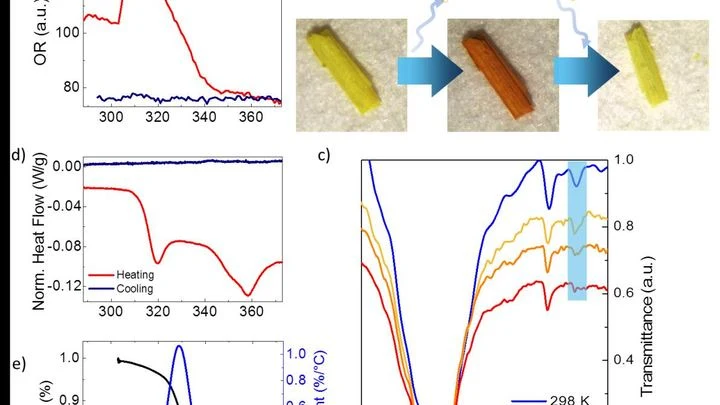
In the air of factory floors and laboratories, invisible solvent molecules drift. One of them, acetonitrile, has a faint smell, but at high concentrations it can harm health. Typical sensors for it are bulky and expensive, but here we have a thin crystalline film that responds on its own to the presence of vapor.
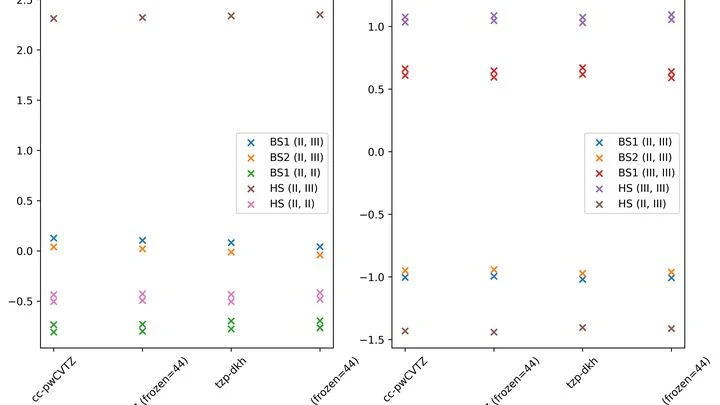
In every handful of fertile soil, there are bacteria that do something no factory can: they take nitrogen straight from the air and turn it into fertilizer. The secret lies in the enzyme nitrogenase, and its working core, a cluster of iron and molybdenum atoms, looks like a tiny factory floor.
Chemists have long tried to understand how this factory works from the inside.
When countless asteroids pummeled the young Earth, they tore chunks from its mantle. These fragments spiraled in a cosmic disk around the planet and, like a snowball in a blizzard, fused into the Moon.