Popular

Hearing Precision: How to Predict the Capabilities of Quantum Sensors from the Sound of a Kettle ⚡ экспресс

Original: "Machine-Learning Prediction of Quantum Fisher Information from Collective Spin and Spectral Features"
arXiv:2606.02986 · 2026-06-02 · CC BY 4.0 · ⏱ 1 min · Quantum Physics
Machine learning enables quick estimation of a quantum sensor's maximum precision from a few simple measurements.
Abstract

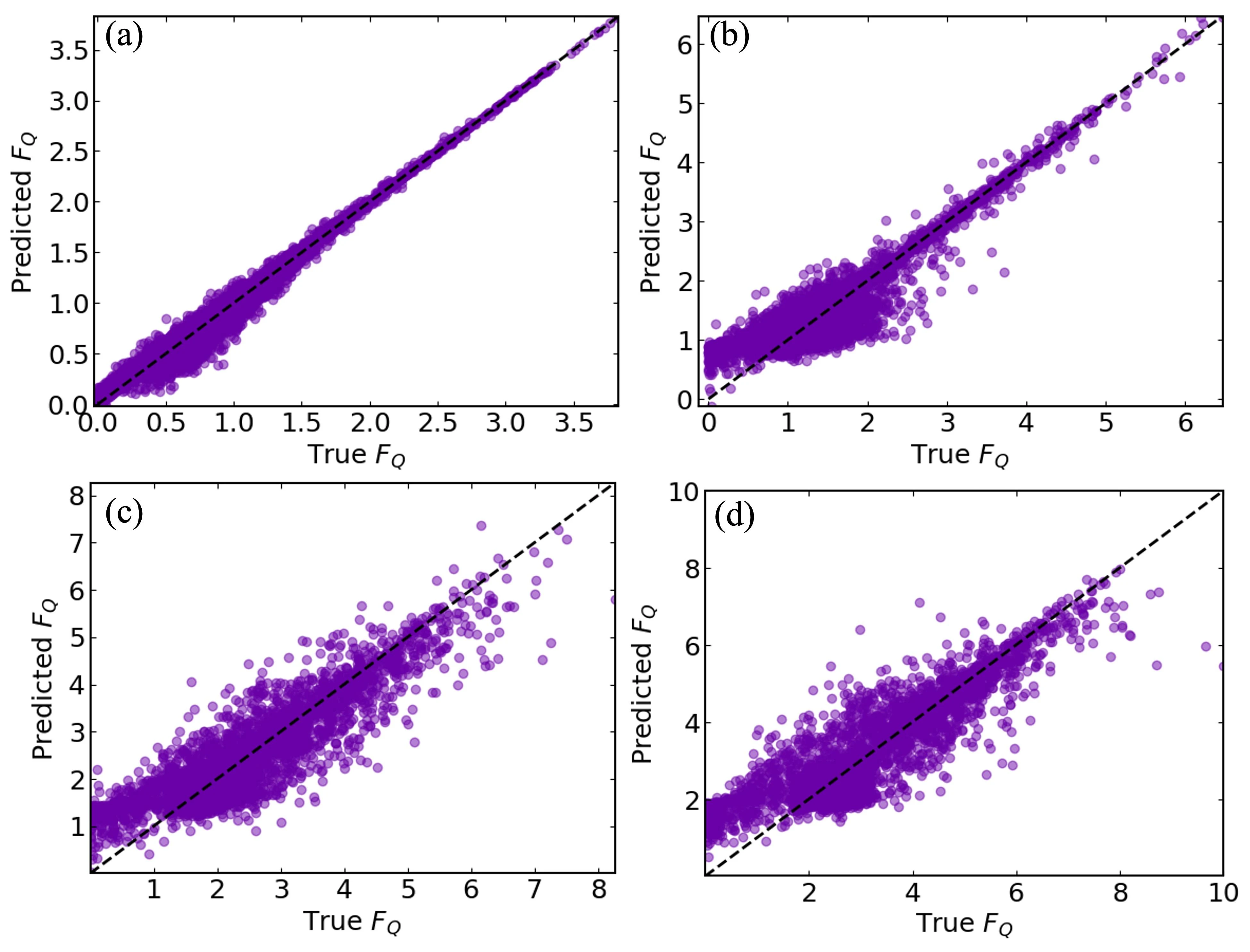
Quantum Fisher Information (QFI) sets the precision limit for quantum measurements but requires a complete description of the system's state. Using Support Vector Regression (SVR), the authors showed that QFI can be accurately predicted from limited experimental data: collective covariances and low-order spectral moments. As the system grows, simple collective spin moments are no longer enough—correlations play a key role. It's like estimating engine power from a few parameters without a full teardown. The result is important for creating sensitive quantum sensors without labor-intensive tomography.

Links in the knowledge graph 1

📄 Showing the "Simple" version — "Popular" is not ready yet. Add it to favorites to help prioritize it.

A boiling kettle with the lid on doesn’t show the bubbling, but the sound and vibration betray the intensity of the water boiling. Quantum systems are similar: their ultimate sensitivity — the precision with which they detect a magnetic field or a gravitational wave — used to be calculated by reconstructing all properties (tomography). That's like making an inventory of every drop. The new approach uses machine learning to predict the key measure (quantum Fisher information, QFI) from just a couple of simple measurements. The key lies in the mutual correlations of particles — entanglement, for the study of which John Clauser and Anton Zeilinger won the Nobel Prize — and low-frequency modes in the energy spectrum.

The main information comes not from sharp spikes, but from the low hum — just as the low drone of a kettle tells you about the heating power more reliably than the gurgling.

This is unexpected: intuitively, high-energy splashes seem more important, but the quiet rhythms are more informative. Now QFI, linked to entropy — a measure of uncertainty — is predicted quickly, without cumbersome tomography. The fundamental limit of precision, akin to the speed of light, becomes fathomable in just a couple of measurements.

🎯 The term 'Fisher information' originated in 1920s statistics: Ronald Fisher introduced it long before the advent of quantum mechanics.

🎬 Extracting the essence from little data is a science fiction staple: think of scanners that determine a distant planet's composition with a single beam.

Scientists
Christian DopplerD. B. McLaughlinDidier QuelozMichel MayorR. A. RossiterAlbert Einstein
Tags
entropy Water speed of light spectroscopy
Laws
second law of thermodynamicsDoppler effectprinciple of constancy of the speed of lightBekenstein-Hawking entropymass–energy equivalenceMaxwell's equations
Original: arXiv:2606.02986 · CC BY 4.0 · bridge42worlds