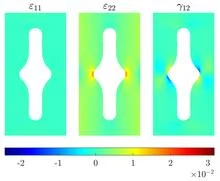
Parameter fitting is the process of adjusting the internal parameters of a model so that its predictions match experimental data as closely as possible. This is a fundamental step in virtually every quantitative science, from condensed matter physics to drug design. The challenge is that models often have many parameters, and the data may be noisy or incomplete, so finding the best set of values is a nontrivial optimization problem.
History
The method of least squares, a foundational technique for parameter fitting, was developed by Carl Friedrich Gauss and Adrien-Marie Legendre in the early 19th century.
How it works
The process typically involves defining a 'loss function' that quantifies the difference between the model's predictions and the observed data. Then, an optimization algorithm—such as gradient descent or more sophisticated methods—iteratively adjusts the parameters to minimize this loss. In modern practice, this is often done with neural networks, where the parameters are the weights of the network, and the fitting process is called 'training'.
In practice
Parameter fitting is used in radiation therapy to calibrate dose prediction models, in quantum chemistry to train neural networks that predict molecular properties, and in materials science to extract elastic properties from geometric measurements.
Fun fact
In physics-informed neural networks, the model is trained to fit data while also satisfying known physical laws, which dramatically reduces the amount of data needed.
A protein engineer is like a chef trying to make a dish that is tasty, healthy, and cheap all at once. Change one ingredient, and you risk ruining another. In the past, computer assistants could only evaluate protein properties one at a time, missing how they are connected.
An interpreter gets distracted by every rustle in the hall, and a one-hour meeting stretches into two. Similarly, molecular foundation models learn the language of molecules from vast corpora, but each new conversation requires fine-tuning. Monroe changes the rules: it doesn't learn a new language but instantly finds common meaning from a few examples.
Two photographers shoot the same mountain. One takes a hundred shots from the summit and only a couple from the base; the other does the opposite. If you try to align their images, the algorithm might decide that the summit in one photo matches the summit in the other simply because there are many similar points there, not because it's the same spot. Sampling density throws it off.
Imagine a huge puzzle where each piece is a quantum particle. To complete the picture, you don't just fit the pieces together: you need to entangle them in a special way. Usually, this is done by carefully applying operations one after another, like assembling the puzzle strictly by the instructions, row by row.
A mountain pass connects two valleys. In one, the protein is folded; in the other, it is unfolded. To get from one to the other, you must cross the saddle — the highest point on the path. In protein science, this point is called the transition state, and the coordinate that shows the distance to it is the committor.
An artist makes a quick charcoal sketch, and the face in the portrait is already recognizable. Astrophysicists face a similar challenge: the spectrum of a star is its individual portrait, revealing temperature, composition, and gravity.
Reconstructing a full picture from fragments is like discerning an orchestra's melody in a noisy hall. Such challenges arise in photometry, where a star's brightness is recovered from faint twinkling. Traditional methods need precise noise information, which is almost always unknown.
The photo enhancement algorithm is like a navigator that step by step leads a blurry picture toward a sharp view. It removes noise and distortions, moving pixel by pixel along a familiar map. But if the image was taken in unfamiliar conditions (say, with unusual blur) the map doesn't match the terrain.
A search party combs a foggy field. At first, people spread out wide: a high 'temperature' of search means a great variety of attempts. Upon finding a trace, they close in. But the speed of convergence is critical — narrow the circle too early, and the best find stays aside. The coordinator assesses the spread of searchers and commands when to speed up or slow down.
Evolution flows like water. In a wide river, changes are smooth and slow, while a mountain stream churns with every stone. Population size and mutation rate set the channel: broad and calm, or narrow and rapid-filled.
DFTB is a high-speed train in the world of quantum chemistry: hundreds of times faster than classical DFT, yet still on electronic rails. But its engine — iterative self-consistency of charges — sometimes resembles an orchestra where each instrument starts from an arbitrary note.
Hybrid perovskites are the rising stars of photovoltaics: their efficiency is growing so fast it feels like we're on the brink of a solar revolution. But these materials, like intricate atomic mosaics, are extremely vulnerable — moisture, heat, and light quickly turn them to dust.
Statistical models are an attempt to stretch a perfect mathematical web over the uneven landscape of data. When a model resists, it emits tension, but we've grown accustomed to ignoring it. Researchers spend hours staring at residual plots, trying to guess where the model is 'coming apart at the seams.' Squealer translates this resistance into sound.
An engineer tunes an antenna: pull one segment, the frequency drifts; change the angle, the gain drops. Developing therapeutic peptides (short protein chains) works much the same way.
For a long time, we only saw proteins in their final form — like photographs of dancers frozen in a beautiful pose. Programs like AlphaFold learned to predict that pose from a chain of carbon links. But the real magic is how a protein finds this shape faster than you can blink, performing a swift dance.
A chef doesn't waste ingredients cooking the whole dish to check the taste: they just taste a drop of sauce. The same logic underlies the "information matching" method for predicting metal strength. Instead of expensive calculations of every atom's behavior, scientists "taste" only simple indicators linked to plasticity — a metal's ability to bend without breaking.
A lab sends a robot a list of a thousand candidate molecules for a new drug. The predictor robot, trained on old data, gives each one a 'fit or no fit' score. But when the list comes from an unfamiliar area, a different virus or a rare tumor, the robot starts to get confused. Its confidence stays high, while actual hits drop to zero.
An orchestra plays without a conductor, and you hear the tempo speeding up and slowing down. All you have is a recording of the sound, not the score. Can you tell from that recording which string to pluck to make the whole orchestra play more steadily?
You're pouring water into a glass, but you want exactly one million drops — not approximately, but exactly. An ordinary faucet pours a stream where the number of drops always varies. In the quantum world, photons have the same problem: a laser emits light where the number of particles fluctuates like a crowd in a square.
Quantum calculations are a recipe with perfect ingredients, but nature-the-chef cooks in her own way. Machine-learned models of atoms memorize the recipe and predict material properties in seconds instead of weeks.
Immediately after the Big Bang, the Universe underwent ultra-fast expansion, an idea proposed by Alan Guth and developed by Andrei Linde. When the expansion stopped, the field-energy began to oscillate like a giant swing.
When a person breathes, air doesn't flow in a steady stream but in waves. Previously, doctors and scientists only looked at overall numbers: how much air entered per breath, what the peak flow was. But within a single breath, there are nuances — small variations that speak to the workings of nerves and muscles. The new approach breaks a breath into parts, much like a musician breaks a chord into individual notes.
A translator who has never been in a meeting translates literally, and loses half the meaning. They don't know that the boss's nod means "do it like last time," and the phrase "well, we'll see" is a polite refusal. That's how a language model that writes code from a scientific paper works: it can read the equations, but not the unspoken agreements.
Thick honey spreads slowly across a plate. In such a world, where friction suppresses inertia, motion is governed not by force but by viscosity. This is how many soft materials behave: polymer gels, colloidal suspensions, the contents of living cells.
A mass spectrometer works like a molecular shredder: it breaks a substance into charged fragments and weighs each one. From this 'fingerprint,' chemists can tell what was in the sample. But if the molecule is new and its fragments don't match anything known, the instrument just shows a set of peaks, and what lies behind them is a mystery.
The authors of the paper proposed a workaround.
Inside a battery, like a layered cake, different solid layers sit side by side. The meeting point, the interface, behaves capriciously: stresses concentrate there, and over time the battery ages. To understand these processes, we need computer models that see every atom. But accurate calculations are too expensive, and fast ones are too crude.
Physicists built a chain of Rydberg atoms — atoms with electrons in enormous orbits, comparable to planetary paths. These giant atoms feel their neighbors intensely, turning the chain into a quantum analog of a string.
Fine-tuning a neural network is like trying to alter a black hole without touching its event horizon: you change only a tiny fraction of parameters. Researchers looked inside and saw stunning patterns — strong links between pieces of the model, akin to quantum entanglement.
A mechanical testing lab is like a kitchen where a chef tastes a dish to guess the recipe. For an anisotropic material, one that is stiffer along its fibers than across them, a single taste is not enough. You need three or more separate tests, each with its own specimen. Engineers have spent years refining specimen shapes by hand, relying on intuition and experience.