Tiny Black Holes Erased Excess Lithium After the Big Bang ✛ ✦
Right after the Big Bang, as the universe expanded and cooled, it cooked up the first elements: mostly hydrogen and helium, and a dash of lithium. Theory precisely predicts the amounts of hydrogen and helium, but lithium-7 comes out three times more than what we see in ancient stars — a smudge on the cosmic canvas.
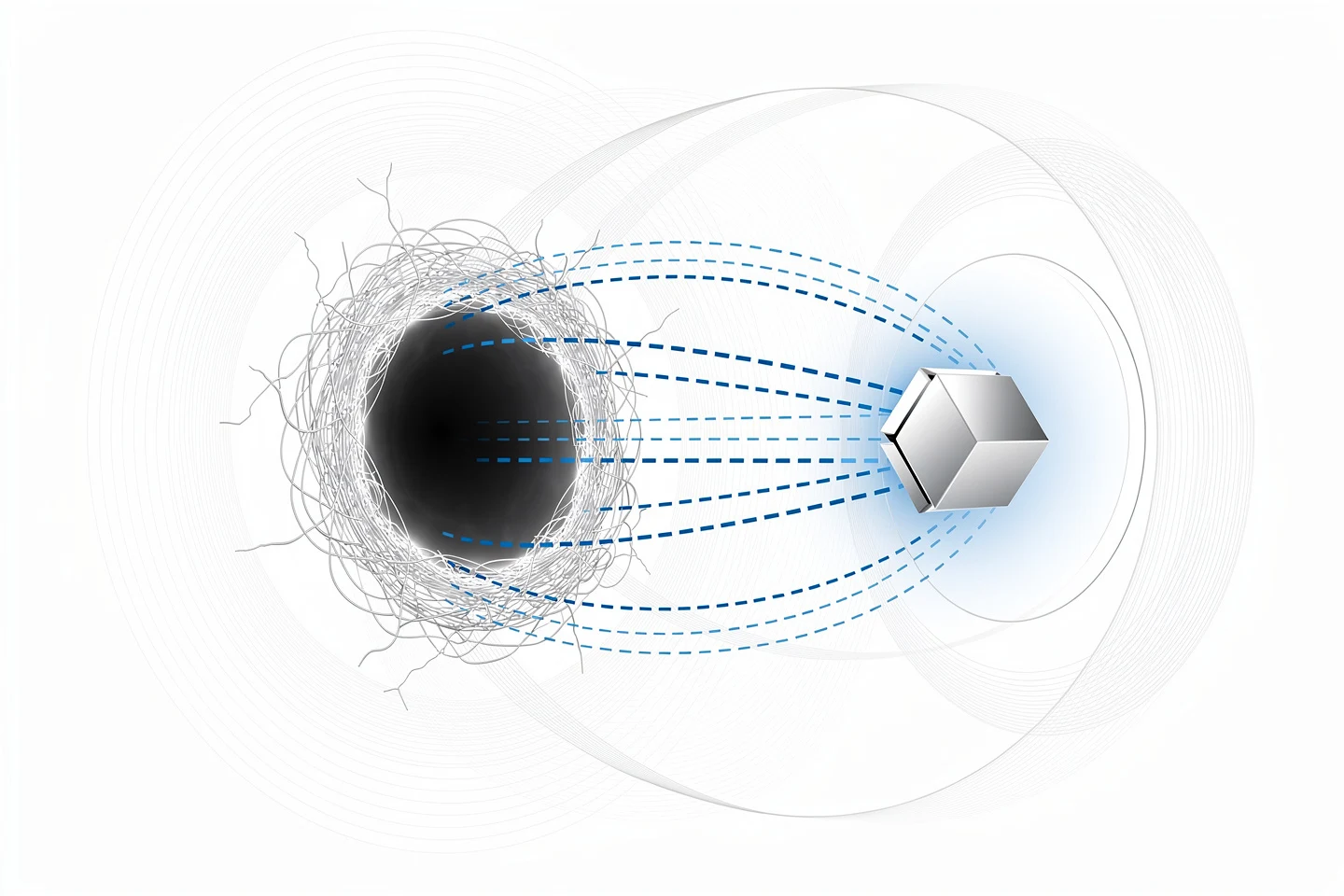
Primordial black holes, crumbs born just after the bang, helped wipe away the smudge. Stephen Hawking discovered that such holes evaporate, ejecting particles. The smallest ones (with the mass of a mountain and smaller than an atom) spat out neutrons — tiny projectiles that transformed lithium-7 into unstable atoms, which instantly decayed into ordinary helium-4. Some antimatter also appeared during evaporation, but it quickly annihilated without interfering. So the black holes acted like erasers, removing the excess lithium without touching the rest.
An unexpected twist: ordinarily, black holes swallow everything, but these ones instead rewrote the cosmos' chemical makeup. Their work lasted a couple of thousand years and may have left an imprint on the cosmic microwave background — the oldest light, reaching us from when the universe was just 380,000 years old.
If primordial black holes make up part of dark matter, then right now in our Galaxy, several such objects could be evaporating every second — tiny fireworks invisible to the eye.