How Superconductivity Is Born express
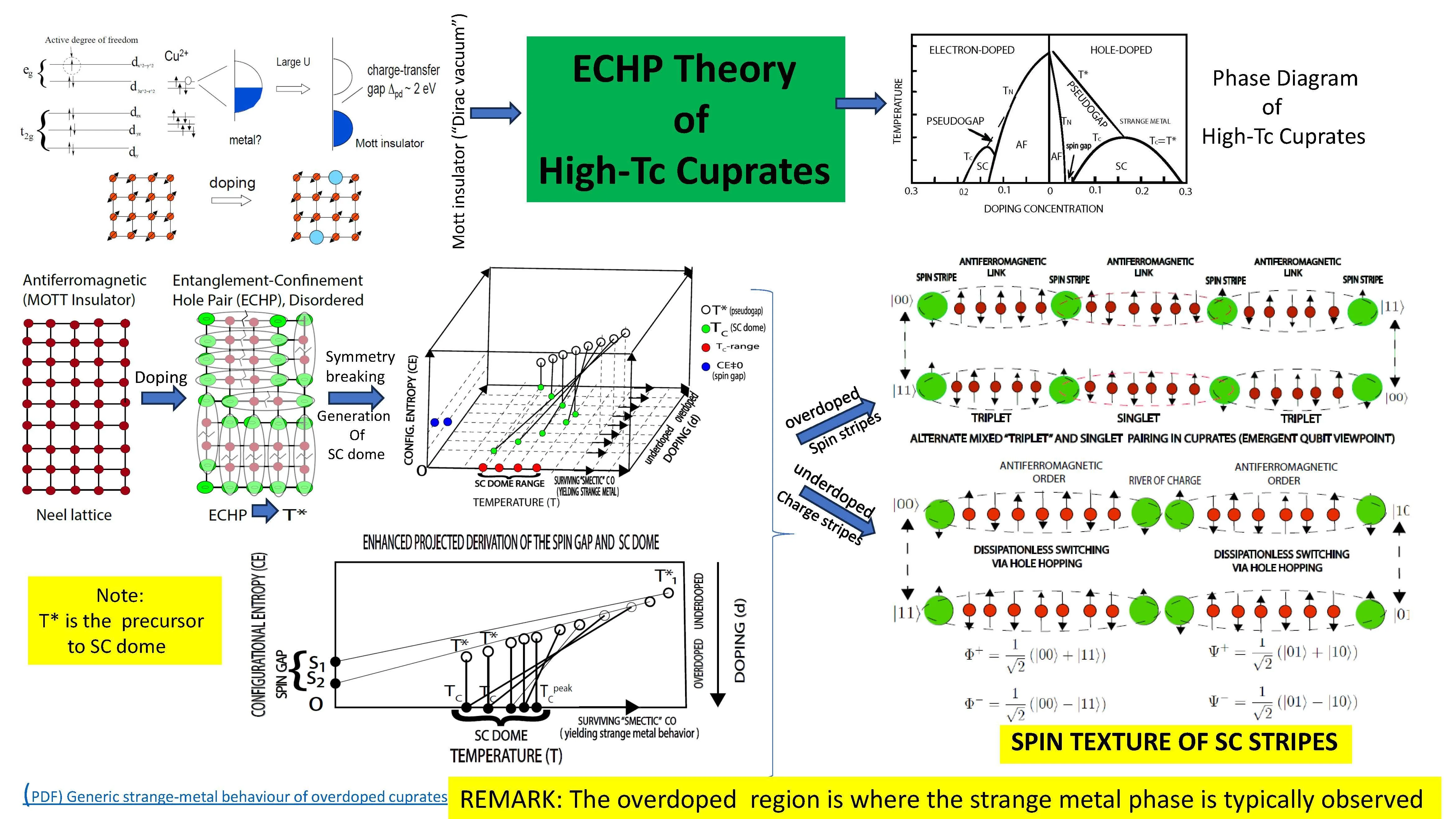
In some materials, electric current can flow without any loss: this is superconductivity. But before becoming a superconductor, a substance often passes through a strange state: electrons already sense each other and form pairs, yet they cannot move in unison. This phase is called the pseudogap, as if the material is frozen in hesitation before a leap.
An international team of physicists, building on recent work by Richard Feynman on quantum interactions, has derived two clear conditions under which the pseudogap gives way to the superconducting dome. First: the pseudogap temperature must drop as more charge carriers are added to the material. As if the hesitation dissipates with more participants in the rehearsal. Second: the order parameter must simultaneously grow, meaning the system becomes increasingly organized. These two conditions are met thanks to a new pairing mechanism — entanglement and confinement of holes (ECHP). In it, the quantum connection between particles is so strong that they cannot drift apart.
This mechanism does not just explain how superconductivity appears in cuprates. It describes the entire phase diagram — both for materials with excess electrons and for those with a deficit. It turns out that superconductivity is not a random guest but a natural outcome: the fading of the pseudogap coincides with the growth of order.
The pseudogap was discovered by accident: scientists were trying to understand why superconductivity in cuprates disappears at a certain temperature, and they stumbled upon a state where pairs already exist but supercurrent does not yet.