A Blob of a Star Grazes a Black Hole express
A blob of cold helium swoops dangerously close to a black hole. But this isn't just a blob: it's a dead star the size of Earth, yet with a mass comparable to the Sun's. Subrahmanyan Chandrasekhar once showed that such objects, white dwarfs, could exist, and here's one, a helium-rich one, meeting the abyss.
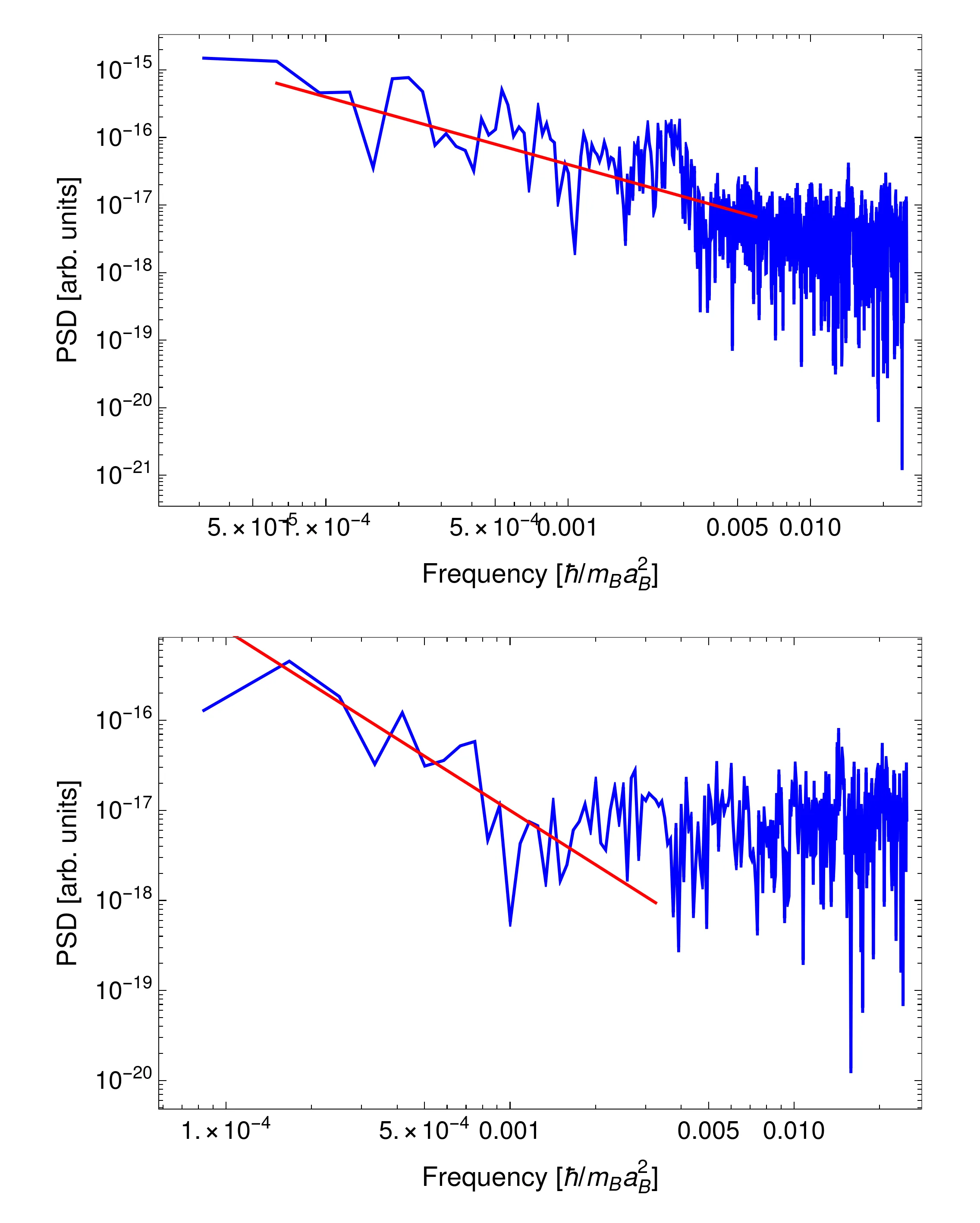
As the star passes its closest point to the hole, tidal forces rip huge chunks off it. This material falls onto the black hole and swirls into a glowing disk — an accretion disk (from Latin for 'growing'). Inside the disk, tiny vortices are born — quantized, like miniature tornadoes in a fluid. They make the disk flicker, and this light changes every few seconds.
Meanwhile, the star itself flies off, but it's not the same as before. Vortices race across its surface, stretching the dwarf like a ball of putty. It begins to spin and, like a spinning top, emits gravitational waves — ripples in spacetime. So one encounter leaves two traces: a light one and a gravitational one.
Original abstract
as written by the authors arXiv:2606.12049
Our study focuses on the strong tidal disruption of a cold helium white dwarf passing a black hole. We model the white dwarf as a Bose-Fermi droplet and use quantum hydrodynamic equations to simulate the binary system's evolution. As the white dwarf passes through periastron, it loses a significant amount of mass. This mass falls onto the black hole and forms an accretion disc. Quantized vortices appear in the accretion disc, manifesting as strong electromagnetic radiation signals that exhibit characteristic flickering patterns changing on a timescale of a few seconds. Meanwhile, the white dwarf moves away from the black hole. As the white dwarf moves through space, vortices run along its surface. This elongates its geometry, causing it to rotate and emit gravitational waves.
A white dwarf the size of Earth can be so dense that a teaspoon of its material would weigh several tons.
In Dan Simmons' novel 'Hyperion', black holes are used as an energy source, and here we see how a real star's encounter with a hole produces two kinds of radiation at once.