Bubbles in the Early Universe: Why They Don't Pop express
In the first moments of its life, the Universe resembled a boiling cauldron. As it cooled, phase transitions occurred — much like steam turning into water, but instead of molecules, the very state of space changed. In this cauldron, bubbles of the new phase were born, akin to bubbles in a pot coming to a boil. Their walls were driven outward by the force of the vacuum, while the plasma outside resisted and heated up from friction.
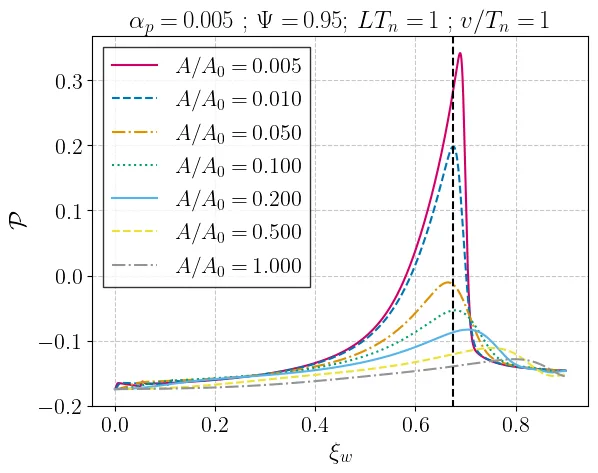
For a long time, it was thought that this heating would quickly halt the acceleration of the walls, like a headwind slowing a cyclist. But the authors of the study showed that while the wall accelerates, heat doesn't have time to spread. The heating wave forms more slowly than the bubble itself moves. The wall slips past the equilibrium point and reaches speeds that were previously deemed impossible.
The practical upshot: gravitational waves from such transitions should be stronger and have a different shape. This changes the strategy for detecting them with modern observatories. Moreover, ultra-relativistic walls could act as natural particle accelerators, producing dark matter right at their front, like surf tossing unexpected finds onto the shore. The Universe turns out to be more turbulent and less predictable than old models suggested.
The speed of sound in the early Universe's plasma was close to the speed of light — about 170,000 km/s. Bubbles could outrun their own sound barrier, creating shock waves akin to a sonic boom.
In Asimov's 'The Last Question,' the Universe dies of heat death, but phase transitions in reverse could kick-start a new cycle, like supercooled water instantly freezing when jolted.