The Oldest Stars Have Spoken: Here’s How Old the Universe Is ✛ ✦
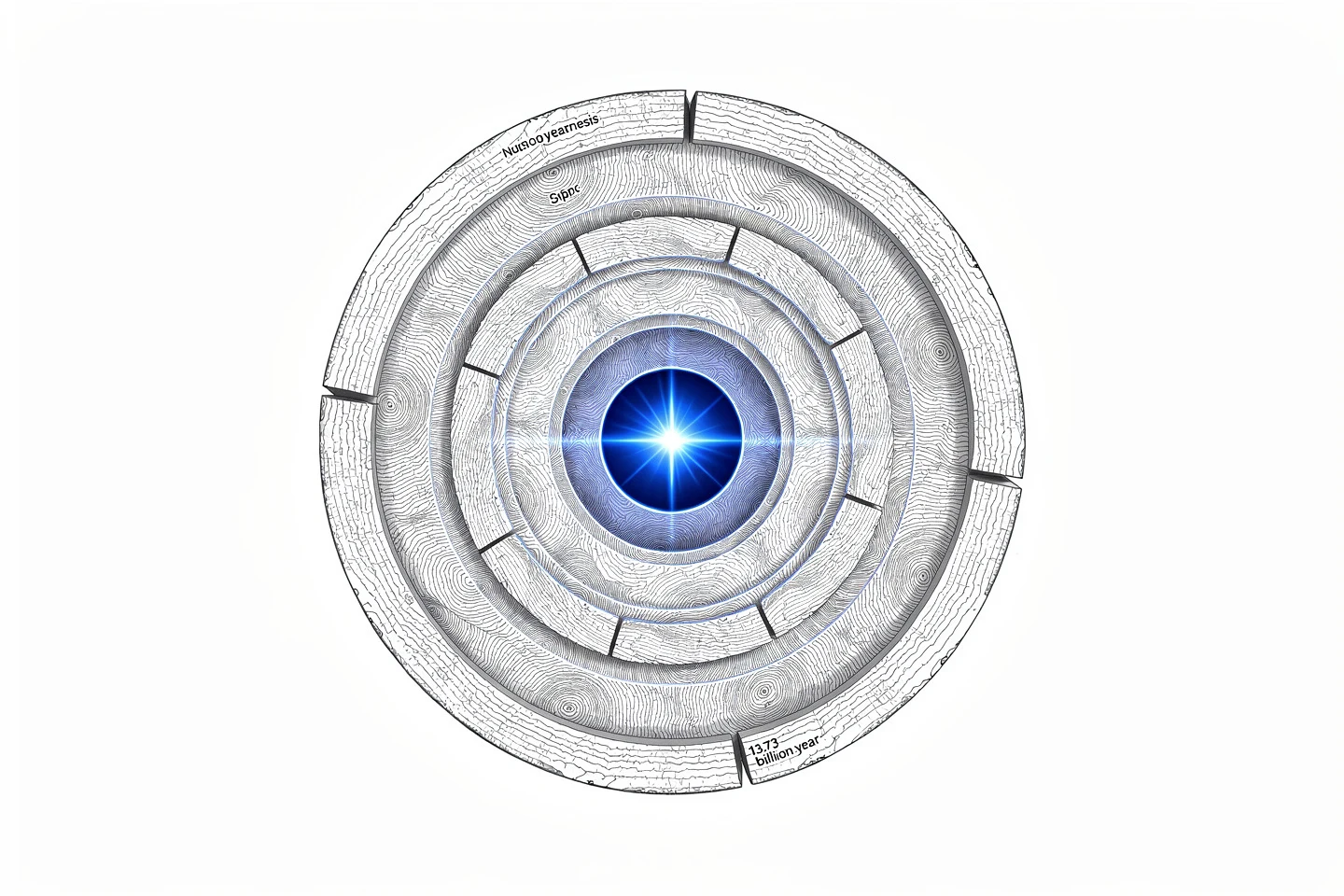
To learn a forest’s age, you look for the oldest tree. Astronomers took the same approach with 155,000 ancient stars in our Galaxy. They split each star’s light into colors (spectroscopy), using the shades and brightness to calculate its age via stellar aging models. Then, with the help of computer simulations, they identified the oldest one — dating back 13.73 billion years.
Adding 0.2 billion years for the first stars to form after the Big Bang (an idea from Georges Lemaître), they arrived at a cosmic age of 13.9 billion years. This matches independent measurements from the cosmic microwave background and from the redshift of distant objects.
Yet this age challenges models that proposed a younger Universe (12.9 billion years) to solve the expansion rate mystery — the “Hubble tension” (based on the discovery by Hubble and the theory of Einstein). The most surprising twist: one star could be older than 14 billion years if uncertainties are taken into account — practically a contemporary of the Big Bang.
One of the stars in the sample ignited when the Universe was only about 300 million years old — by cosmic standards, a stunningly early age.