A Hormonal Assistant with a Flair for Math express
Inside each of us, invisible clocks are ticking. They control the release of cortisol — the hormone that helps us wake up in the morning, cope with anxiety, and keep our immune system on its toes. In adrenal insufficiency, these clocks break down: the body can't produce the right amount of cortisol on its own. Without treatment, a person feels constant fatigue, and even a common cold can become dangerous.
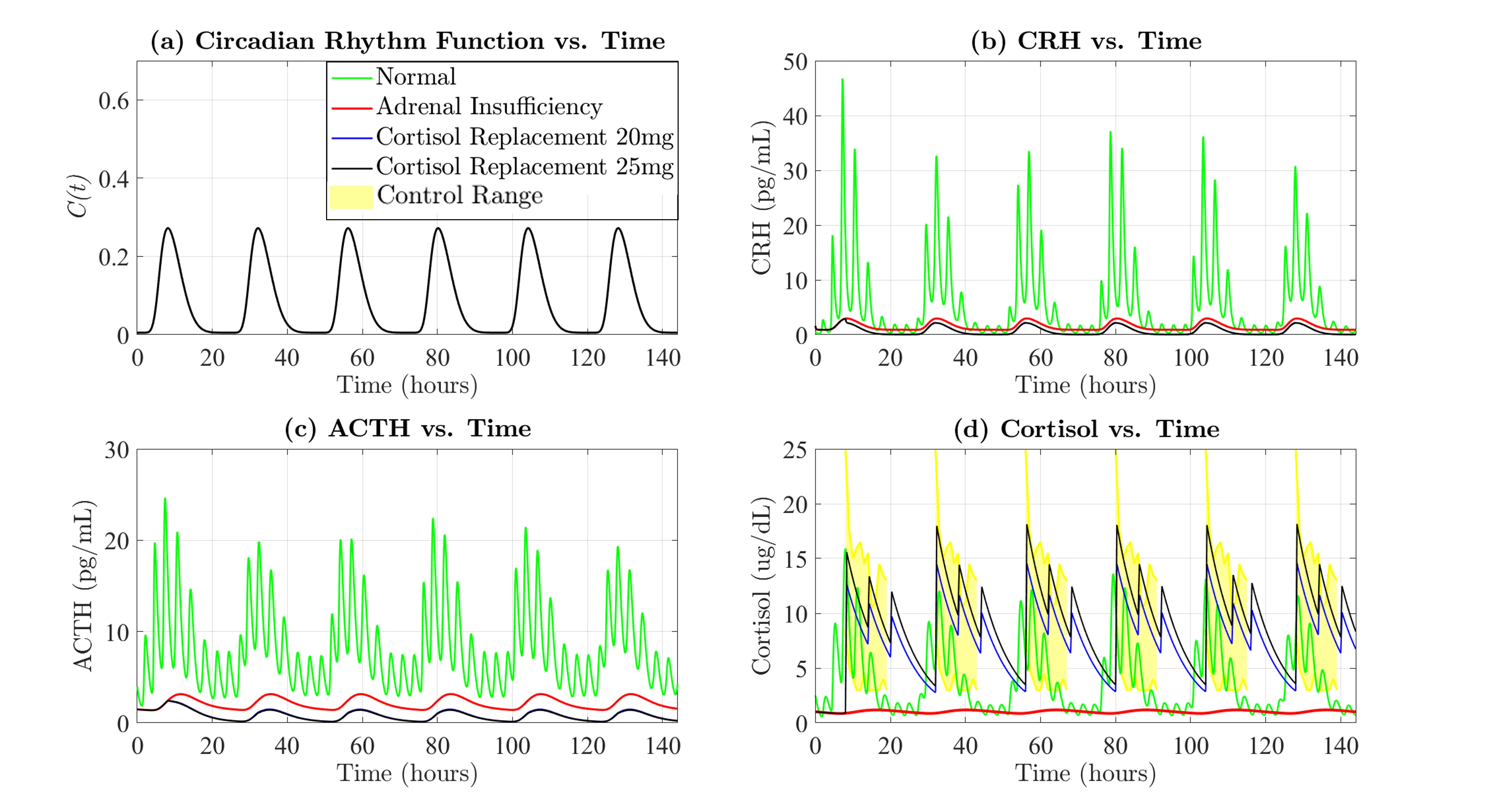
The authors built a mathematical model of the hypothalamic-pituitary-adrenal axis — the very system that triggers cortisol production. The model incorporates the circadian rhythm, so it mimics the natural rises and falls of the hormone throughout the day. They tested the standard treatment approach on this model: the patient receives a fixed dose of hydrocortisone at specific times. The calculations showed that this method works but is far from ideal — cortisol levels either plummet or spike.
Then came the model predictive controller — an algorithm that calculates the future. It's like an experienced navigator: it knows the map of the daily rhythm, remembers previous doses, and can foresee the consequences of each decision. The main advantage of such an assistant is that it strictly adheres to constraints and will never suggest a dose above the safe threshold. The doctor remains the captain but gets a precise calculation instead of relying on intuition.
Cortisol follows a strict daily schedule: its level peaks around 8 a.m. and bottoms out around midnight. That's why hydrocortisone tablets are usually taken two to three times a day to mimic the natural rhythm.