Parkinson's disease is a progressive neurodegenerative disorder that primarily affects movement, causing tremors, stiffness, and difficulty with balance and coordination. It results from the gradual loss of dopamine-producing neurons in a brain region called the substantia nigra. The disease also involves non-motor symptoms like depression, sleep disturbances, and cognitive decline, making it a complex condition that affects quality of life profoundly.
History
The disease was first formally described in 1817 by James Parkinson in his essay 'An Essay on the Shaking Palsy'. The link to dopamine loss was established in the 1950s and 1960s by Arvid Carlsson and Oleh Hornykiewicz, leading to the development of levodopa therapy.
How it works
The loss of dopamine disrupts the normal signaling in the basal ganglia, a set of brain structures that help initiate and regulate movement. Without sufficient dopamine, the brain's motor circuits become overactive or underactive, leading to the characteristic symptoms. Treatments aim to restore dopamine levels (e.g., with levodopa) or to modulate the abnormal brain activity directly, as in deep brain stimulation, where electrodes implanted in specific brain regions deliver electrical pulses to normalize circuit function.
In practice
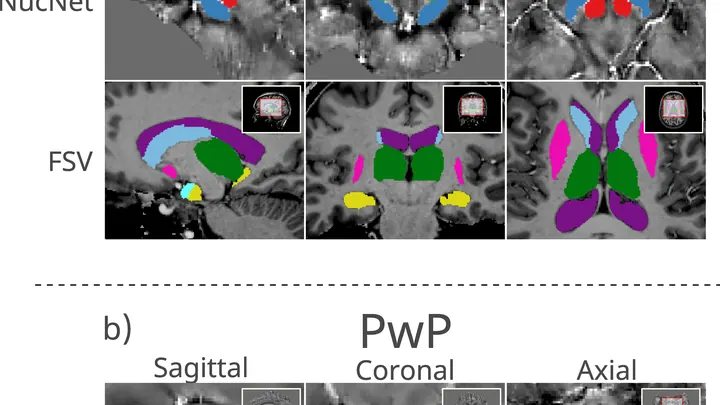
Deep brainstimulation is used to treat motor symptoms in advanced Parkinson's disease when medications become less effective, and research models are being developed to personalize treatment strategies.
Fun fact
The characteristic resting tremor in Parkinson's disease often disappears during voluntary movement, which is why patients can sometimes perform actions like catching a ball despite the shaking.
The brain is like a city where every cell is a resident, and its fate depends on its neighbors. It used to be thought that the aging of each cell was its own private business: DNA damage accumulated, so the cell wore out on its own. But a new study shows that even a cell's ability to repair its DNA depends on who lives next door.
When you're standing on a bus and the driver suddenly brakes, your brain manages to tense your muscles in a fraction of a second so you don't fall. This automatic response is born deep in the cortex, in an area that plans complex movements, the supplementary motor cortex.
In a large orchestra, every musician knows their part: the violinist carries the melody, the cello holds the bass, the flute comes in during the pauses. If the violinist suddenly started playing the horn part, the music would fall apart, even though the instruments themselves would remain intact.
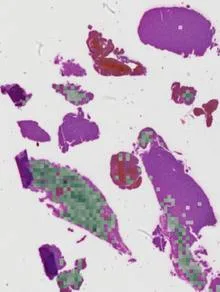
Imagine trying to figure out what happened in a room from the sound that lingers after a gunshot. The shot is gone, but the echo still bounces off the walls. That's roughly how a neuropathologist views a brain tissue section where the tumor itself is absent: the biopsy only captured healthy tissue that reacted to the disease.
A city power plant is running itself into the ground, but the city doesn't know it yet. Lights are on in its homes, the streets are noisy, and only the engineers notice that the turbines are spinning more slowly and voltage is dropping in the wires. This is what an aging brain looks like: the neurons are alive, but their internal power plants, the mitochondria, are already losing capacity.
In an orchestra rehearsing a symphony, every musician must take their part on cue. If a violinist suddenly decides he's a cello, and a flutist starts playing the trumpet's part, the music turns into noise.
The brain as a house built too spacious: lovely to live in, but expensive to maintain. Parkinson's disease is usually pictured as the destruction of that house, with neurons dying and structures shrinking.
Construction is in full swing: neurons are laying down their processes the way bricklayers stack up walls. But an error has crept into the blueprints. The protein tau, which normally serves as scaffolding for the cellular framework, in its mutant form starts dictating the wrong dimensions.
A neuron transmitting a signal is like a tiny battery that quickly discharges and recharges. For nearly 70 years, it was believed that a special "potassium valve," opening with a delay, was responsible for the recharge phase. New work claims this current is a ghost.
Inside each of us, invisible clocks are ticking. They control the release of cortisol — the hormone that helps us wake up in the morning, cope with anxiety, and keep our immune system on its toes. In adrenal insufficiency, these clocks break down: the body can't produce the right amount of cortisol on its own.
For one person, the disease begins with a tremor in the hand — the cup dances on its saucer as they carry it to the table. For another, the legs suddenly refuse to move smoothly: the step becomes short and shuffling, as if the floor were suddenly covered in a sticky layer. These are not two different diseases but two faces of the same one — Parkinson's disease.
The brain is like a multi-story building: lower floors process simple signals, while upper floors assemble them into complex perceptions. Scientists have long suspected that this order is tied to how neurons work together. But exactly how has remained a puzzle.
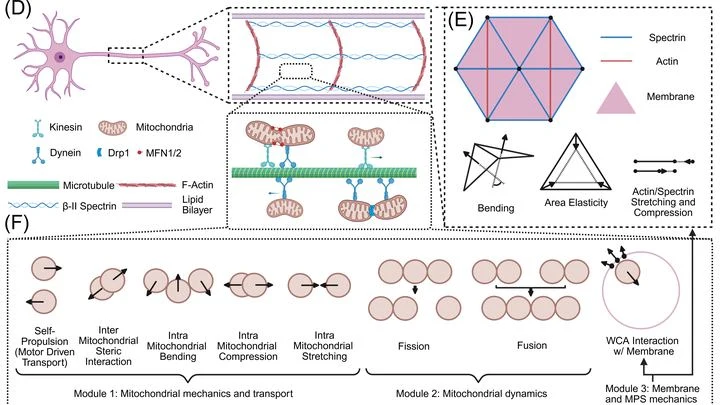
Inside every neuron, there's a long, thin channel, the axon, through which signals travel from the cell body to other cells. To keep this channel working, mitochondria constantly shuttle along it. These tiny organelles produce energy and move in both directions, like cars on a narrow road.
A person hears a ringing that isn't there. The doctor asks them to describe it — loudness, pitch, persistence. But it's subjective: one might say "like a mosquito," another "like steam from a kettle." We need a way to see tinnitus directly, in the brain itself.
Brain aging is like the wear and tear on a bridge: cracks appear unnoticed, but if you reinforce the supports in time, the structure lasts longer. Three ordinary things turned out to be such supports — handgrip strength, the ability to move for a long time without breathlessness, and lung capacity.
The brain of a person with Parkinson's disease works like an orchestra where the conductor either freezes or waves the baton off-beat. Medications don't help everyone, so doctors turn to stimulation — weak electrical pulses that restore the rhythm.
Alzheimer's disease begins quietly: deep in the brain, two proteins, tau and amyloid-beta, start to accumulate. They behave like weed seeds: one clump that appears causes neighboring cells to produce similar clumps. Gradually, the proteins spread along nerve fibers, like water through the capillaries of a paper towel, and invade new areas.
Depression is sometimes sought in the brain's electrical waves. The logic is simple: if a disease has stages (acute, maintenance, recovery) then the signals should change gradually, like volume when you turn a knob. Researchers took EEG recordings from 74 people: 24 in the acute phase, 23 in the maintenance phase, and 27 healthy.
A thin superconducting wire, cooled to near absolute zero, can sense a single particle of light. Such detectors are indispensable for quantum computing and secure communication, but their temperament is spoiled by disorder — random irregularities and impurities that cannot be completely removed.
Instead of fighting disorder, physicists decided to tame it.
Toss a handful of pebbles into a stream: some settle on the bottom, others get swept around. That's roughly how waves behave in a disordered medium — light in frosted glass, sound in porous material. Usually, disorder slows things down: the wave gets stuck, spreads out, loses direction. But in a new study, physicists built an acoustic lattice where things work differently.
Quantum particles in a strongly disordered environment behave like dancers executing steps in sync: each knows its own move and never collides with others. This kind of coordinated, frictionless flow, superfluidity, unexpectedly emerged in an experiment on a superconducting quantum chip.
In the everyday world, order preserves and disorder destroys. But in quantum computing, this logic is turned on its head. Consider a diamond: carbon atoms with their nuclei and electrons behave like tiny magnets capable of storing a quantum "whisper"—information encoded in the orientation of their spins.
Hong Kong sits at a crossroads: tropical diseases arrive with travelers, while the local climate follows global cycles. In this city, from 2000 to 2016, two afflictions grew in different ways: dengue fever surged in sharp waves, while Guillain–Barré syndrome (acute paralysis, often after infections) crept upward slowly but steadily.