Lone Radio Pulsars: The Mystery of Rare Bursts express
Pulsars are rapidly spinning neutron stars that emit radio pulses like a lighthouse. But some of them stay silent almost all the time, occasionally emitting a single pulse. Such objects are called rotating radio transients (RRATs). They were discovered nearly twenty years ago, but they remain a mystery.
The PALFA survey team studied twelve such sources found in the plane of our Galaxy. Eleven were initially classified as RRATs, and the twelfth as a fast radio burst (FRB) candidate. For five objects, precise rotation models were constructed: we now know how fast they spin and how they slow down. For two more, rotation periods were determined.
The pauses between bursts behave like a random process: the probability of a new burst does not depend on how much time has passed since the previous one. This is like waiting for a bus that arrives on schedule but with large random delays.
Of particular interest is the source J0613+18, previously considered a fast radio burst candidate. New data indicate that it lies far beyond our Galaxy. If confirmed, it will join the list of extragalactic fast radio bursts, which remain one of the biggest mysteries in modern astrophysics.
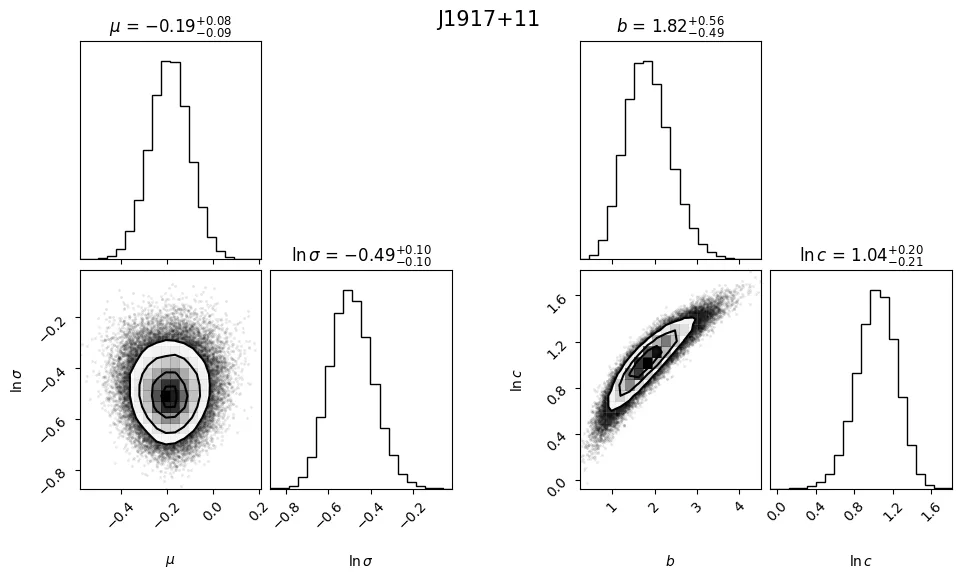
The lognormal distribution of burst energies means that occasionally a pulsar emits a burst hundreds of times brighter than usual, even if on average it is barely detectable.
In Carl Sagan's novel "Contact," an alien signal is initially mistaken for a series of pulses from a pulsar, but then a coded message is discovered within them.