Antiprotons: Bounce or Annihilate? express
The antiproton is the mirror twin of the proton: same mass, but negative charge. When it hits matter, it usually annihilates instantly — disappearing in a burst of energy upon colliding with an atomic nucleus. But if an antiproton moves slowly, with an energy of just a few thousand electronvolts, it might bounce off a surface like a ball off a wall, without ever meeting a nucleus.
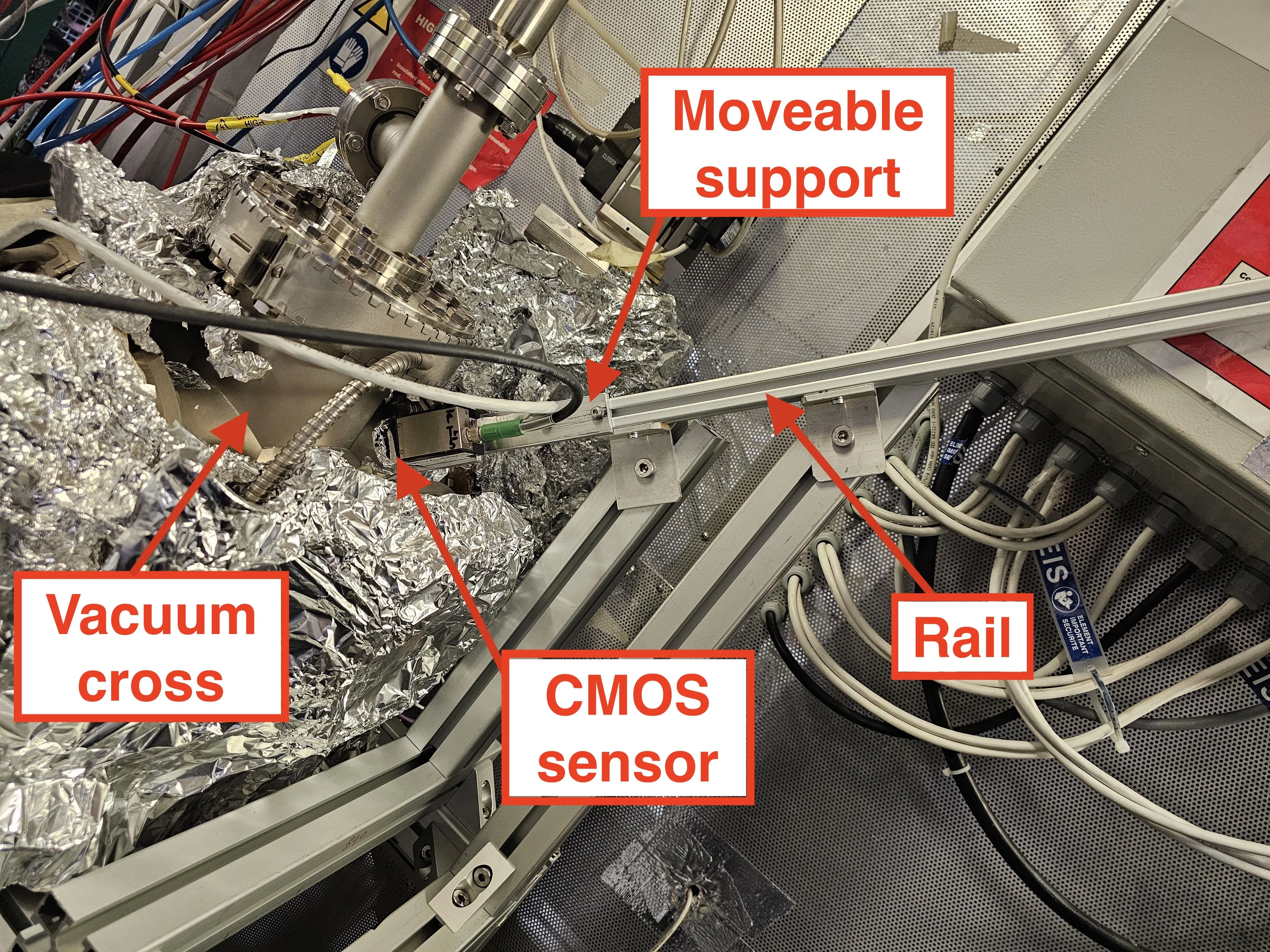
In the GBAR (Gravitational Behaviour of Antihydrogen at Rest) experiment at CERN, antiprotons are cooled and combined with positrons to create antihydrogen atoms. To know how many atoms are produced, you need to know exactly how many antiprotons hit the target. If some antiprotons reflect off the detector walls, the count would be off. The researchers put this to the test: they directed a beam of antiprotons with energies of 4 and 6 keV onto the surface of a microchannel plate — a sensitive detector that registers every particle.
The result was reassuring: not a single bounce was recorded. This means the probability of reflection is less than 14% (at a 68% confidence level). In other words, out of 100 antiprotons hitting the detector, at most 14 could have bounced, but most likely none did. For the GBAR experiment, this is important: now it is possible to determine more precisely how many antiprotons actually participated in creating antihydrogen.
The annihilation of an antiproton with a proton releases about 1000 times more energy per unit mass than the fission of uranium nuclei in an atomic bomb.
In the series "Star Trek," antimatter is used as fuel for warp drives, and the problem of storing antiprotons is key to such technologies.