The Heat We Throw Away Now Works for Us express
Hot water after a shower, warm air from ventilation, the heated walls of an engine — all this is heat below 100°C. Usually, it dissipates without doing any useful work. Now it can be captured and turned into electricity.
Inside the new device is a wire made of a nickel-titanium alloy. This material remembers its shape: when heated, it contracts; when cooled, it returns to its original shape. If you stretch such a wire like a string and then heat and cool it, it will twitch like a muscle. This motion generates electricity.
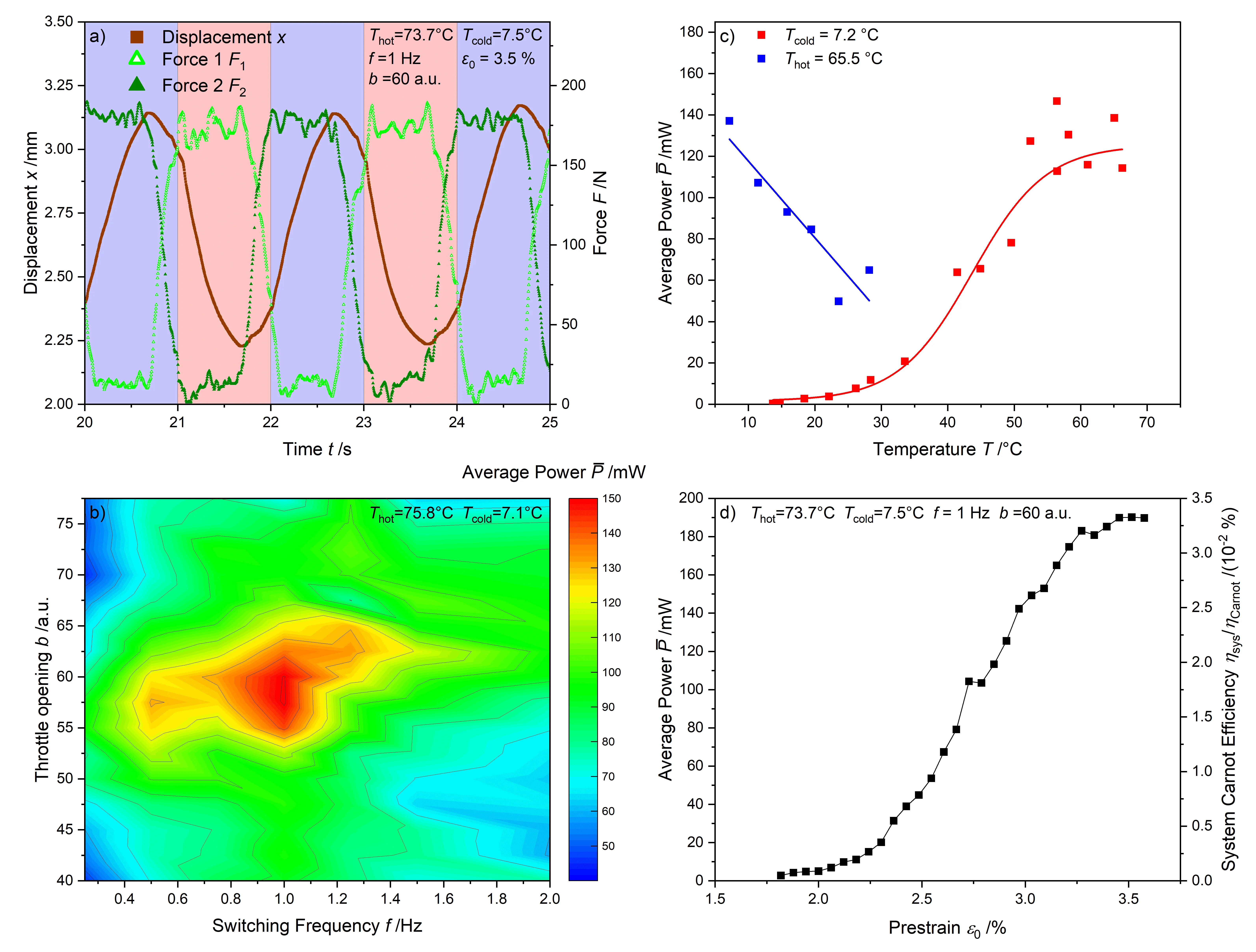
Previously, such devices wasted a lot of energy stretching the wire before each cycle. The authors came up with a system where one wire helps stretch another, like two climbers taking turns pulling each other up a cliff. And a water flow that washes across the wire allows the temperature to change quickly, regardless of the wire's length.
As a result, the device delivers 366 milliwatts per cubic centimeter of active material. That's 1.7 times more than the best previous thermoelastic device, and better than all known thermomagnetic and pyroelectric generators. In terms of power per dollar, it even beats thermoelectric generators in this temperature range.
So the heat we're used to throwing away becomes a source of electricity. Just stretch a smart wire and let it work like a muscle.
Original abstract
as written by the authors arXiv:2608.12092v1
Low-grade waste heat below 100 degC is one of the largest untapped opportunities in solid-state energy conversion. Three ferroic routes are candidates for recovering this resource: thermomagnetic, pyroelectric, and thermoelastic harvesters. The last has remained the most unexplored, despite decades of progress on the underlying NiTi shape-memory alloy wires. Three system-design changes close this gap: a protagonist-antagonist architecture that recovers the energy for prestraining, a continuously tunable prestrain mechanism that sets the force-strain balance, and transversal water flow that decouples cycle frequency from wire length. The resulting harvester delivers a directly measured power density of 366 mW/cm^3 with respect to the active material, about 1.7 times the next-best thermoelastic device, ahead of every reported thermomagnetic and pyroelectric generator, and outperforming the best thermoelectric generators in this temperature range also with respect to power per material cost. The system maps the parameter space directly through force and displacement measurements, without using material-property estimates, giving a quantitative picture of how the alloy responds while the device is doing work.
The nickel-titanium alloy (nitinol) was discovered in 1959 and has since been used in dentistry, eyeglasses, and even Mars rovers — anywhere a component that changes shape with temperature is needed.