Epidemics Breathe in Tandem express
Every winter, hospitals fill up, and by summer they seem to empty. Epidemics breathe like the tide. But why do waves of disease keep rolling in, even without new mutations? Mathematicians found an answer in a tug-of-war between two strains.
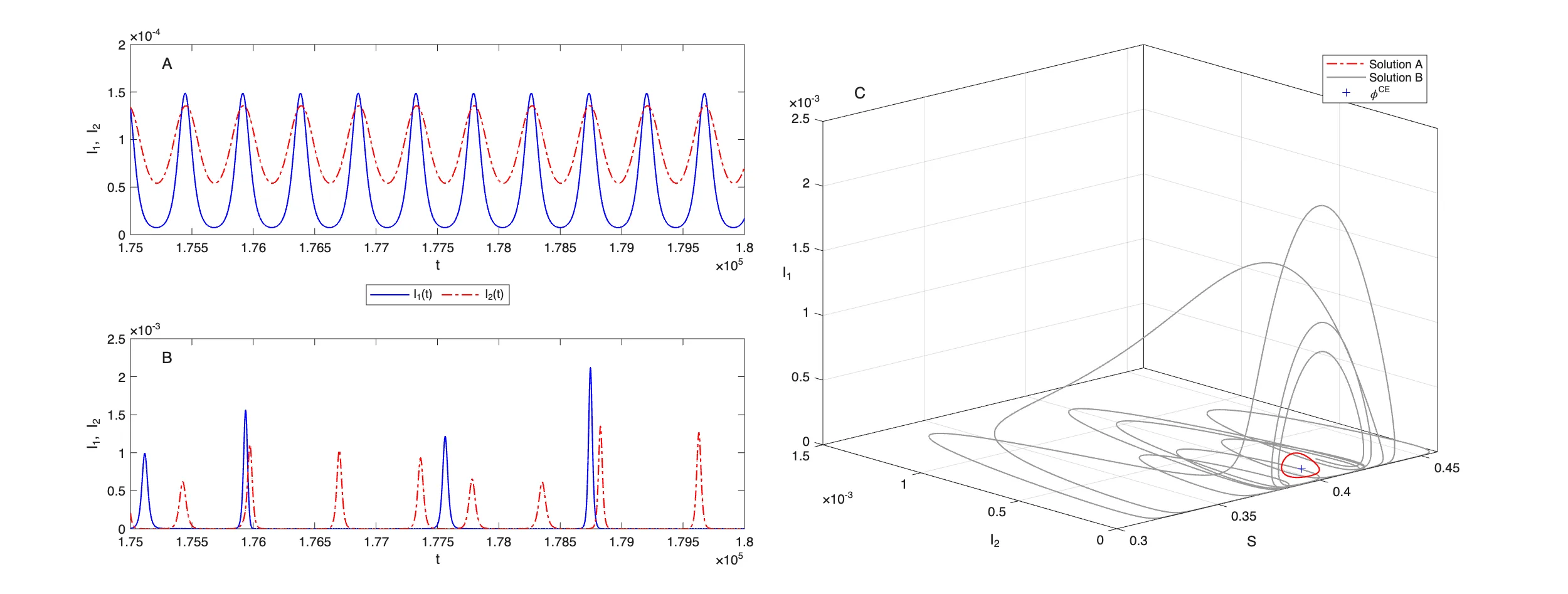
Within a single epidemic, two virus variants often coexist. Recovering from one gives partial protection against the other. It's like two wrestlers who keep each other from grabbing the same spectator. If one strain is slightly more contagious, it starts setting the pace. At first, fluctuations are small — case numbers bob gently, like a boat on calm water. But cross a threshold, and the boat is tossed into a storm: outbreaks become huge and repeat over and over.
The scientists tested the model on a computer, adding waning immunity and isolation of the sick. The waves didn't disappear. This means recurring epidemics aren't a fluke but an built-in property of a system where viruses compete for hosts.
So the next surge in cases isn't a whim of nature, but the ticking of a clock wound by the strains themselves.
Even without new mutations, two competing strains can sustain epidemic cycles for decades, like a pendulum that no one pushes.