Immunity can be innate and acquired. Innate immunity reacts instantly and identically to any threat: skin and mucous membranes create a barrier, macrophages and neutrophils phagocytize (engulf) intruders, and the complement system punches holes in bacterial membranes. Acquired (adaptive) immunity starts slower but acts precisely: lymphocytes recognize specific antigens, after which B cells turn into plasma cells and release antibodies, and killer T cells destroy infected cells. This response leaves memory cells, ensuring a rapid reaction upon repeated contact.
History
Since ancient times, it was observed that those who recovered from the plague did not get reinfected. Edward Jenner scientifically justified vaccination in 1796. Louis Pasteur in the 1880s created vaccines against chicken cholera and rabies. Ilya Mechnikov (1882) discovered phagocytosis, Paul Ehrlich (1891) – humoral immunity and antibodies. In 1959-62, Macfarlane Burnet and Peter Medawar uncovered the mechanisms of immunological tolerance. In 1975, Susumu Tonegawa showed how immunoglobulin genes rearrange to create billions of antibody variations.
How it works
The process begins with the capture of an antigen by dendritic cells, which migrate to lymph nodes and present antigen fragments on MHC II molecules to T helper cells. Activated T helpers secrete interleukins, stimulating the proliferation of B cells and their maturation into plasma cells that release millions of antibody molecules into the bloodstream. T killer cells recognize foreign peptides on MHC I of infected cells and induce apoptosis via the perforin-granzyme mechanism. Some B and T cells are preserved as memory cells (sometimes for life), ensuring a secondary response. Key molecules: antibodies (immunoglobulins), T-cell receptors (TCR), major histocompatibility complex (MHC), cytokines (interleukins, interferons).
In practice
Vaccination trains the immune system to recognize real viruses, and cancer immunotherapy teaches it to attack tumors.
Fun fact
Breast milk contains ready-made antibodies that protect the infant from infections in the first months of life, while its own immunity is still immature.
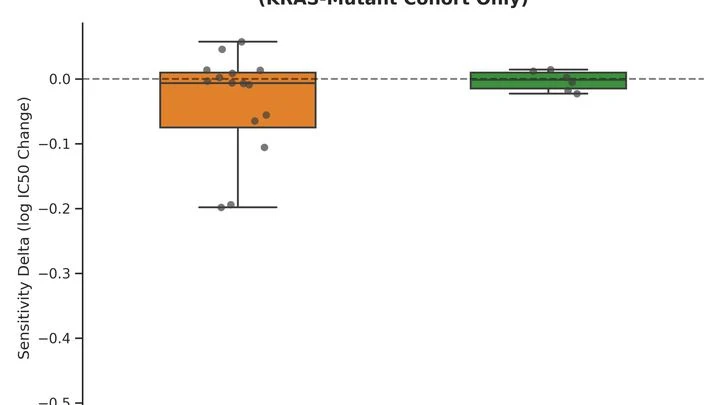
A mouse gets food that is missing a single amino acid, and within five days it loses a fifth of its weight. Its white fat turns darker, as if tiny stoves had lit up inside it. This is not hunger and not exercise: cysteine was simply removed from the diet.
Cysteine is a building block of proteins that our body can make on its own from another amino acid, methionine.
The skin of an older person is like an orchestra where the musicians are all in place, the instruments are tuned, but the conductor walks onstage later than he should. Infection with Staphylococcus aureus sets off an elaborate concert of immune cells in the skin, and it used to seem that with age the orchestra simply plays more quietly.
After a big police raid in a city, a few criminals remain. Some hide in dark alleys, others slowly gather strength for a new job. The police need not only to catch them now but also to prevent them from taking over the streets again. This is roughly how blood cancer treatment with hunter cells works.
These cells are created from the patient's own immune cells.
Chemotherapy hits cancer like a powerful spray on a dirty plate: the stream washes away almost everything, but crumbs remain in the cracks. Old models said that if you make the pressure strong enough, the plate becomes perfectly clean. New work shows this isn't so.
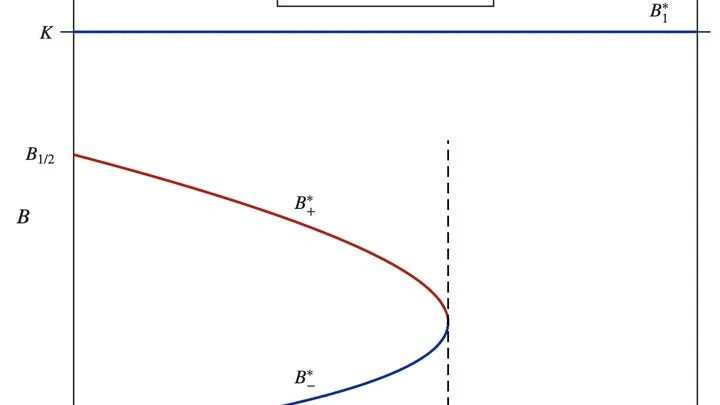
Every winter, hospitals fill up, and by summer they seem to empty. Epidemics breathe like the tide. But why do waves of disease keep rolling in, even without new mutations? Mathematicians found an answer in a tug-of-war between two strains.
Within a single epidemic, two virus variants often coexist.
Every winter, hospitals fill up, and by summer they seem to empty. Epidemics breathe like the tide. But why do waves of disease keep rolling in, even without new mutations? Mathematicians found an answer in a tug-of-war between two strains.
Within a single epidemic, two virus variants often coexist.
In 1970, mathematician John Conway invented the Game of Life — a cellular field where just three rules generate surprisingly complex patterns. Forty years later, SmoothLife appeared: a version where space is no longer cellular but smooth, like a blurred patch. The authors of the new study took an even simpler variant of this continuous game: now everything changes smoothly in time as well.
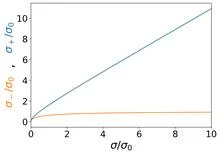
A disease outbreak is like a wildfire: the fire runs through dry grass, and its speed depends on wind and humidity. But an infection has its own 'wind'—how often people infect each other. When this rate changes along with the fraction of already infected, the epidemic wave can behave differently.
Ordinary models assume that infection is like a steady flow of water that washes over everyone equally. In reality, the stream from a sick person fluctuates: right after infection it barely trickles, then turns into a raging downpour, and later subsides. The chance of catching the virus depends on the strength of this flow at the moment of contact.
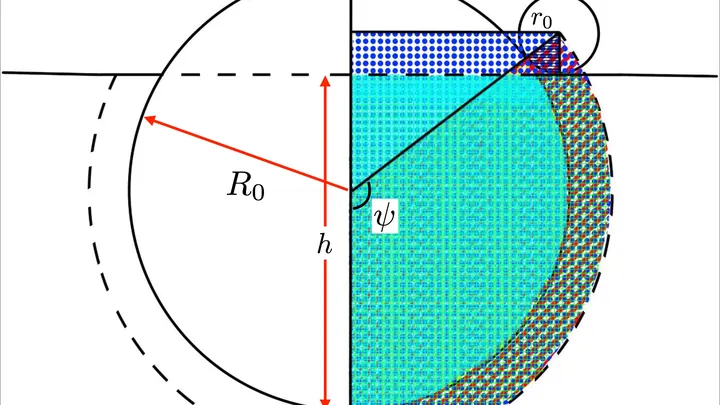
The cell membrane is not a calm boundary but an arena of relentless Brownian motion. Water molecules, ions, and small metabolites collide chaotically, creating constant pressure on the cell's surface. A new model shows that it is this molecular jostling, not just chemical affinity, that triggers particle uptake, a process known as endocytosis.
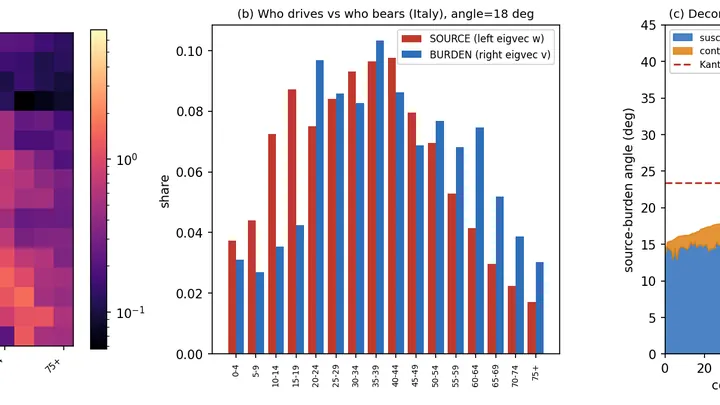
The orchestra plays without a conductor. We know the overall volume: that's the basic reproduction number R0, the spectral radius of the epidemic. But the score itself, the contact matrix between people of different ages, holds the melody: who spreads the infection and who takes the main blow.
In 1944, Erwin Schrödinger asked the question "What is life?", foreshadowing quantum explanations of biology. Almost a century later, physicists return to this puzzle, armed with the apparatus of quantum field theory.
Imagine a book being simultaneously copied by trillions of scribes. As long as most of them check against the original, the narrative remains meaningful. But once control weakens, the text accumulates typos, which multiply until the manuscript turns into gibberish.
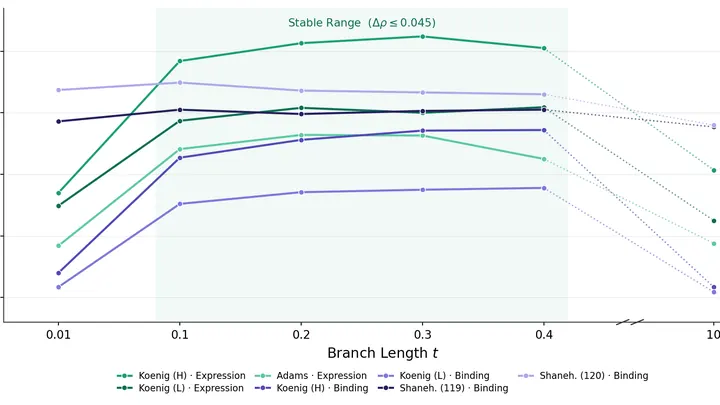
The immune system is like a tireless editor, revising antibody drafts to make them stickier to viruses and bacteria. This process is called antibody maturation: random typos (mutations) arise in the genes, and natural selection keeps those that improve target capture.
Life is a constant dance between order and chaos. Back in the mid-20th century, Erwin Schrödinger noted that living things feed not so much on matter as on "negative entropy"—the ability to maintain their own order by increasing disorder around them.
Billions of tiny motors hum inside every living creature. Cells ceaselessly pump substances, burn sugar, and build new proteins, and all this invisible motion warms us from within. To maintain order, life must dissipate heat into the environment, like a stove that never goes out.
The power of this internal heating is almost independent of size.
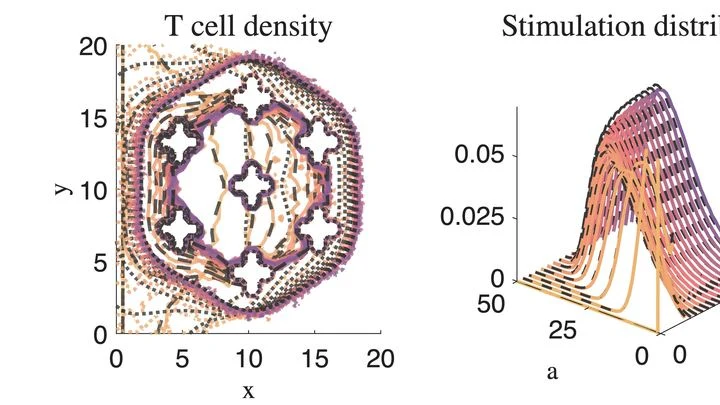
A lymph node is like a bustling command center. Here, dendritic cells, scouts that collect enemy debris, show T cells (the soldiers) fragments of invaders. If scouts stand alone, soldiers pass by barely noticing the signal. But when scouts huddle into tight groups, it's as if they light bonfires: the signal becomes brighter and more insistent.
An epidemic is not just a virus: it's millions of personal decisions. One person keeps riding the subway; another locks themselves at home. Classical models describe the average behavior of a crowd but don't ask why each individual acts that way.
Brain aging is like the wear and tear on a bridge: cracks appear unnoticed, but if you reinforce the supports in time, the structure lasts longer. Three ordinary things turned out to be such supports — handgrip strength, the ability to move for a long time without breathlessness, and lung capacity.
When a virus enters the body or a cancer cell appears, T cells, the immune system's fighters, take the stage. Each T cell has its own receptor, a lock-like molecule that searches for the right key: a piece of protein (peptide) on the surface of the diseased cell. If the key fits, the T cell activates and destroys the enemy.
An epidemic is like a fire in a dry forest: a spark flares up, the flames leap from tree to tree, and within a week the whole area is burning. A hundred years ago, scientists devised a simple mathematical model for such a fire: they divided people into those who had not yet fallen ill, those who were ill, and those who had already recovered.
A cancer cell is like a stubborn lock that changes its keys as you try to pick it. The drug acts as a lockpick, but the cell quickly finds a way to keep it out. In a new study, scientists built a computer model that mimics how cancer cells behave with various genetic glitches.
An antibody is a protein that catches viruses and bacteria. When an enemy enters the body, immune cells start trying out different antibody variants, as if testing different keys against a lock. Beneficial changes are kept, harmful ones are discarded. Over a few weeks, this process yields an antibody that fits its target perfectly.
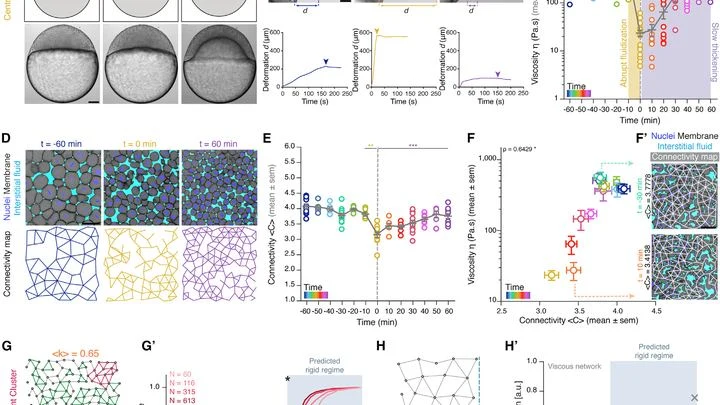
As an embryo grows, its cells don't just divide: they constantly touch their neighbors, like people in a crowded bus. The strength of these contacts determines where a cell moves and what shape the tissue takes. Scientists studied how cell 'stickiness' changes during the earliest stages of development.
Bacteria don't just crawl across a surface: they collectively decide what shape their colony will take. Picture a crowd moving across a square: each person steps on their own, but together they form a flow. Bacteria are the same: each moves individually, but together they create patterns of branching trails.
Scientists took Enterobacter sp.
In winter, puddles freeze, and ice cracks the asphalt. Inside a living cell, freezing does something similar: ice crystals tear its membrane. To prevent this, the cell is soaked in a special solution, like antifreeze for a car. But precision is key: too little solution and ice still forms; too much and the solution itself poisons the cell.
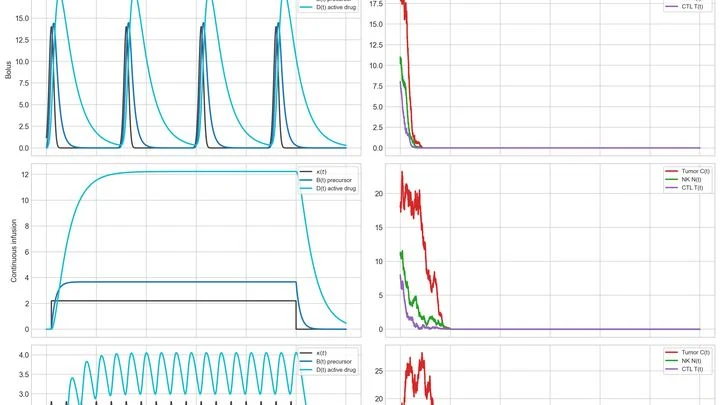
A tumor in the kidney grows like a weed that has learned to hide from the gardener. The immune system, that very gardener, simply doesn't notice it. Doctors try different drugs, but each person's disease behaves differently.
The authors made a computer replica of this battle.
An infection is spreading through a city, and residents are watching each other: some have already been vaccinated, others are hesitant. Every day, they update their decisions — whether to imitate neighbors or friends who support vaccination.
A drop of blood can reveal how a tumor in the lungs is behaving. Doctors have long noticed that when the disease retreats, some blood markers rise while others fall. But tying these changes into a single coherent picture has been elusive.
A cell doesn't just lie on a surface: it probes it, pulls it, and pushes it. Until now, instruments could only detect direct forces: how hard a cell presses or stretches its support. But if you grab a cell by the "shoulders" and give it a slight twist, it responds by rotating, and until recently, no one could measure that rotation.