Methyl Group Heats Up Liquid Crystal to 120 Degrees express
In a thin layer of liquid crystal, molecules usually lie like matches in a box — aligned in one direction but randomly oriented: some point up, others down. To make all the matches point the same way, you need a special molecular architecture. Scientists have found a chemical trick that does this almost automatically.
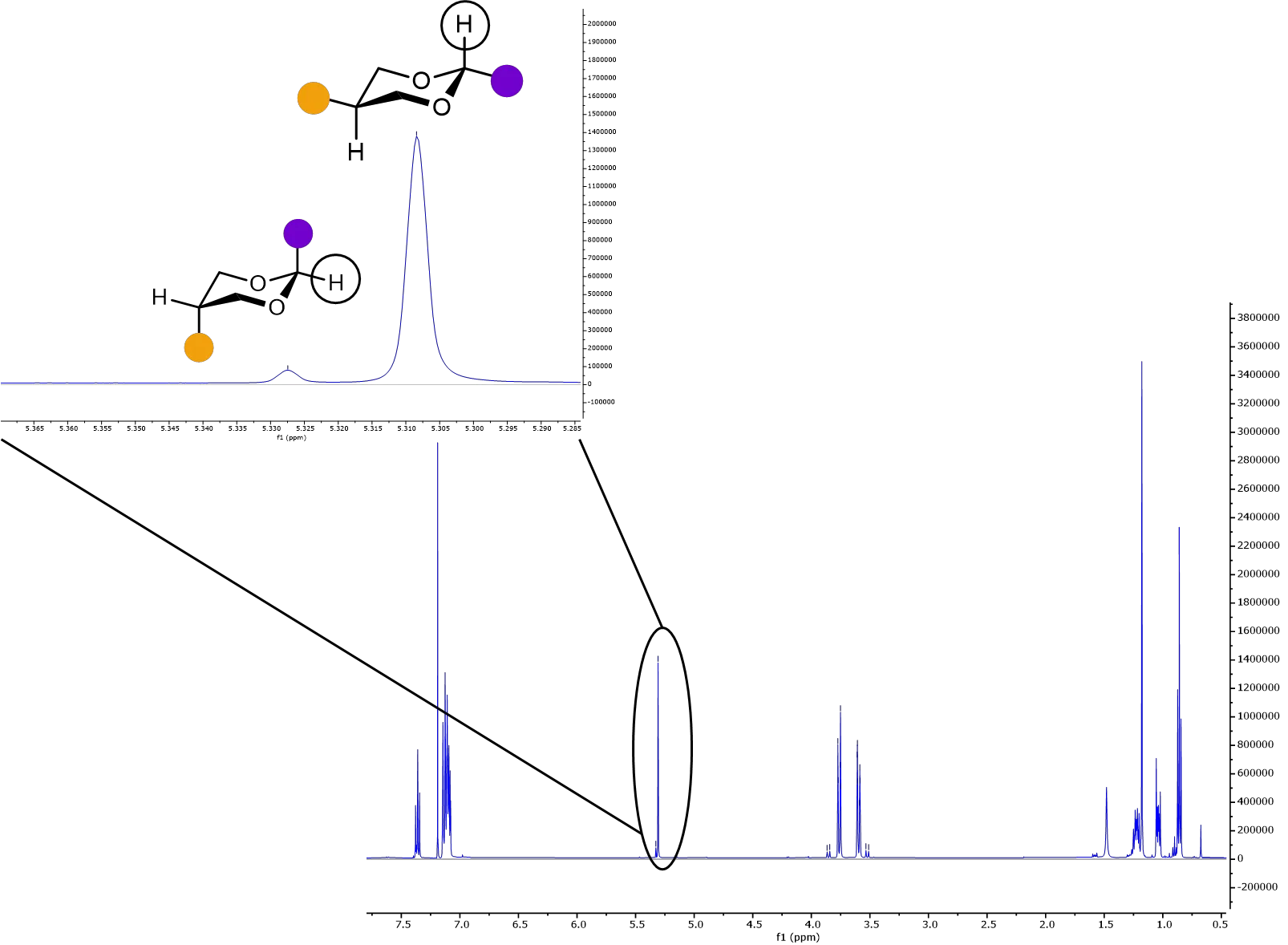
The molecules in question are based on 1,3-dioxane — a six-membered ring with two oxygen atoms. If you attach a methyl group (a small bump made of one carbon and three hydrogens) at position 5 of this ring, the molecules start to align polar. That is, all their electric dipoles, like tiny compass needles, point in the same direction.
The most interesting part is that this trick works not just for one compound but for a whole family. In eight pairs of "parent — methylated analog," adding the methyl group either strengthened the polar order or switched it on where it was completely absent. It's as if the same small part made different construction sets assemble into the same shape.
Such simple molecular design opens the door to new liquid crystal materials for displays, sensors, and optoelectronics. Instead of laboriously screening complex molecules, you can take a proven scaffold and add one small bump, and get the desired property.
A methyl group is just one carbon and three hydrogens, but its position on the ring can completely change a molecule's behavior, like how turning the handlebars changes a bicycle's direction.