Neural network learns to hold plasma shape ✛
A tokamak holds plasma, a superheated gas, in a magnetic field, like an invisible hand holding jelly. The plasma shape must be precise: if it touches the walls, everything is ruined. Previously, settings for shape control were calculated in advance, like a navigator plotting a course on a paper map. But plasma can behave unexpectedly, and the map becomes outdated.
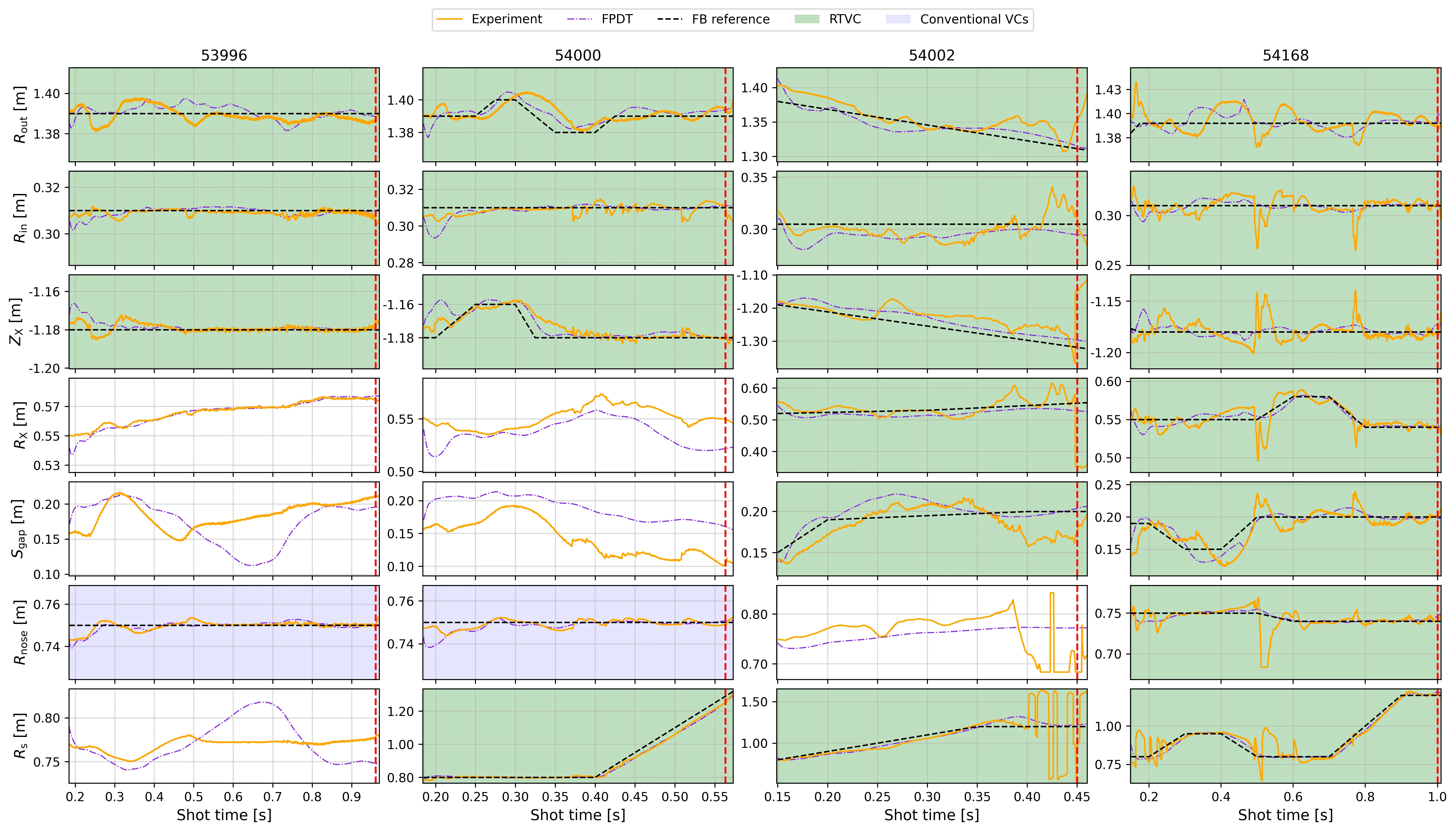
On the MAST Upgrade device, a neural network learned to predict how the plasma shape would respond to changes in currents. Every 5 to 5.6 milliseconds, it produced a new sensitivity table, and the controller immediately recalculated virtual circuits. This is like a navigator that sees a traffic jam ahead and suggests a detour, without waiting for the driver to notice it themselves.
Experiments showed that the same emulator handles different tasks: holding the shape, tracking perturbations, moving the divertor leg. There were also difficulties: when controlling all seven parameters at once, the numbers became too large, and the control trembled. But the main thing was achieved: the neural network can update settings on the fly, and this is compatible with the conventional control system. Previously, operators manually prepared settings for each stage; now the neural network does it, making experiment preparation simpler.
The neural network emulators were trained on 100,000 synthetic equilibria generated over several days on a high-performance cluster, whereas manually calculating that many virtual circuits would have taken years.