Cosmic Census: Why Computers Can't See Galaxy Shapes ✛
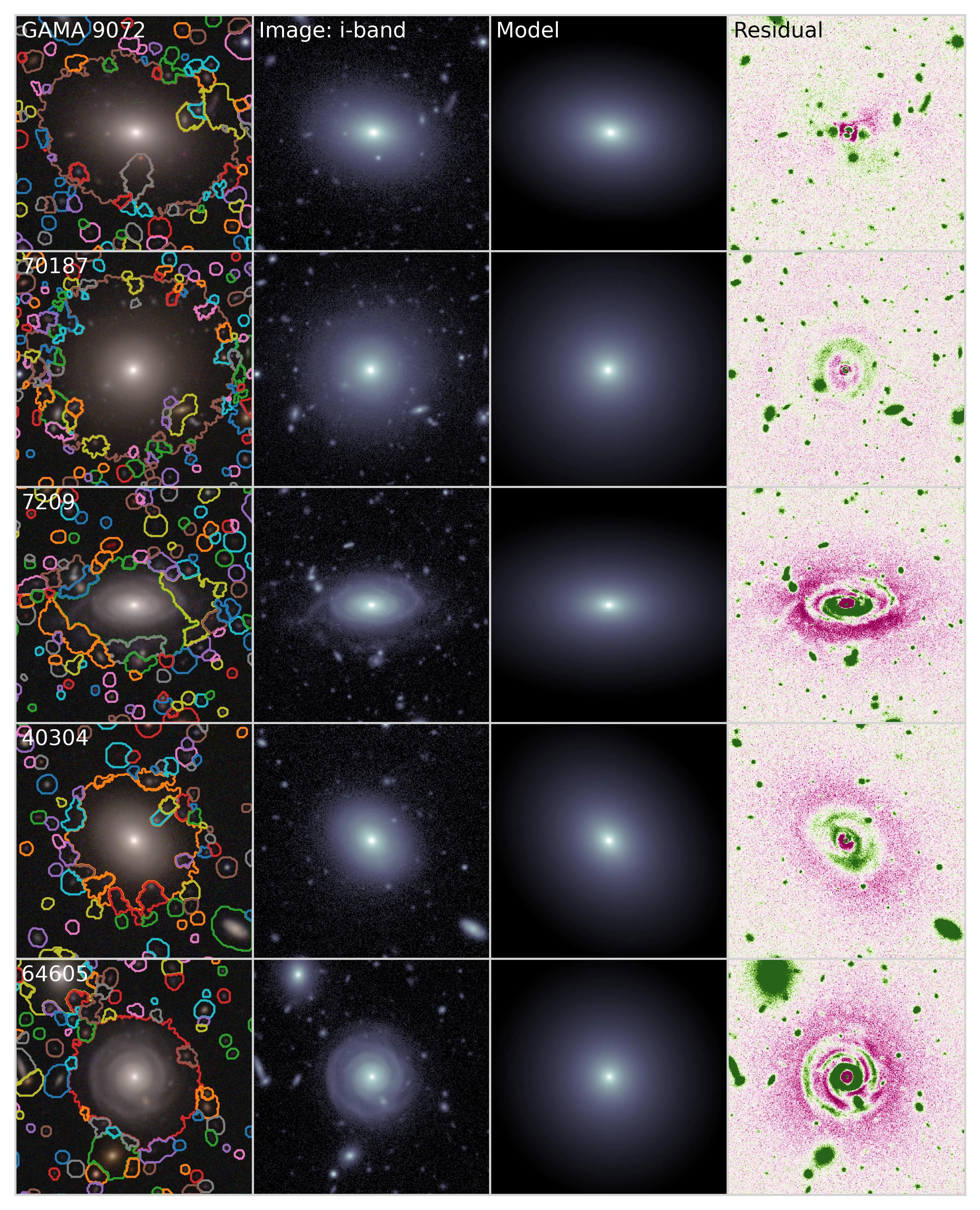
A census by body shape: that's one way to describe what astronomers did with 6348 massive galaxies. Instead of height and weight, they measured how concentrated the light is toward the center, how flattened the galaxy is, and how asymmetric its shape is. Then they ran the same measurements on galaxies from three computer models of the universe and compared the results.
Each model turned out to be like an artist drawing a portrait from memory: it gets the general features right but muddles the details. One model too often produces galaxies with a bright, dense core; another inflates disks to unrealistic sizes; and the third almost never creates the very flat galaxies that are common in the real sky.
Why does this happen? In the models, the transfer of angular momentum within a galaxy works poorly. The gas from which stars form must lose rotation as it falls toward the center, otherwise the disk won't become thin. The processes responsible for this are described too crudely in the computer. So the model doesn't know what to do with the excess rotation, and the galaxy's shape comes out wrong.
Previously, it was thought that if a model reproduces the overall number of galaxies, then the internal structure would also be close to reality. Now it's clear that's not the case. The total number of stars can match, but their spatial distribution can differ greatly from what is observed. For future models, this is a tough exam: they will have to pass not only the count but also the shape.
The next step is to look not only at shape in isolation but also at how shape relates to mass and star formation rate. Then it will become clear in which corners of the model universe the physics breaks down. Meanwhile, the census continues: each new galaxy from future sky surveys will test whether computers have learned to see what telescopes see.
The Sérsic index of galaxies typically lies between 1 (a pure exponential disk) and 4 (a classical de Vaucouleurs elliptical profile), but in simulations values up to 8 are found, which is almost never observed in reality.
In Liu Cixin's novel 'The Three-Body Problem', the Trisolaran civilization tries to predict the structure of their chaotic star system but faces fundamental limitations in modeling. Similarly, modern galaxy formation simulations face limitations in reproducing structural diversity, despite impressive computational power.