Magnetic resonance imaging (MRI) is a non-invasive imaging technique that produces detailed three-dimensional images of the inside of the body. Unlike X-rays or CT scans, it does not use ionizing radiation, making it safe for repeated use. Instead, it exploits the magnetic properties of atomic nuclei, primarily hydrogen protons in water and fat, to create contrast between different soft tissues. This makes MRI the go-to method for visualizing the brain, spinal cord, muscles, joints, and internal organs with exquisite anatomical detail.
Histoire
The underlying principle of nuclear magnetic resonance was discovered independently by Felix Bloch and Edward Mills Purcell in 1946, for which they shared the Nobel Prize in Physics in 1952. The application to imaging was developed by Paul Lauterbur and Peter Mansfield in the 1970s, who were awarded the Nobel Prize in Physiology or Medicine in 2003.
Comment ça marche
The patient is placed inside a powerful, superconducting magnet that aligns the magnetic moments of hydrogen protons in the body. A radio-frequency pulse is then applied, knocking these protons out of alignment. As they relax back to their original state, they emit radio signals that are detected by receiver coils. The timing and strength of these signals depend on the local chemical environment, allowing a computer to reconstruct a high-resolution image. By varying the sequence of pulses, different tissue contrasts can be emphasized, such as highlighting blood flow or detecting edema.
En pratique
MRI is a cornerstone of medical diagnostics, used for detecting tumors, brain abnormalities, spinal cord injuries, ligament tears, and cardiovascular disease. It is also a powerful research tool in neuroscience for mapping brain activity (functional MRI) and in materials science for non-destructive testing.
Anecdote
The world's most powerful MRI machines use superconducting magnets that must be cooled to near absolute zero with liquid helium, and the magnetic field they generate is strong enough to lift a car.
La lumière arrache des électrons au cristal, et ils s'envolent vers le détecteur comme des flèches vers une cible. En suivant leurs trajectoires, les physiciens reconstituent la vie des électrons à l'intérieur du matériau : avec quelle énergie et dans quelle direction ils se déplaçaient.
Le sculpteur regarde un bloc de marbre et y voit une figure à libérer de l'excédent. Au lieu d'ajouter de l'argile, il enlève tout ce qui n'appartient pas à la forme.
Les ondes radio d'un pulsar lointain traversent le milieu interstellaire et rencontrent sur leur chemin des structures magnétiques invisibles de la taille de la distance entre le Soleil et la Terre.
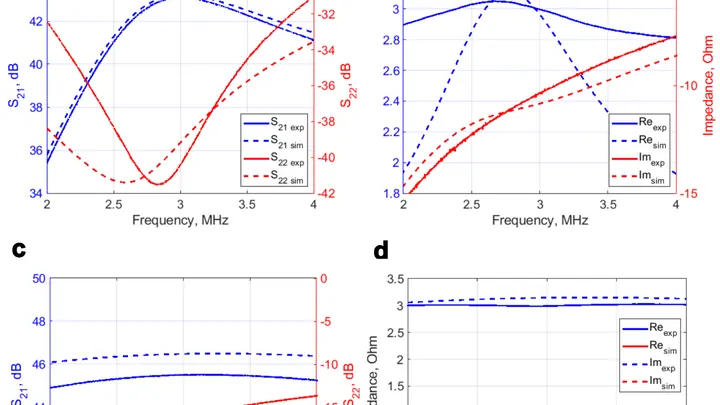
La bobine d'une IRM capte le signal radio des atomes d'hydrogène, comme une antenne capte une station de radio lointaine. Mais le signal est faible, et si l'amplificateur lui-même est bruyant, l'image devient granuleuse.
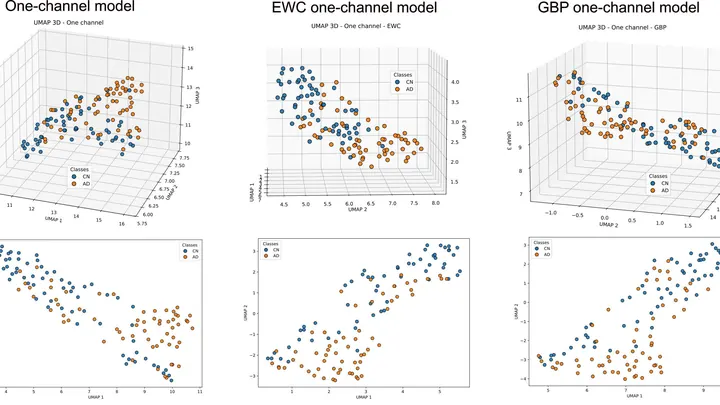
Un médecin passe des années à apprendre à reconnaître les maladies sur les images du cerveau. D'abord, il repère parfaitement les signes du vieillissement, puis il maîtrise les tumeurs – et soudain, il se met à confondre ce qu'il savait auparavant. C'est à peu près ce qui arrive à de nombreux réseaux de neurones : les nouvelles connaissances effacent les anciennes.
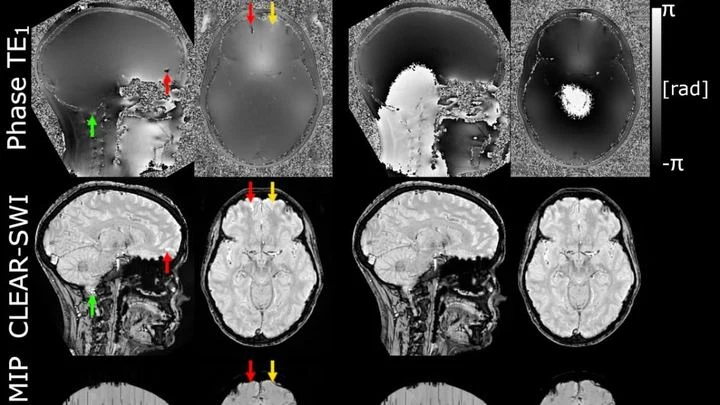
L'aimant puissant de l'IRM induit de faibles courants électriques dans les tissus. Leur phase se comporte comme l'aiguille d'une boussole qui tremble au moindre coup de vent : la moindre perturbation transforme la carte en un rideau de parasites, où l'on ne distingue plus que du bruit au lieu des petits vaisseaux ou des dépôts de fer.
Dans un morceau d'oxyde de manganèse épais de quelques couches atomiques, les électrons se comportent comme une foule dans un escalator : chacun suit ses propres règles, mais ensemble ils créent un flux commun. Les physiciens ont dirigé un rayonnement X mou sur ce film et en ont arraché des électrons.
Dans la maladie de Parkinson, on implante de fins fils dans le cerveau pour calmer les tremblements. L'opération est lourde et les fils restent en place pendant des années.
Les marqueurs radioactifs, c'est comme un livreur avec une balise : on l'injecte dans le corps, et il illumine l'organe voulu sur l'image. Mais ce livreur a des règles strictes : on ne peut pas l'envoyer souvent, il se fatigue vite et coûte cher. Les médecins rêvent depuis longtemps d'un moyen de voir un organe sans radiations.
Le champ magnétique est invisible, mais on peut le faire « briller » grâce à de minuscules défauts dans le diamant : les centres azote-lacune. Chaque défaut agit comme une boussole miniature qui indique l'orientation du champ. Le problème, c'est qu'il y a beaucoup de ces boussoles, et les lire toutes une par une reviendrait à recopier à la main chaque lettre d'un gros livre.
Une tasse chaude ou une main humaine émettent une lumière invisible : le rayonnement infrarouge moyen. Chaque substance absorbe cette lumière à sa manière, laissant une « empreinte digitale » unique. Grâce à cette empreinte, on peut savoir de quoi est fait un objet sans le toucher.
Le glioblastome, tumeur cérébrale, est sournois : chez certains patients, le témozolomide fonctionne, chez d'autres, presque pas. La différence réside souvent dans une petite région de l'ADN, le gène MGMT. Si cette région est chimiquement « éteinte » (méthylée), la tumeur répare moins bien ses cellules, et le médicament frappe plus précisément.