Why Does Iran Swing Between Drought and Flood?
Original: "Spatial Analysis of Seasonal Precipitation over Iran: Co-Variation with Climate Indices"
arXiv:2001.09757 · 2020-01-15 · CC BY 4.0 · 1 min
Three distant oceanic pulses decide how much rain falls each season.

In 2018, Iran saw almost no rain, but in 2019 rivers burst their banks. It turns out these swings are tied to three distant oceanic pulses that act like orchestra conductors, each setting its own rhythm for rains over Iran.

These pulses go by the names SOI, NAO, and PDO. SOI is the pressure difference between Tahiti and Darwin, NAO is the difference between the Azores and Iceland, and PDO is the Pacific Ocean's surface temperature. When the ocean runs warm or cold, the atmosphere above it shifts, which changes how much moisture reaches Iran.

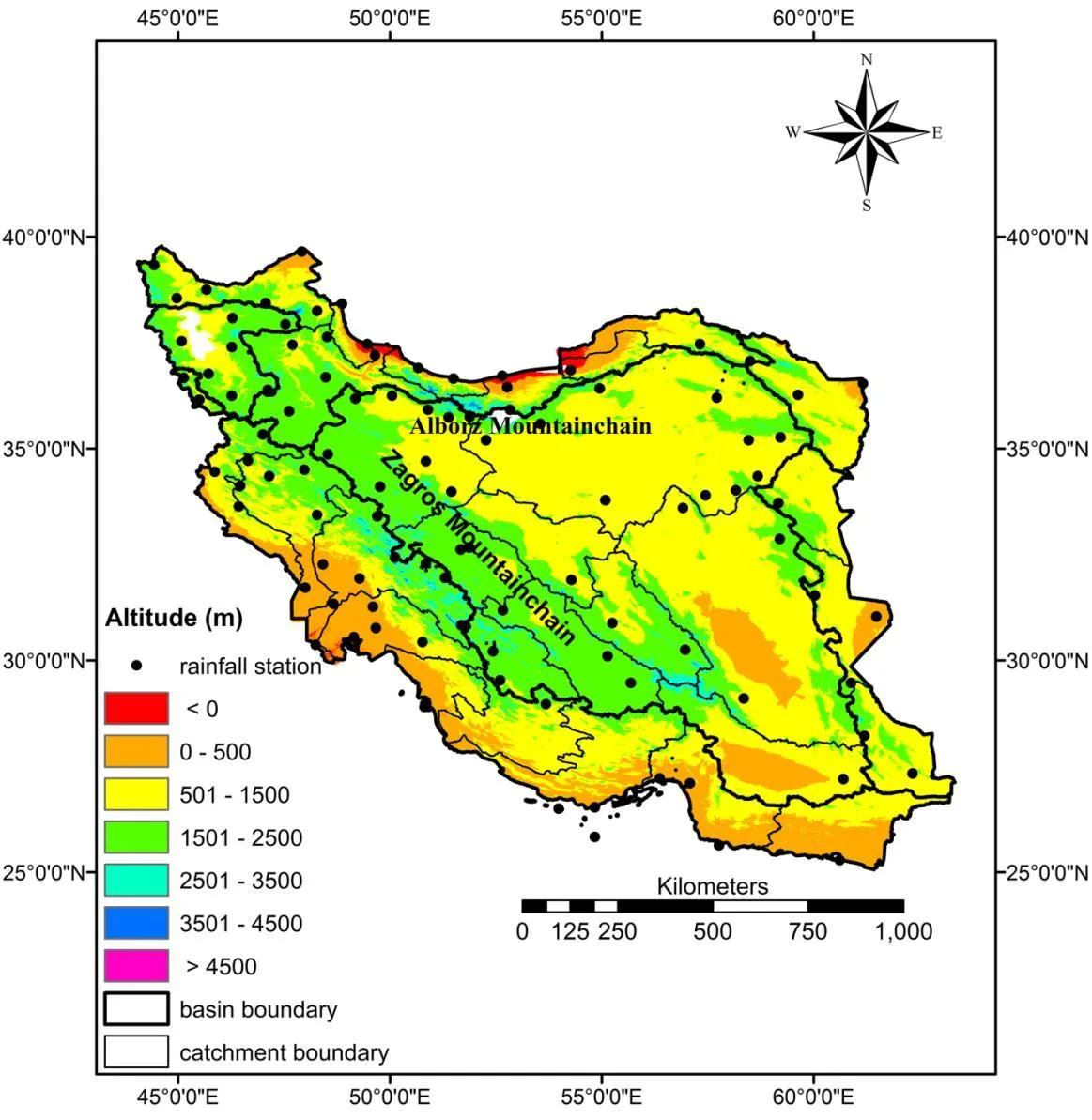
The researchers took rainfall data from 103 weather stations over 30 years and matched them against the phases of these three pulses. They found that SOI has the strongest grip on precipitation, driving rains at 86% of stations in autumn. When all three pulses sit in a neutral phase, rainfall most often falls below normal, while other phases can bring either no rain at all or up to twice the usual amount.

Now, for each station and season, you can predict in advance by what percentage precipitation will change if you know the phase of SOI, NAO, or PDO. That helps plan dam operations, allocate irrigation water, and brace for droughts or floods.

In some parts of Iran, such as Yazd, average annual precipitation is just 51 mm, while on the Caspian coast at Bandar-e Anzali it reaches 1730 mm per year, a 34-fold difference. Yet even in arid regions, an El Niño phase can more than double seasonal precipitation.

\rho = 1 - \frac{6 \sum d_i^2}{n(n^2 - 1)}
A measure of monotonic association between two variables, where d_i is the difference in ranks and n is the number of observations
Concepts
North Atlantic Oscillation Southern Oscillation index El Niño index ENSO spring predictability barrier El Niño interannual variability precipitation monsoon NOAA CPC La Niña precipitation anomaly seasonal cycle Indian Ocean capacitor effect Indian Ocean Dipole natural variability monsoon onset seasonal forcing TAO/TRITON moorings Teleconnection