Why African Rains Depend on Distant Oceans, and How Models Get Tangled in These Links ✛
In summer, the sky over West Africa darkens and the rainy season begins, feeding hundreds of millions of people. These rains are brought by the West African monsoon, a wind that pulls moist air from the ocean onto land. But how strong the rains are depends on water temperatures in three distant places: the warm El Niño current in the Pacific Ocean, the Mediterranean Sea, and the equatorial Atlantic. Scientists use computer models to test exactly how each of these influences the rains.
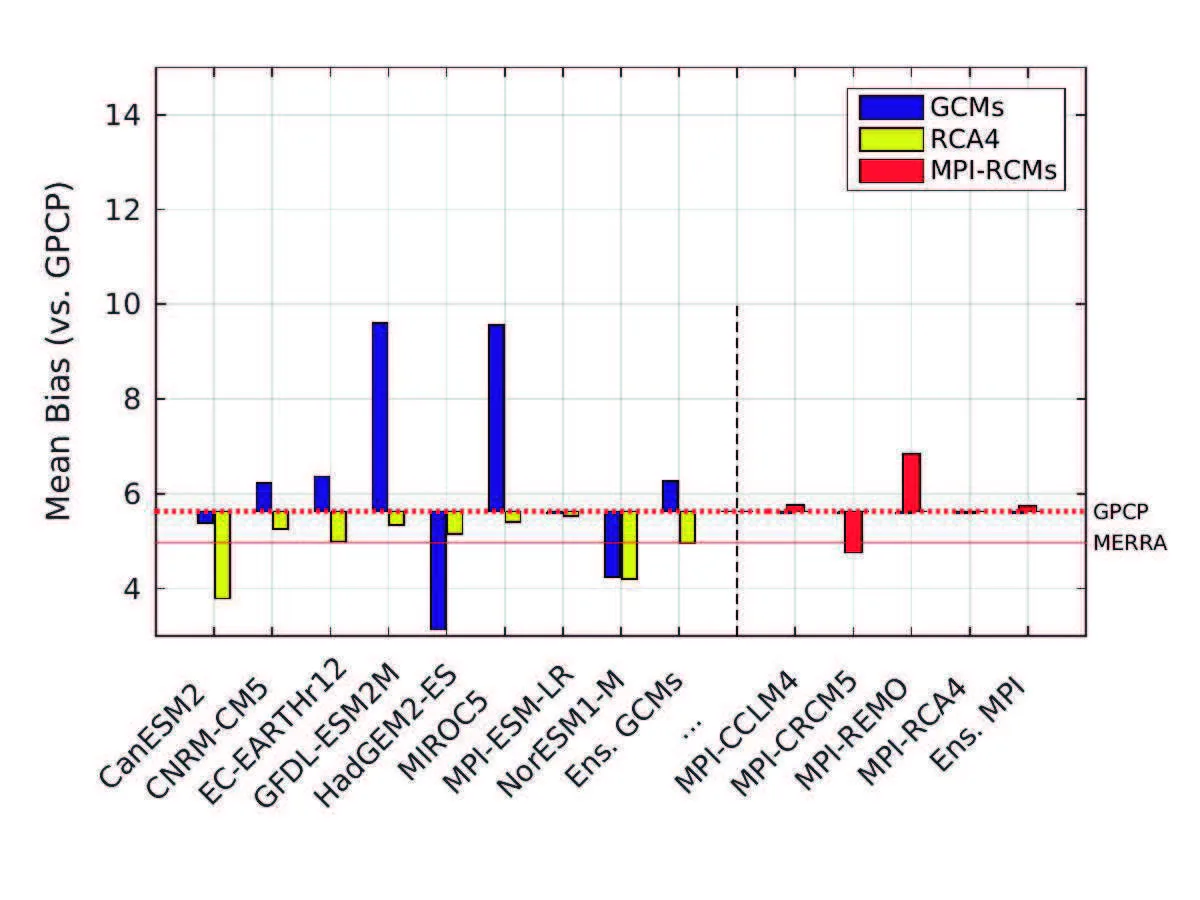
There are two kinds of models. Global models cover the whole planet but with coarse cells, like pixels in an old photograph. Regional models take a small area, such as West Africa, and compute it in much finer detail, like a magnifying glass. It seems logical that a detailed model would also capture the ocean links better. But scientists compared 8 global models and 11 regional ones against real observations over 26 years and saw something unexpected.
Regional models do hear the Mediterranean better: when the water there is warm, they correctly show more rain in the Sahel. But they hear El Niño worse. Global models know that a warm Pacific usually means drought in the Sahel, while regional models lose this signal because the Pacific lies far outside their small domain. The third signal, from the Atlantic, could not be tested: over those years it always appeared together with El Niño, and separating them was impossible, like trying to hear a quiet voice while someone shouts nearby.
The takeaway is simple: there is no single best model. For forecasting El Niño droughts, a global model is better; for the Mediterranean influence, a regional one. It is like a translator who renders one speaker perfectly but drowns out the other. So before predicting rains, you need to figure out which ocean matters most this time and pick the right tool.
The regional model SMHI-RCA4, when driven by different global models, consistently produces a spurious drought over the Congo. This defect also appears in other regional models, pointing to a common problem with convection parameterization in that part of Africa.