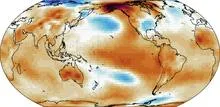
The Pacific Decadal Oscillation (PDO) is a long-lived pattern of sea surface temperature variability in the North Pacific Ocean, characterized by alternating warm and cool phases that persist for 20 to 30 years at a time. Unlike El Niño, which lasts months, the PDO's shifts occur on timescales that span decades, making it a key driver of long-term climate trends in the Pacific basin and beyond. Its signature is most visible in the northern Pacific, where a warm phase brings warmer-than-average waters along the west coast of North America and cooler waters in the central North Pacific, with the opposite pattern during a cool phase.
History
The term 'Pacific Decadal Oscillation' was coined in 1996 by Steven Hare, a fisheries scientist, who noticed that salmon production in Alaska and the Pacific Northwest alternated in sync with the pattern. Earlier work by Francis Fukuda and others in the 1980s had described similar variability, but Hare's naming and subsequent research by Nathan Mantua and colleagues brought it to wide attention.
How it works
The PDO is not a single oscillation but a composite of several physical processes, including ocean–atmosphere interactions, oceanic circulation changes, and stochastic forcing from weather. Its index is typically defined as the leading principal component of North Pacific sea surface temperature anomalies. The pattern is maintained by feedbacks between the ocean and atmosphere: for example, during a warm phase, reduced sea level pressure in the Aleutian Low alters wind-driven ocean currents, which in turn reinforce the temperature anomalies. The PDO also interacts with other climate modes, such as El Niño, which can trigger or modify its phases.
In practice
The PDO is used to inform long-term planning in fisheries management, water resource allocation, and wildfire risk assessment, as its phase shifts the productivity of marine ecosystems and the likelihood of drought in western North America.
Fun fact
The PDO's phase can influence the frequency of strong El Niño events, with more frequent and intense El Niños during the positive phase of the PDO, as seen in the late 20th century.
At 359.8 K (about 87 °C), a substance made of bent, banana-shaped molecules transitions into a liquid crystal phase where the molecules assemble into layers. But unlike ordinary layers where all the 'bananas' lie the same way, here they are tilted in two directions at once, like cherry pits in a jar that can point both up and sideways.
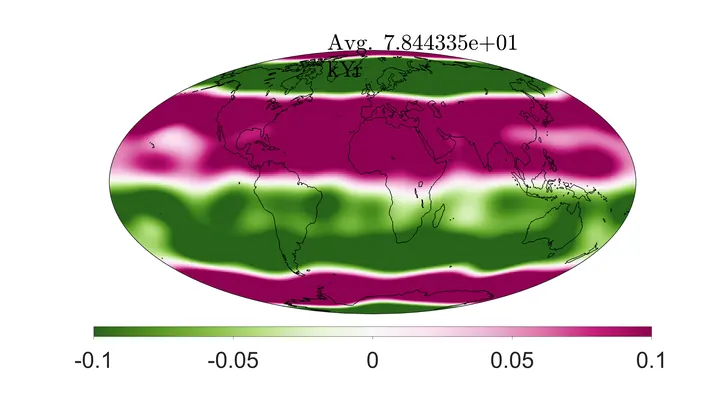
Earth's magnetic field is like an invisible shield that protects us from cosmic radiation. But if you look closely at its long-term averaged pattern, you'll notice that this shield isn't perfectly smooth: it has its own "seams" and "patches." New research using computer simulations of the geodynamo shows that…
The giant cloud of icy chunks on the outskirts of the Solar System, the Oort cloud, resembles a transparent bubble stretched to a light-year across. Usually, these chunks hang quietly in their distant corners, but sometimes something disturbs them.
Most often, it's the tidal influence of our Galaxy.
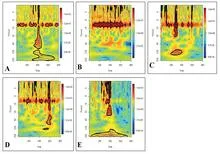
An orchestra plays in a dark hall, and the listener hears only a hum: hundreds of instruments blend into a dense noise in which no melody can be discerned. That is roughly what spectra extracted from climate data by methods like the Koopman operator look like: hundreds of components, each with its own frequency, and it is unclear which ones are true musicians and which are the rattling of chairs.
The Sun pulses in a slow rhythm, and that rhythm can be heard in the rains over Brazil. Sunspots on the solar disk thicken and thin roughly every eleven years, and along with them, pressure in the Pacific Ocean shifts, sea surface temperatures change, and then rainfall amounts in the northeast of the country follow suit.
Imagine a radiator in a room: it heats up, but if its surface is clogged with dust, heat escapes less efficiently. Something similar is happening to our planet. Earth receives energy from the Sun and must radiate the excess back into space, otherwise temperatures rise. Scientists call this ability to shed excess heat radiative feedback.
When a planet approaches its star to a critical distance, tidal forces, the result of a sharp gradient in gravity between the near and far sides of the celestial body, tear it apart. This process ignites a cosmic funeral pyre: the planet's debris forms a glowing accretion disk around the star.
Lunar rocks brought a puzzle: their age is 4.35 billion years, but the Moon itself should have appeared 150 million years earlier. The missing time is hidden in tidal heating. When the Moon hung closer to Earth, Earth's gravity acted like tireless hands: it constantly kneaded and bent the satellite.
Imagine an interpreter in a negotiation room who hears the tropics whisper and repeats it too loudly. That is how the neural-network climate model DLESyM behaves when forced with real Pacific sea surface temperatures. The ocean whispers "El Niño," and the atmosphere shouts back as if being shaken by the shoulders.
The ocean hums like a crowded hall: in one corner, voices argue about decades; in another, about years; in a third, about the changing seasons. To pick apart these voices, climatologists used to rely on filters they tuned themselves, letting through only slow waves or only fast ones. But the Pacific plays by its own rules: a warm patch off the coast of Peru can be a brief spike or part of a long-term rearrangement.
A translator that learned the grammar of the wind, not just the vocabulary. The wind blows over the Pacific, and the water responds with waves, currents, and upwellings of cold depths. The KIST-Ocean neural network was taught not just to memorize how the ocean looked yesterday, but to understand why it will become what it is tomorrow.
Each Atlantic hurricane season is like a game of dice, where the number of spots depends on three major climate forces: El Niño, ocean temperature in the 'hurricane nursery,' and the North Atlantic Oscillation.
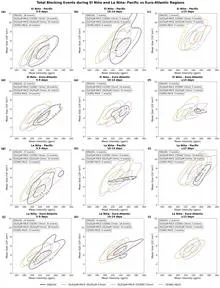
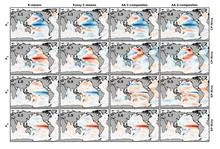
An artist painting the ocean does not limit themselves to two colors: warm and cold. Likewise, climatologists studying El Niño increasingly speak of a whole palette of shades. El Niño is a warm current off the coast of Peru that, every few years, alters weather across the planet. Its counterpart, La Niña, brings cold.
Water remembers. Every current, every eddy, every degree of temperature in the ocean's depths does not vanish without a trace; it leaves a mark that can be read. But until recently, that mark was read only by bulky physical models that spent weeks on supercomputers and still got the details wrong.
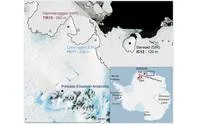
On the coast of Dronning Maud Land, two ice cores stand like two seismographs on one shore. One, FK17, was drilled on the crest of the Lokenryggen ice rise; the other, TIR18, on the crest of Hammaryggen. A hundred kilometers apart, they catch different tremors of the climate. One hears the Pacific, the other the Atlantic and Indian Oceans.
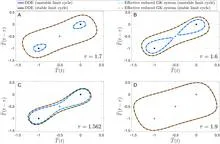
The Pacific Ocean remembers. Water warmed off the coast of Peru drifts slowly westward, and six months later its heat returns to South America. Scientists call this six-month journey the delay. It turns a simple climate model into a maze where the route depends not only on your current position but also on where you were half a year ago.
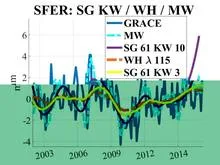
Imagine sensitive scales scattered across Europe. Each GPS station is one such scale, recording daily how much the ground beneath it has risen or fallen. When water accumulates underground, the surface sags slightly; when water leaves, the surface lifts. These movements are tiny, on the order of millimeters, but the stations pick them up.
Seventy-five years of weather observations in India, when plotted on a graph, resemble the cardiogram of a vast organism. Instead of a single steady pulse, there are fifteen different lines, each with its own rhythm. Somewhere the heartbeat is as steady as a sleeping person's, while elsewhere it falters, as if after a quick run.
An interpreter at a negotiation hears not only the volume of the voice but also the shift in topic. Climatologists have long listened only to volume: the average temperature. If it rises, the planet is warming. But behind the average hide events that matter more than the trend: heat waves, cold snaps, sudden changes.
A doctor who has followed the same patient for years learns to predict flare-ups from subtle signs: a slight pallor, labored breathing, restless sleep. The ocean is just such a complex patient, only instead of a thermometer it has thousands of buoys and satellites, and instead of a medical history, seventy years of daily measurements.
A conductor in a concert hall waves a single baton, yet violins and timpani respond differently. Likewise, the warm patch in the Pacific Ocean known as El Niño makes different corners of Russia experience completely different winters under the same phase. Somewhere snow melts in January, while elsewhere frosts intensify to the limit.
Soil breathes. The top layer of the earth takes in moisture after rain, then releases it into the air, much like lungs inhale and exhale. This inhalation and exhalation happens everywhere on the planet, but its rhythm is not uniform: in some places it is fast and steady, in others irregular and deep.
A baker puts a layered cake in the oven: the dough is the same, the heat is the same, but each layer bakes differently. The thin crust on top is already browning, while the middle is still underdone. Earth's climate is similar: the planet is warming, but different parts of it are warming at different rates and at different times.
The ocean remembers its past. Heat given to the water off the coast of Norway does not vanish without a trace: it embarks on a long journey across the Atlantic, only to return decades later and alter the temperature at those same shores once again.
Earth's climate resembles a choir, where each member sings their own part at their own pitch. Some voices hold low notes, like multi-year ocean temperature oscillations, while others produce rapid trills, like short atmospheric waves. The conductor needs to hear each one, but the voices overlap and the notes blend into a mush.
The orchestra has been playing in the Pacific Ocean for over a century. Some instruments carry a fast melody, others draw out a slow bass line, and together they create a pattern of warm and cold patches on the water's surface.
A wave travels westward, reflects off the coast, and returns six months later to alter temperatures along the eastern Pacific. This journey of Rossby and Kelvin waves Mori-Zwanzig formalism turns into an equation with memory. Previously, climatologists added delays to El Niño models by intuition, relying on physical insight.
The thermometer at a weather station in Delhi doesn't know it's part of a giant ear. Every day it records the temperature, and after forty years of such records, you can hear the breathing of an entire subcontinent. The India Meteorological Department divided the country's land into one-degree squares and took readings from 1970 to 2009.
The same orchestra sounds different when two different conductors stand at the podium. One swings the baton widely, and the whole hall hears his accents; the other barely nods, and only individual instruments respond.
The Paglia River behaves like a pendulum that resists being pushed. If a sudden influx of water pours in, the river does not keep gaining strength but quickly swings back to its usual level. This behavior is called antipersistence, and it was found in a twenty-two-year record of half-hourly discharge measurements near the Italian town of Orvieto.
The river that circles Antarctica does not flow in a single channel: it sometimes splits into branches, sometimes merges into one stream. That is what the fronts of the Southern Ocean look like on maps built from satellite data on sea surface height. Previously, these fronts were sought along lines of equal water level, and they seemed to creep slowly southward.
In 1972, anchovies vanished off the coast of Peru. Fishermen were left empty-handed, and the world learned the word El Niño. Since then, scientists have been searching for ways to predict when that warm current will once again upend the planet's weather.
An orchestra without a conductor: the instruments set their own rhythm. That is how one might describe the climate system of the Indo-Pacific region, where sea surface temperatures oscillate across many time scales, from seasonal to multi-decadal. Previously, to hear a single instrument, you had to pre-tune filters, cutting off everything else.
A kitchen thermometer doesn't creep upward gradually when you turn on the stove: first it stays put for a while, then suddenly jumps a few degrees. According to researchers' calculations, global temperature behaved much the same way from 1950 to 2013.
Every clear night, a telescope on the island of La Palma looked at the sky and recorded how much the air dimmed starlight. This was routine work for astronomers measuring stellar positions. But in these records, like in an old diary, traces of a different story remained: the arrivals of dust from the Sahara.
Ocean temperatures did not rise like water filling a bathtub; they rose like a person climbing stairs: two broad steps upward, with waves of natural variability lapping around them, advancing and retreating. The first step occurred in 1925/26, the second in 1987/88.
A rock chronicle where each layer is a page, and spectral analysis reads the rhythm of the lines. In the Realmonte salt mine in Sicily, geologists measured the thickness of 120 three-part cycles: a millimeter-scale clay parting, a thin anhydrite or polyhalite layer, and then a decimeter-scale halite bed.
The ocean is like a pendulum with a memory. A push from seasonal winds returns not immediately but months later, when a wave crosses the Pacific. This delay, the authors argue, is what makes El Niño and La Niña repeatedly peak at the same time of year.
A forest fire has no "typical" size: a small grass burn and a firestorm covering thousands of hectares are part of the same phenomenon. The same goes for tropical cyclones: the energy they release over their lifetime does not cluster around some average value. Instead, it follows a power law, and this rule holds across all of Earth's oceans.