How to Predict El Niño Six Months Ahead ✛
A translator at negotiations first simply repeats words, but gradually begins to guess what will be said next. The new weather model works the same way: physics provides the foundation, and machine learning learns from errors and fills in the gaps. As a result, it predicts El Niño—the warm Pacific current that alters weather worldwide—months in advance.
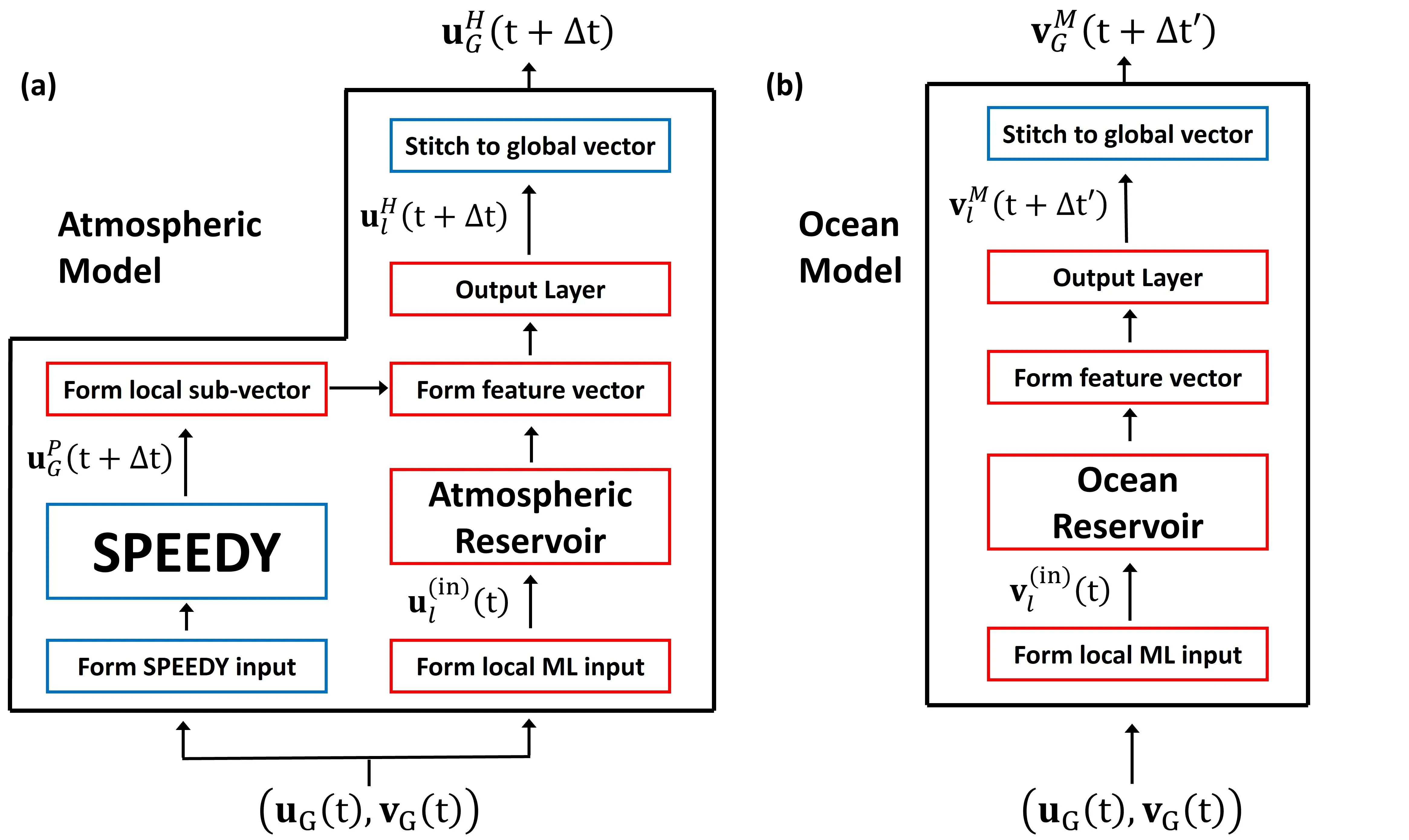
The model consists of two parts. The atmospheric part is a simplified physics-based model that computes weather on a grid with a resolution of about 400 kilometers. The oceanic part is a trainable program that predicts sea surface temperature and the heat stored in the upper 300 meters of water. Previously, this heat reserve was insufficient to look beyond a few weeks.
Now the model predicts temperature in the central Pacific better than expensive operational systems for the first 4 months of the forecast. It captures El Niño's connections to precipitation: drought in the eastern Pacific and wet weather in the southern U.S. This approach could benefit small research groups that lack access to supercomputers.
A translator that learns from mistakes eventually starts predicting the next phrase. The new model does the same with the language of the ocean: it is not perfect yet, but it can already hint when the Pacific is about to speak.
The ocean component of the model takes a step every 72 hours, while the atmosphere steps every 6 hours. To synchronize them, the ocean simply 'freezes' for 12 atmospheric steps until its turn to update comes around.
The idea of a hybrid model where physics and machine learning work in tandem recalls the concept of 'neuromorphic' systems from science fiction, such as in Neal Stephenson's novel 'Seveneves', where autonomous modules of a spacecraft combine rigid algorithms with learnable components for long-term forecasting.