Black Holes Like Boiling Water ✛
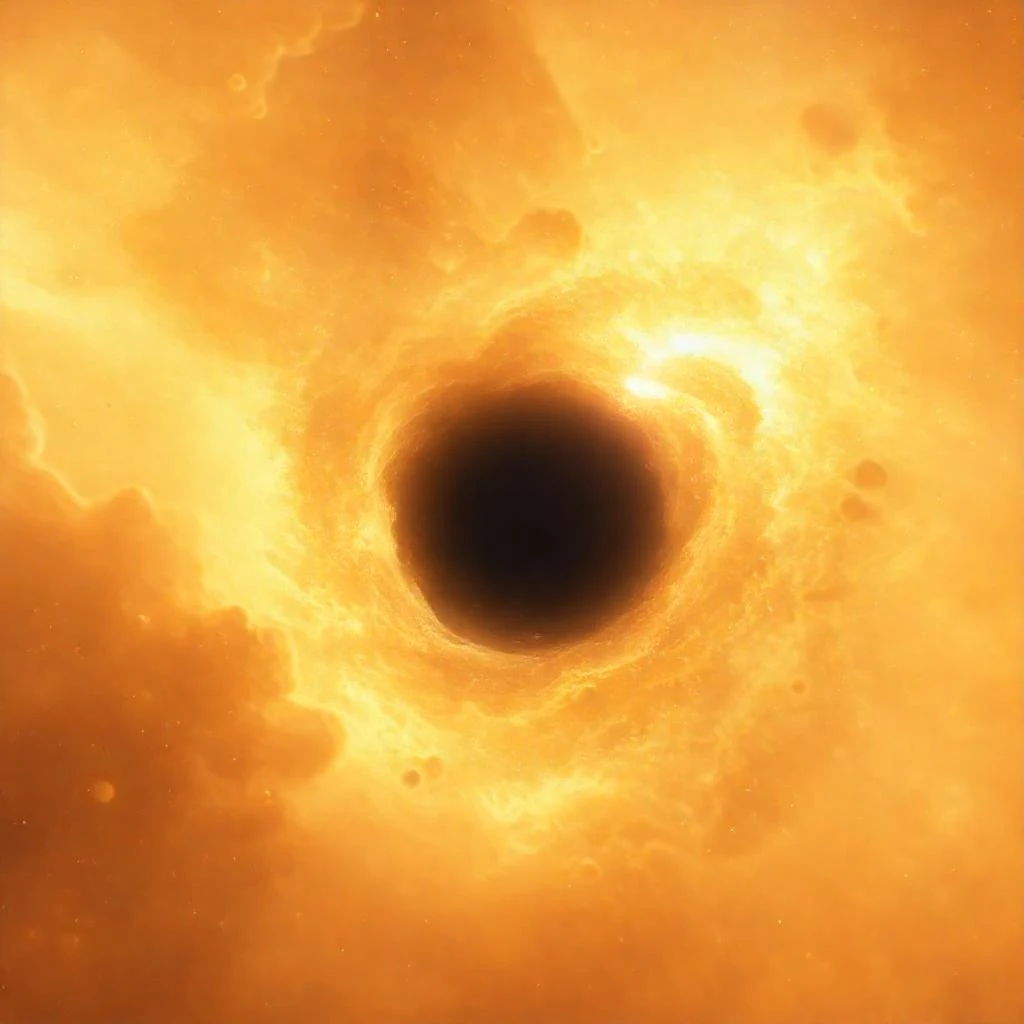
Some black holes behave like water: they can boil and condense. Their entropy (disorder) was once measured by the horizon area — a discovery by Jacob Bekenstein and Stephen Hawking. But quantum effects made entropy more complex; yet the link between extreme states endures — like a water droplet that boils and evaporates but still obeys the general laws of liquids.
Scientists have built a topological map of states marked by charges. Different quantum corrections draw different maps. In one case, charges are stable; in another, they break into groups, but the total sum of their weights remains unchanged. These charges are like bubbles in a boiling droplet: their arrangement shifts, but the collective 'importance' stays the same. The most surprising part: the more massive a black hole, the colder it gets. The record-holders are colder than the cosmic background — their temperature is near absolute zero.
The most massive black hole can be colder than the space around it — its temperature is near absolute zero.