Microwave Teleportation Withstands the Heat ✛ ✎
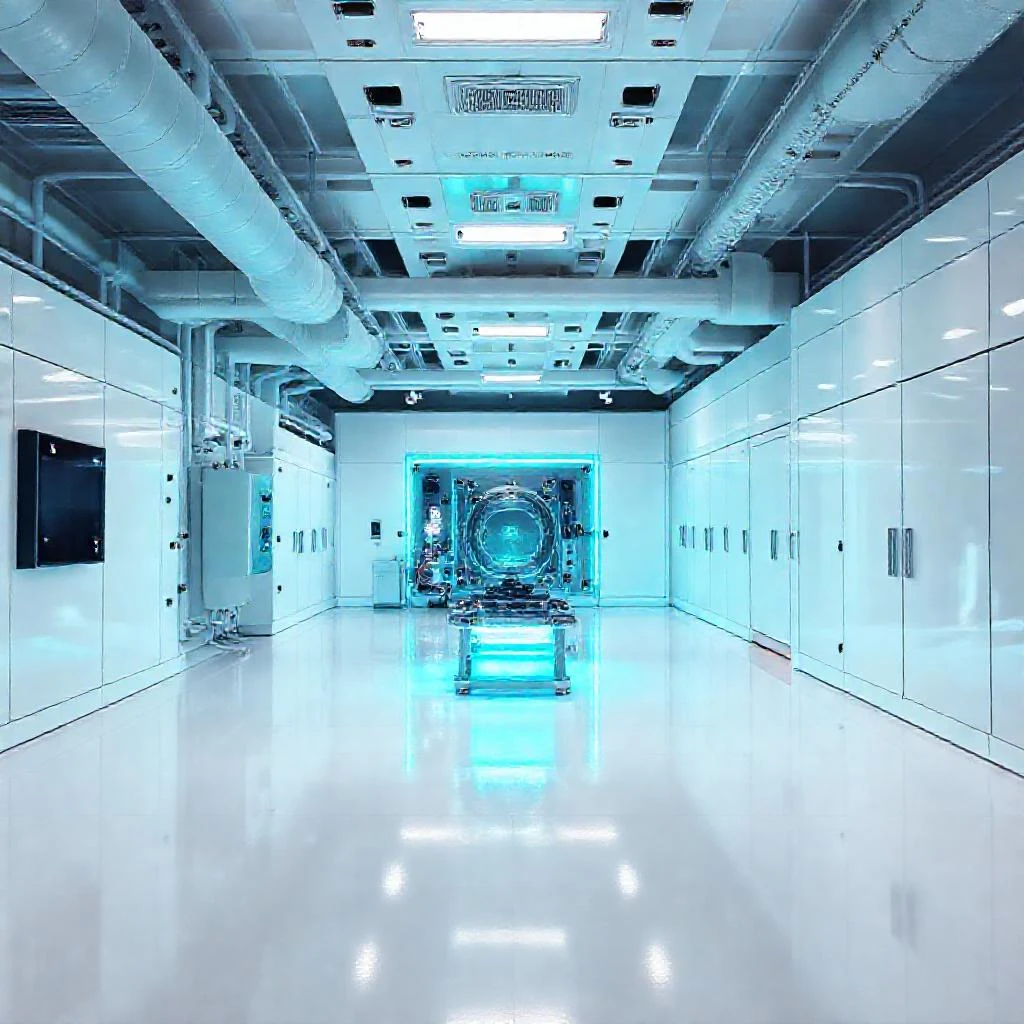
Superconducting quantum computers operate only in extreme cold — near absolute zero (–273 °C). They're cooled by systems using a rare isotope of helium. Connecting such computers with ordinary wires means letting in heat, fatal to quantum states.
Scientists turned to quantum teleportation. They created a pair of entangled microwave signals—'twins' whose properties are inseparably linked. One twin stayed in the fridge, while the other was sent through a channel heated to 4 K (hundreds of times warmer than the circuits, yet still colder than space). The signal, racing at the speed of light, reached its destination, and scientists measured it. Instantly, the first twin took on the original quantum state — information flitted from one fridge to another. Fidelity reached 60–72%, well above the classical limit.
Thermal noise, the rise of entropy, barely distorted the signal. The idea of quantum teleportation was proposed back in 1993 by Charles Bennett. This breakthrough means that for a quantum internet, total deep-freeze isn't needed — cold is only necessary at key nodes.
The operating temperatures of qubits (millikelvins) are hundreds of times colder than interstellar space.
Unlike the teleporter in Star Trek, what's transferred here is not matter but a quantum state, a kind of 'subatomic fax'.