Rhythms of Black Holes: 34 Pulsations in Gamma-Ray Bursts express
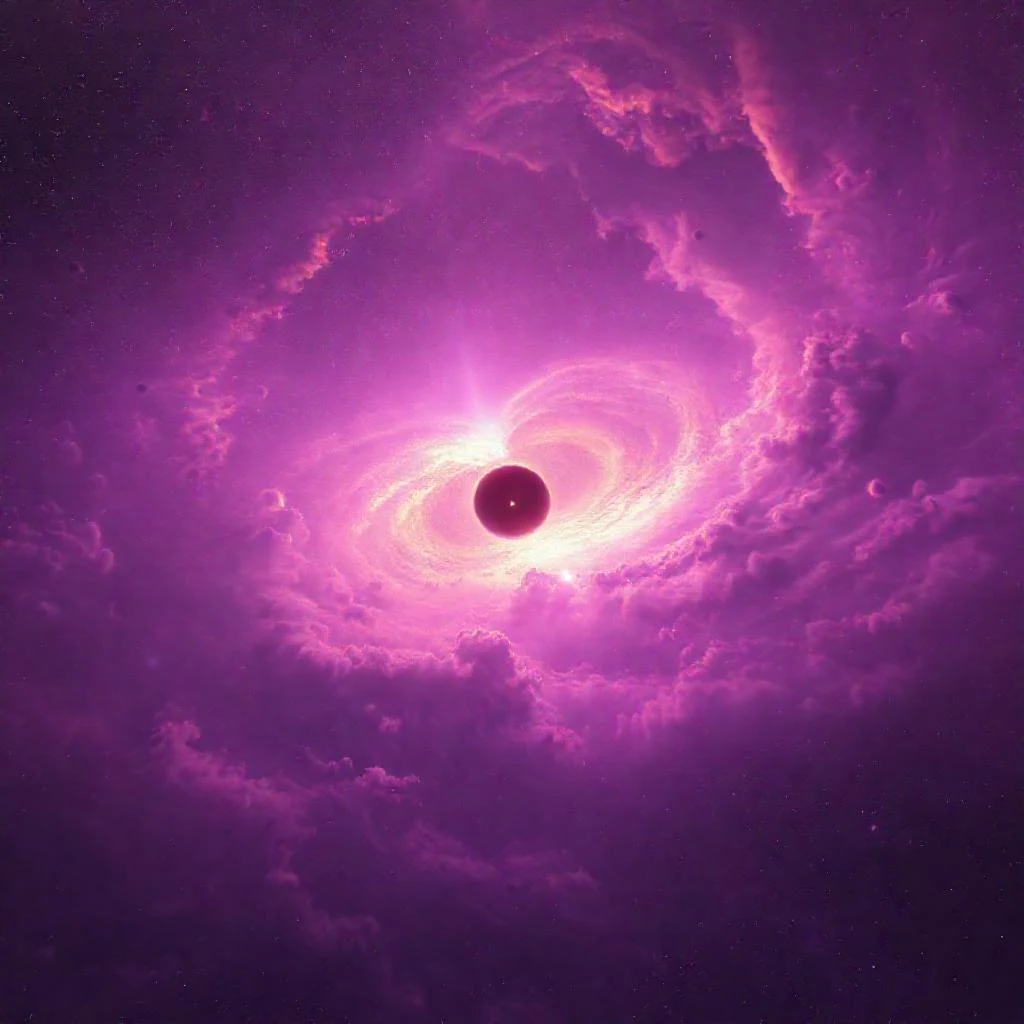
Gamma-ray bursts are the most powerful explosions in the Universe: a dying star collapses into a black hole, ejecting streams of energy. Often this happens after a supernova flare. But astronomers caught a strange rhythm — in the emission of 34 such bursts, clear pulsations appeared, like beats of a cosmic heart. The secret of this rhythm hides in the twisted spacetime around the black hole. The effect discovered by Josef Lense makes even empty space rotate, dragging along superheated gas that alternately compresses and stretches, giving rise to periodic bursts. This resembles a heartbeat — only the size of a solar system. Some pulsations speed up or slow down, as if a heart changes rhythm from excitement. These studies confirm the ideas of John Archibald Wheeler, who coined the term "black hole." The pulsations open a window into the very core of the gravitational funnel, where matter performs its farewell dance before vanishing.
These cosmic heartbeats can be extremely fast: some pulsation periods are less than a millisecond — in that time, light travels only 300 kilometers, yet more energy is released than the Sun emits in an entire year.