Tiny Seesaw Cooled Almost to Absolute Zero express
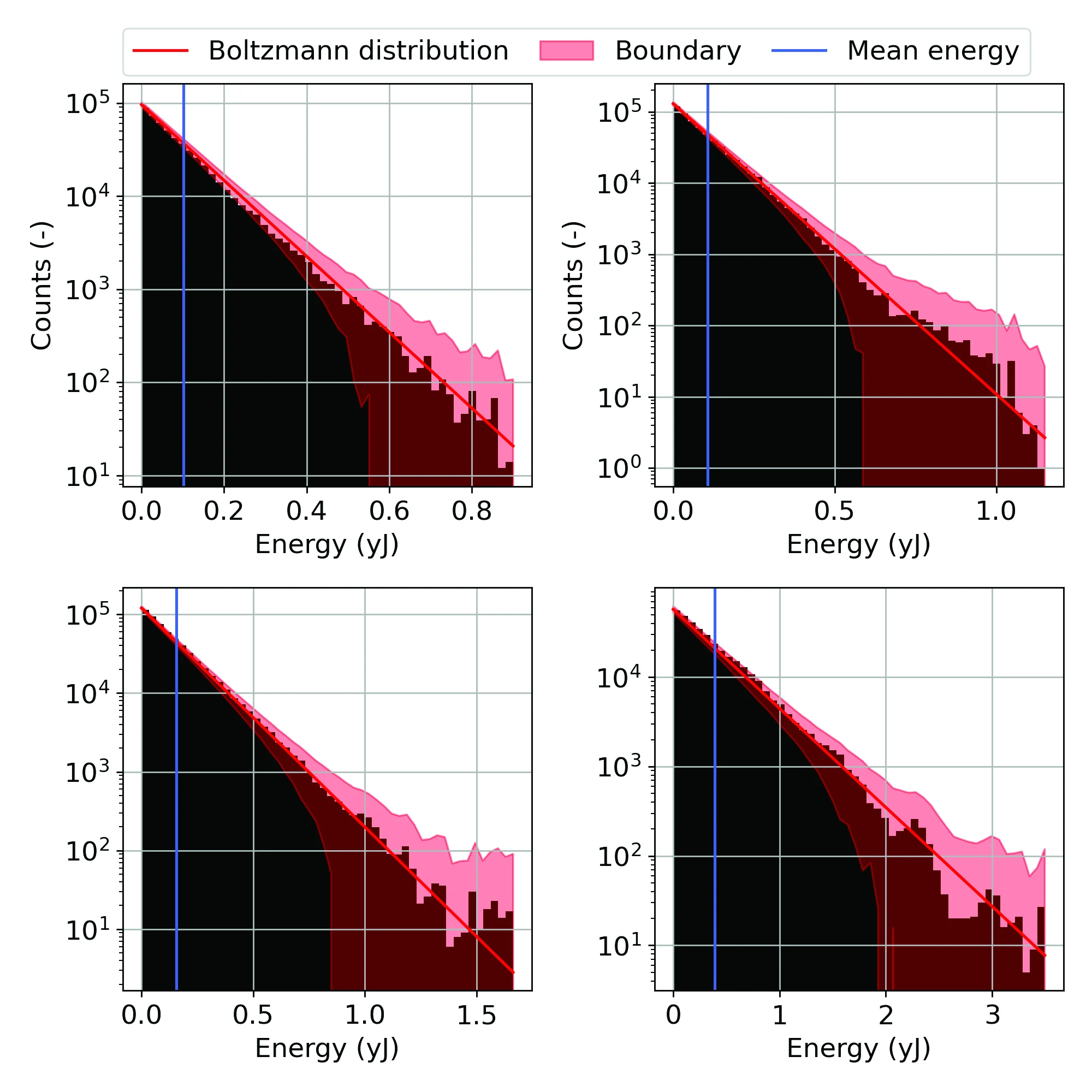
A tiny seesaw weighing 1.5 nanograms oscillates not from the wind, but from the heat of its surroundings. Physicists nearly stopped it by cooling it to 0.006 degrees above absolute zero. First, the seesaw was magnetized, then the field was smoothly removed: this technique, nuclear demagnetization, drew out its energy like a sponge soaks up water. Unlike conventional cooling with liquid helium, no active intervention was needed.
Laser spectroscopy tracked displacements down to thousandths of an atom. Analysis showed the motion followed a thermal distribution: entropy (a measure of disorder) decreased, but didn't zero out.
This experiment is a stepping stone to even colder seesaws. In the future, they could become sensors for gravitational waves or probes for dark matter. And they'll help test quantum mechanics on objects that are almost visible to the naked eye.
Original abstract
as written by the authors arXiv:2510.24199
Highly coherent mechanical resonators are invaluable to ultrasensitive detection techniques by enabling detection of small forces. Studying mechanical resonators in a thermal equilibrium state at millikelvin temperatures provides a promising path to increase their coherence time. Here, we passively cool a 700 Hz massive (1.5 ng) mechanical cantilever down to 6.1(4) mK by means of nuclear demagnetization, as confirmed by detecting its thermal motion via a lock-in based detection scheme. At the lowest temperatures the thermal motion of the resonator is still clearly distinguishable from the background noise. Our data analysis confirms that at these temperatures the motion is still thermally distributed. These results pave the way for passive cooling low-frequency resonators to the sub-millikelvin regime, which would enable new tests of quantum mechanics and advances in ultrasensitive force detection.
This seesaw is colder than the cosmic microwave background left over from the Big Bang (which is 2.7 K). In fact, it's one of the coldest artificial macroscopic bodies ever created.
Cooling an almost visible object to the edge of the quantum world is like trying to lock Schrödinger's cat in metal and silicon, where vibrations slow to a single particle's shiver.